World news and discussion on TalkFuse.
Tesla burns through a billion as Musk bets the farm on chips and bots
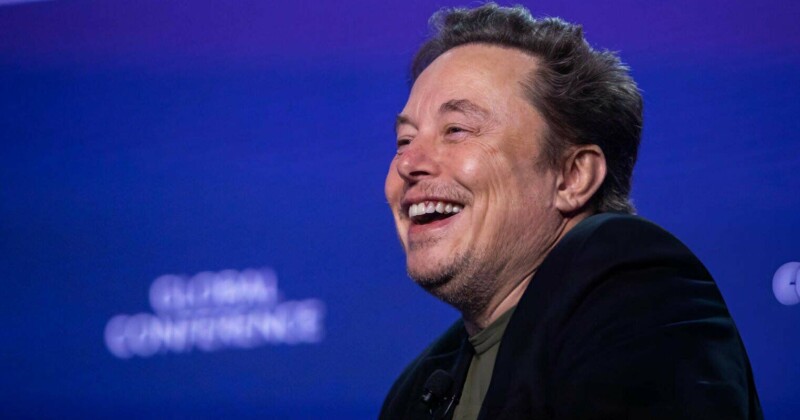
Tesla's spending surged dramatically in the second quarter as Elon Musk committed the company to what he called its "largest and most exciting period of investment," pouring money into AI chip production and robotics rather than its core car business. The sharp rise in capital expenditure pushed Tesla into negative free cash flow, and the company has warned that spending will keep climbing for the rest of the year, underlining how heavily its future now hinges on unproven bets like humanoid robots and self-driving taxis rather than vehicle sales.
Capital expenditure more than doubled from $2.5 billion in the previous quarter to $5.8 billion, leaving Tesla with negative free cash flow of $1.1 billion, an 848 percent year-on-year decline, with full-year spending expected to exceed $25 billion. Much of this is aimed at the "Terafab" chip facility in Austin, which Musk described as a "high-risk, high-payoff bet" needed to secure enough AI chips for the Optimus robot programme. Vehicle deliveries rose 25 percent year-on-year to 480,126 and automotive revenue topped $20 billion, but operating margin slipped to 1.4 percent from 4.1 percent. Musk also addressed regulatory scrutiny of the Robotaxi rollout and sidestepped questions about merging Tesla with SpaceX, whose shares have fallen well below their IPO price; Tesla's own shares dropped in after-hours trading.
In short
- Tesla's capex more than doubled to $5.8bn as Musk bets on AI chips and robots
- Free cash flow turned negative $1.1bn; full-year spending seen topping $25bn
- Car margins fell despite higher deliveries; investors reacted negatively
Steelman: both sides, in good faith
The strongest fair case each way — we don't pick a winner.
The case for
Transformative technologies require substantial upfront investment before generating returns, and Tesla's core business remains healthy with 25% delivery growth and $20 billion quarterly revenue. Developing proprietary AI chips and humanoid robots could unlock vastly larger markets than traditional vehicles, whilst Musk's track record—from electric vehicle viability to reusable rockets—demonstrates that contrarian bets can create extraordinary value when executed successfully. The company has sufficient financial resources to pursue these ambitious projects.
The case against
Burning through $1.1 billion quarterly in negative free cash flow is financially risky when the core business shows deteriorating margins, collapsing from 4.1% to 1.4%. Robotics and autonomous vehicles remain unproven, and diverting resources from a profitable car business to speculative ventures—which Musk himself calls 'high-risk'—jeopardises the entire enterprise. Without improved profitability or lower capital expenditure, Tesla's financial position becomes increasingly precarious regardless of whether future products succeed.
Explained simply
Tesla is the world's leading electric car manufacturer, founded by Elon Musk. The company has dramatically shifted its investment focus, pouring billions into artificial intelligence chip production and robotics instead of expanding car factories. This represents a bet that robots and autonomous vehicles will eventually be far more valuable than selling cars.
Musk believes Tesla needs to build its own AI chips to power humanoid robots and self-driving taxis that could be far more profitable than the car business. The company is now spending money faster than it earns, burning through $1.1 billion in cash in the most recent quarter. Spending is expected to accelerate further, potentially reaching $25 billion this year or beyond.
The strategy is high-risk because humanoid robots and fully autonomous taxis do not yet exist as viable products Tesla can sell. The traditional car business remains profitable but margins are shrinking, meaning the company urgently needs its new ventures to succeed. Whether Musk's vision will pay off or the company has overcommitted itself remains to be seen.