Russian ship defies sanctions to send military vehicles to Mali
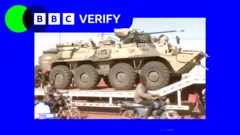
BBC Verify has found evidence that a sanctioned Russian cargo ship delivered a large number of military vehicles to Mali, helping to resupply Russian and Malian forces battling a rebel offensive in the north of the country. The finding underscores that the Kremlin is deepening its military support for Mali's ruling junta despite Western sanctions, even as its Africa Corps mercenaries struggle to contain a rapid advance by jihadist and Tuareg separatist fighters who have seized swathes of northern territory.
Ship tracking data shows the Mikhail Britnev, sanctioned by the US in 2024, left Russia's Baltiysk port on 18 June, was escorted through the English Channel by a Russian warship, switched off its transponder, and docked in Lomé, Togo, on 9 July. Satellite images indicate it carried trucks, armoured personnel carriers and light infantry vehicles matching a large convoy filmed arriving in Bamako on 25 July after travelling through Togo and Burkina Faso, both run by Moscow-backed juntas. Analysts say the vehicles could bolster a future counter-offensive, noting this follows other recent shipments via Guinea, while Mali's junta has suffered fresh battlefield setbacks and Amnesty International has called for a war crimes investigation.
- Sanctioned Russian ship delivered military vehicles to Mali via Togo
- Shipment aids Russia-backed junta fighting a major rebel offensive
- Amnesty International calls for war crimes probe amid setbacks
New here? Start with this
Russian involvement in Mali dates back to around 2021, when the country's military government turned to Moscow for support after falling out with former colonial power France. Russian fighters, now organised as the Africa Corps, have since worked alongside Malian troops, particularly against a long-running insurgency by jihadist groups and Tuareg separatist fighters in the north of the country. Western governments have imposed sanctions on individuals and vessels linked to this military cooperation.
Mali's junta has faced a resurgent rebel offensive in recent months, with fighters advancing across parts of the north, putting pressure on both Malian forces and their Russian allies. Because Mali is landlocked, military supplies typically have to reach it by sea to a neighbouring coastal country and then overland by road, a route that also makes shipments easier to track by researchers and journalists.
This matters because it points to Russia expanding its military footprint in West Africa despite international sanctions intended to limit such support, at a time when the conflict in northern Mali is intensifying and drawing renewed scrutiny from human rights groups.
Both sides, in good faith
The strongest fair case each way — we don't pick a winner.
The case for
Advocates of Mali's approach would argue that a sovereign government facing a serious jihadist and separatist insurgency has every right to seek military partners of its choosing, particularly after its rupture with France and other Western allies. From this perspective, the sanctions imposed on Russian shipping were unilateral Western measures never endorsed by the UN Security Council, and Mali's junta is simply pursuing pragmatic security cooperation to protect its territory and population from an advancing rebellion. Supporters would also note that Russia frames this as legitimate counter-terrorism assistance to a recognised government, comparable to arms transfers Western states routinely make to allies facing insurgencies.
The case against
Critics would argue that these shipments represent a deliberate and cynical evasion of sanctions specifically designed to curb military support linked to serious human rights abuses, noting that Amnesty International has called for a war crimes investigation into the conduct of Russian and Malian forces. From this view, deepening reliance on Russia's Africa Corps mercenaries entrenches an unaccountable junta's grip on power rather than protecting civilians, and the covert nature of the operation – transponders switched off, warship escorts, transit through allied juntas – shows Moscow and Bamako know this cooperation cannot withstand public scrutiny. Critics would also stress that rewarding sanctions evasion undermines the broader international system meant to hold abusive military actors to account.