Travellers set up in another Sheffield park
Developed over time first seen 2 months ago
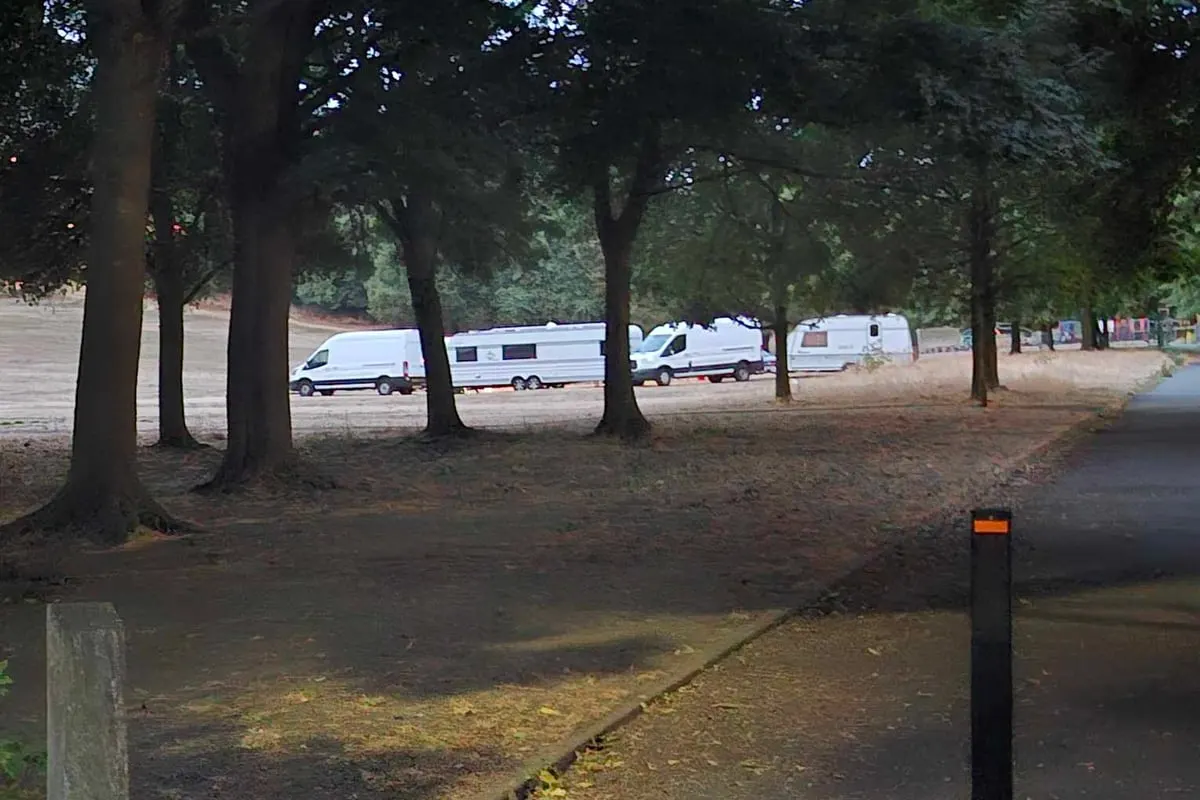
The Star reported on 15 August that a group of Travellers had established an encampment in another Sheffield park. The report placed the development in the context of earlier encampments in the city, indicating that the park was a subsequent location rather than an isolated incident. The available coverage did not establish in the material reviewed how long the group intended to remain or whether formal action to move it on had begun.
Unauthorised encampments are normally handled by Sheffield City Council through site and welfare checks, liaison with those present and, where necessary, legal processes. The council says Sheffield has two long-term Gypsy and Traveller sites but acknowledges that authorised provision does not meet current and projected demand. The report should therefore be understood as an account of a local land-use and accommodation issue; no allegations of criminality should be inferred from the group’s presence alone.
- The Star reported that Travellers had set up an encampment in another Sheffield park.
- The report linked the arrival to previous encampments in the city.
- Council policy involves welfare checks and case-by-case management of unauthorised sites.
New here? Start with this
Travellers are people who live a nomadic or semi-nomadic way of life, including groups such as Gypsies, Roma and Irish Travellers. Some travel in caravans or other vehicles and may stop temporarily on land that has not been formally designated for camping.
Councils are responsible for managing unauthorised encampments on public land, while landowners deal with sites on their own property. They must consider welfare needs and legal duties before seeking removal, which can involve court action or police powers in certain circumstances.
The issue often highlights a shortage of authorised stopping places and longer-term sites for Traveller communities. Local residents may also raise concerns about access to parks, rubbish collection and the length of a stay.
Both sides, in good faith
The strongest fair case each way — we don't pick a winner.
The case for
Unauthorised encampments on public land raise legitimate concerns about public space management and the rule of law. Whilst sympathising with accommodation challenges, councils must apply legal procedures consistently to maintain fair access to shared facilities for all residents. Proper enforcement processes exist to balance different needs; the solution lies in expanding authorised provision whilst maintaining standards, not tolerating unauthorised occupation which merely displaces problems and undermines the planning system.
The case against
The fundamental issue is insufficient authorised Traveller accommodation, creating genuine hardship for communities with few alternatives. Enforcement-focused responses simply move encampments without solving the underlying crisis, whilst resources spent on removal would better serve expansion of legal sites. Traveller communities face systemic barriers to finding sites; unauthorised encampments represent a symptom of policy failure rather than its cause, warranting sympathetic handling and urgent investment in proper provision.