Canada secures brief reprieve from impending 50% US tariff
Developed over time first seen 2 months ago
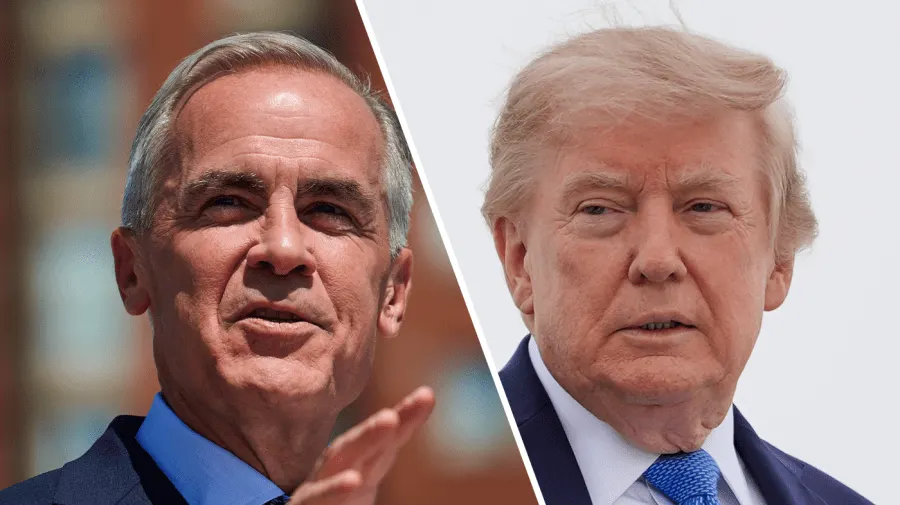
Canada secured a three-day pause on a threatened 50% US tariff after Donald Trump announced late on Tuesday that the two countries had reached a deal "subject to the finalisation of documents." The reprieve came just hours before the tariff hike, which would have hit around $20bn worth of Canadian exports including wine and hockey sticks, was due to take effect. In the same post, Trump suggested the long-dormant Keystone XL oil pipeline project "may be awoken from the grave," though no detail was given on whether this was formally tied to the trade agreement. Canadian prime minister Mark Carney said "substantial progress" had been made but that further work was still needed, leaving the precise terms of any wider deal unclear.
The stand-off had been building since February 2025, when Washington imposed a 25% tariff on Canada over border security and drug trafficking concerns, prompting Canadian retaliation and a dispute over the accuracy of the underlying claims. Tensions escalated further in July 2026 when the White House unveiled the 50% tariff, citing alleged discrimination against US-made cars, alcohol and dairy, with some goods previously shielded under the USMCA left exposed. Canada and the US remain deeply intertwined economically, with roughly $909bn in trade between them in 2024, and officials described the days before the deadline as "intense and delicate." The episode caps a turbulent year for the relationship, during which Trump repeatedly floated the idea of Canada becoming a US state.
- Trump paused a 50% Canada tariff for three days after a last-minute deal
- Deal reached hours before hike on $20bn of Canadian goods
- Trump hinted at reviving the Keystone XL pipeline project
New here? Start with this
Trump has been threatening steep new tariffs on Canadian goods as part of a wider trade dispute between the two countries, which are each other's largest trading partners. Tariffs are taxes charged on imported goods, so a 50% tariff would make Canadian products much more expensive for American buyers, hitting industries and consumers on both sides of the border.
The two governments had been negotiating to try to head off the measure before it took effect. Trade tensions like this often become entangled with other cross-border issues, including long-running energy projects such as oil pipelines linking Canadian producers to American markets, which is why the two topics are being discussed together.
This matters because tariffs of this size could disrupt supply chains, raise prices and strain the broader US-Canada relationship, which covers everything from manufacturing to energy. A pause, even a short one, is significant because it signals whether the two sides are moving towards a longer-term agreement or simply delaying a decision.
Both sides, in good faith
The strongest fair case each way — we don't pick a winner.
The case for
Supporters of this approach argue that tariff threats are a legitimate and effective negotiating tool, forcing a trading partner to the table and extracting concessions without the economic pain of tariffs actually being imposed. They would say the three-day pause demonstrates the strategy working as intended, protecting American industries and workers while preserving room for a deal, and that tying progress to a major pipeline project reflects a sensible push for energy security and infrastructure investment alongside trade talks. From this vantage point, decisive and unpredictable use of tariff power is precisely what secures faster, more favourable outcomes than conventional diplomacy.
The case against
Critics would counter that using the threat of a crippling 50% tariff as leverage, even briefly, injects damaging uncertainty into a deeply integrated and historically friendly trading relationship, harming businesses, investors and consumers on both sides of the border who cannot plan around such volatility. They would argue that linking tariff relief to an unrelated pipeline project blurs the line between trade policy and political dealmaking, and that the lack of detail on the wider agreement's terms raises legitimate concerns about transparency and accountability. For this side, predictable, rules-based trade relationships with close allies serve long-term economic interests better than brinkmanship, however short-lived.
More coverage
- Daily Mail — Trump hails last-minute deal with Canada to avoid crippling tariffs as he breathes fresh life into plan for giant oil pipeline
- NPR — Trump says U.S. and Canada reached deal to delay 50% U.S. tariffs on Canadian imports
- The Guardian — Trump hits pause on Canada tariffs threat, and hints at revival of Keystone XL oil pipeline project
Americas Government Politics World
Read the full article at the source →
Originally published by The Hill as “Trump pauses 50% tariffs on Canada for 3 days”.