Trump halts tariff threat against Canada as trade agreement emerges
Developed over time first seen 2 months ago
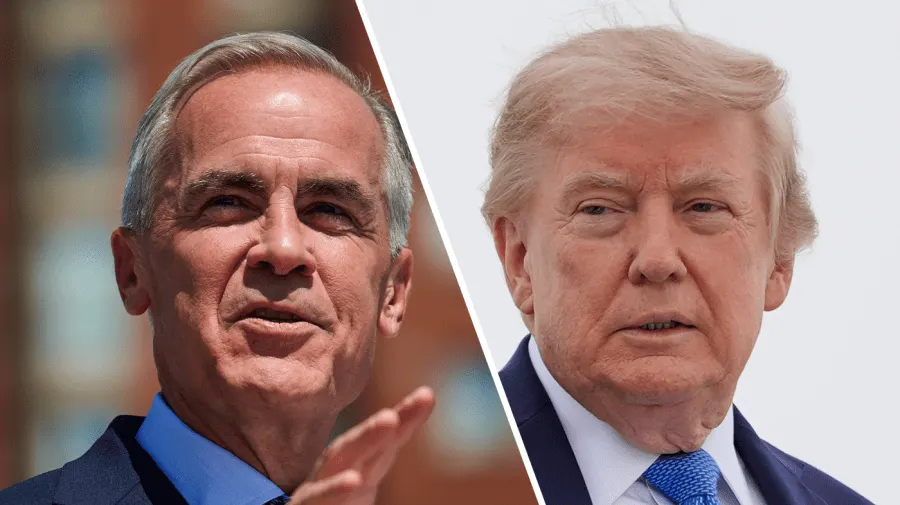
Donald Trump postponed a threatened 50% tariff on Canadian goods just hours before it was due to take effect, announcing that the United States and Canada had reached a deal in principle pending finalisation of documents. The three-day pause averted an immediate levy on nearly $20bn (£14.8bn; C$28bn) of Canadian imports and followed intensive negotiations, including two calls that week between Trump and Prime Minister Mark Carney, capping months of tension over tariffs that had disrupted decades of free trade between the neighbours.
The dispute had centred on US tariffs on Canadian autos and on provincial bans on American liquor sales imposed in retaliation the previous year, alongside US demands to adjust Canadian dairy quotas. Reports indicated negotiators were discussing cutting US auto tariffs from 25% to 15%, though they remained divided over which vehicles would qualify for the reduction, while Ontario's premier signalled openness to lifting the liquor ban. Trump also floated reviving the long-blocked Keystone XL pipeline, capable of carrying 830,000 barrels of oil a day, as part of the final agreement, with US officials describing the deal as covering market access, economic security and digital trade alignment while protecting American workers.
- Trump paused a 50% Canada tariff hours before it took effect
- Both sides cited a deal in principle pending final paperwork
- Sticking points: auto tariffs, liquor bans, Keystone XL revival floated
New here? Start with this
Trump has accused Canada of unfair trade practices for months, threatening steep tariffs on billions of dollars of Canadian goods entering the United States. Canada is one of America's largest trading partners, and the two countries have relied on largely tariff-free trade for decades, so any disruption affects industries and consumers on both sides of the border, from car manufacturing to alcohol sales.
The key figures are US President Donald Trump and Canadian Prime Minister Mark Carney, who have been negotiating directly to resolve the dispute. Sticking points include tariffs on cars built in Canada and provincial bans on American alcohol that Canada introduced in retaliation, with Ontario premier Doug Ford among the regional leaders whose agreement is needed for any final deal.
This matters because tariffs of this scale would raise costs for businesses and consumers, strain a long-standing alliance, and could reshape supply chains that both economies depend on. The negotiations are also being watched as a test of how the two governments manage disagreements while trying to preserve their broader trading relationship.
Both sides, in good faith
The strongest fair case each way — we don't pick a winner.
The case for
Supporters of the administration's approach argue that tariff pressure, however disruptive in the short term, is a legitimate and ultimately effective negotiating tool to secure fairer terms for American industry, particularly in autos, where they contend Canadian and provincial trade practices have long disadvantaged US producers and workers. They point to the fact that the threat produced tangible movement, including a proposed cut in auto tariffs and progress on longstanding grievances such as provincial liquor bans, as evidence that firm leverage succeeds where quiet diplomacy had stalled. Reviving projects like Keystone XL, they argue, would further strengthen North American energy security and jobs while rebalancing a relationship they see as having tilted too far against US interests.
The case against
Critics, including many in Canadian business and government, argue that using the threat of a 50% tariff as a negotiating tactic imposes real economic harm and uncertainty on companies and workers in both countries, disrupting supply chains built over decades of integrated free trade. They contend that brinkmanship conducted through public threats and last-minute reprieves undermines the predictability that investment and long-term planning depend on, and forces sovereign decisions, such as provincial alcohol policy, to be negotiated under duress rather than through orderly diplomacy. For them, the fact that a deal was reached only hours before a punitive tariff was due to hit does not vindicate the method, but rather illustrates the unnecessary risk and strain it placed on a historically close and mutually beneficial trading relationship.
Coverage
- The Hill — Canada secures brief reprieve from impending 50% US tariff
- BBC World — Trump postpones Canadian tariffs while trade deal talks advance