German neo-Nazi suspected of deadly 1970 fire at Jewish retirement home
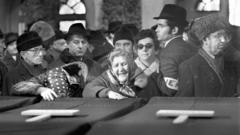
German prosecutors believe they have identified the man responsible for a 1970 arson attack on a Jewish retirement home in Munich that killed seven Holocaust survivors, more than five decades after the crime. The suspect, named by Der Spiegel as Bernd V, was a 25-year-old neo-Nazi with known antisemitic views who died in 2020, meaning the discovery comes too late for any prosecution. The case has long been regarded as one of the worst attacks on Germany's post-war Jewish community, and the revelation also highlights an apparent early failure by police, who were given a possible lead in the 1970s but lacked sufficient evidence to act.
Prosecutors say the killer poured petrol into a wooden stairwell at the building on Reichenbachstrasse at around 20:40 on 13 February 1970 before setting it alight; four victims died in the stairwell and a fifth after jumping from a window, while 15 others were injured. New "credible information" came from a woman who came forward last year following the death of a relative who had known the suspect, describing his antisemitic remarks shortly before the fire and a lifelong "Hitler-fixation". The investigation, closed in 2017 for lack of evidence, was reopened last year, and while prosecutors say the presumption of innocence still formally applies, they found no reliable evidence anyone else was involved.
- German prosecutors name suspect in 1970 Munich Jewish home arson
- Attack killed seven Holocaust survivors; suspect died in 2020
- New witness testimony reopened case, closed since 2017
New here? Start with this
Suspicion has fallen on a man German prosecutors believe carried out an arson attack on a Jewish retirement home in Munich in February 1970, an act that killed seven Holocaust survivors and remains one of the worst assaults on Germany's post-war Jewish community. The suspect, identified by the magazine Der Spiegel as Bernd V, was a young neo-Nazi with a history of antisemitic views, and he died in 2020, so the case can never go to trial. Police had a possible lead on him decades ago but did not have enough evidence at the time to pursue it.
The attack itself involved petrol poured into a wooden stairwell of the building, which was then set alight, trapping and killing several residents while others were injured, some severely. For years the crime went unsolved, and a formal investigation opened long afterwards was eventually shelved for lack of proof, leaving the case unresolved for decades.
The renewed identification of a suspect matters both because it may finally offer an answer to a long-unsolved atrocity against elderly Holocaust survivors, and because it raises questions about how such a serious lead could have gone unpursued by investigators in the 1970s.