Farage is loved by some but hated by more – now even Reform can see it
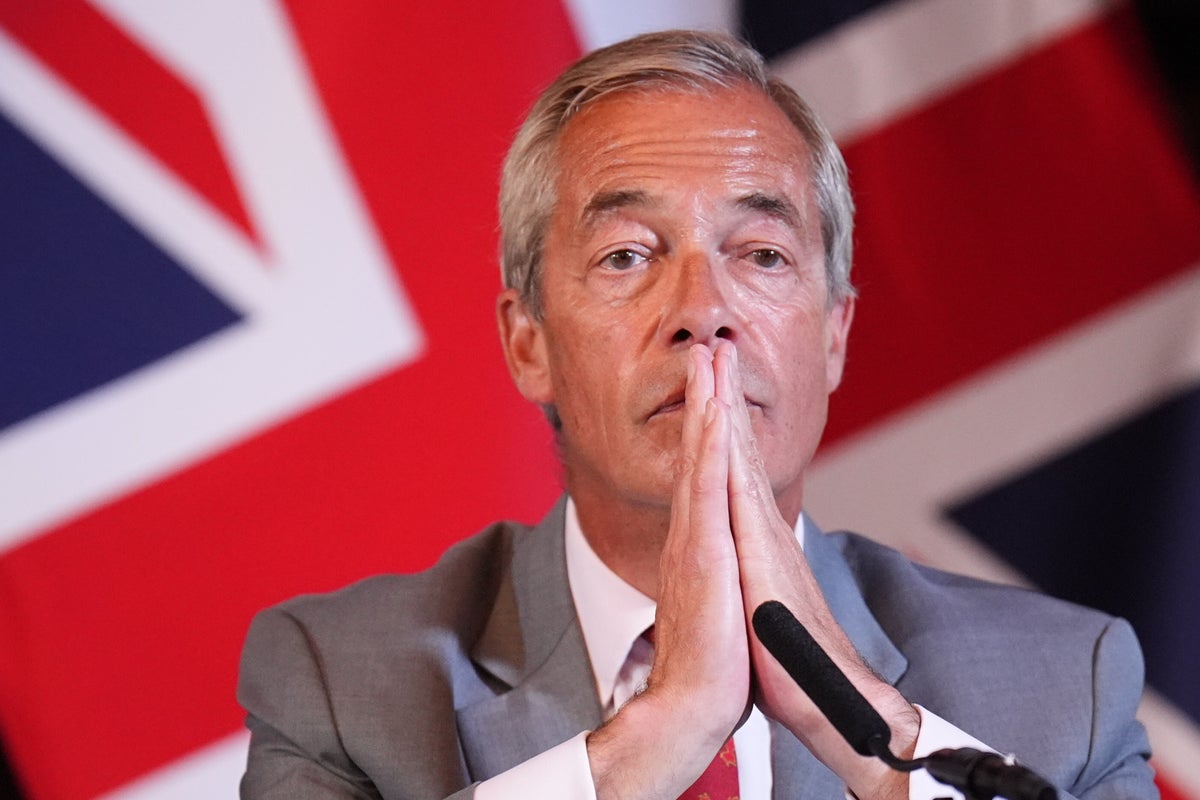
Reform UK arrives at its Birmingham conference weaker than a year ago, with deputy leader Richard Tice admitting the party needs to make the country "love Nigel Farage again" — a striking concession that Farage remains deeply divisive. The party's poll ratings have slipped from over 30 per cent a year ago to the low 20s now, and it has even fallen to third place behind the Conservatives in one poll, undermining its previous claim to be an inevitable party of government.
Farage is also facing an ongoing standards commissioner investigation into an undeclared £5m donation from crypto billionaire Christopher Harborne, which he has claimed is rigged, while a breakaway party, Restore Britain, led by former Reform MP Rupert Lowe and backed by Elon Musk, is drawing off around 5 per cent of the vote. Labour's new leader and prime minister, Andy Burnham, has also proved a tougher opponent, defeating Reform in the Makerfield by-election and outperforming Farage on social media, adding to a sense within Reform that its dominance of British politics has stalled.
- Reform's poll lead has collapsed from over 30% to the low 20s
- Farage faces a standards probe over an undeclared £5m donation
- Rupert Lowe's rival party Restore Britain is splitting Reform's vote
New here? Start with this
Reform UK is the right-wing populist party led by Nigel Farage, which has surged in the polls over the past couple of years and briefly looked on course to become a serious contender for government. Deputy leader Richard Tice's admission at the party's Birmingham conference marks a shift, acknowledging that Farage's personal popularity is a liability as well as an asset for the party's fortunes.
The party is currently under pressure on several fronts: its poll lead has narrowed considerably, Farage faces a standards inquiry over an undeclared multi-million-pound donation, and a rival party called Restore Britain, set up by a former Reform MP and supported by Elon Musk, is competing for the same voters. Meanwhile Labour, now led by Andy Burnham as prime minister, has begun to push back more effectively against Reform, including a by-election win.
This matters because Reform's rise has reshaped British politics, and questions about whether that momentum can be sustained have implications for all the main parties, including the future shape of the political right and how governments respond to challenger movements more broadly.
Both sides, in good faith
The strongest fair case each way — we don't pick a winner.
The case for
There is a reasonable case that Reform's slide reflects real and significant problems rather than a mere wobble: falling from over 30 per cent to the low 20s, dropping behind the Conservatives in a poll, losing a high-profile by-election to a resurgent Labour under Andy Burnham, and haemorrhaging support to a Musk-backed breakaway all point to Farage's personal unpopularity capping the party's ceiling. On this view, a party built so heavily around one polarising figure is inherently fragile, and an unresolved standards investigation over an undeclared £5m donation only deepens legitimate doubts about transparency and judgement at the top.
The case against
An equally reasonable case is that this is a normal mid-term dip being overread as a crisis: Reform remains comfortably ahead of where it stood a few years ago, single-poll fluctuations and one by-election defeat are thin evidence of collapse, and Farage's supporters would argue the standards probe is itself contested and possibly politically motivated, as he claims. From this perspective, a breakaway drawing off a modest slice of the vote and a stronger opposing leader are the ordinary friction of competitive politics, not proof that Reform's underlying appeal or Farage's ability to reconnect with voters has been permanently damaged.