Lenovo Expands Business Laptop Design with Flexible-Screen Concept at IFA 2026
Developing story first seen 2 hours ago
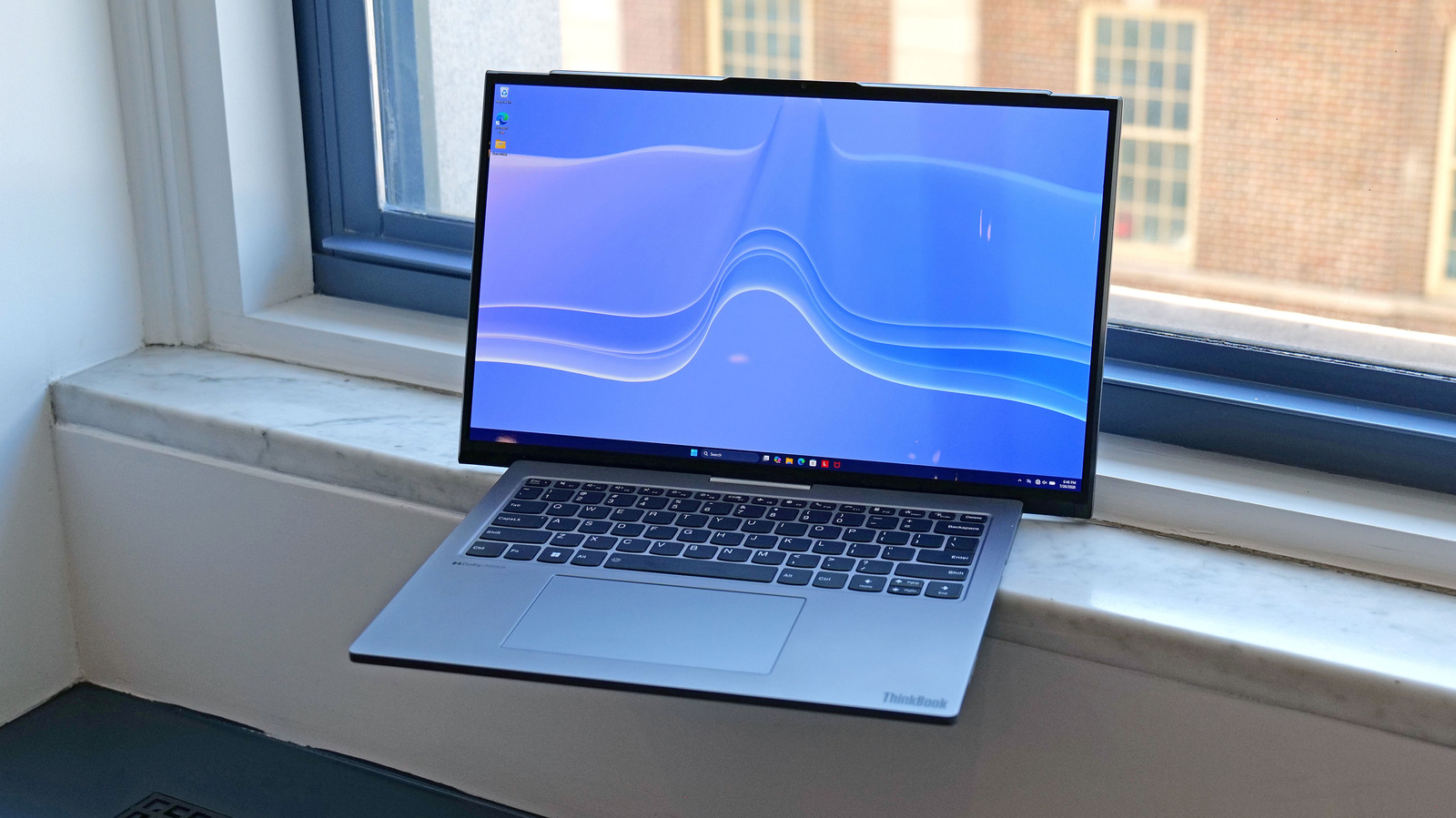
Lenovo has shown off Project Swan, a concept business laptop whose 14-inch screen expands to 17 inches within seconds, alongside a second concept, Project AeroBlade, an ultra-thin laptop cooled without a traditional fan. Both were unveiled at IFA 2026 and demonstrated hands-on by the company, marking a step beyond Lenovo's earlier gaming-focused rollable-screen prototype towards a more conventional, work-ready device. Neither model has been confirmed for production, but their polish suggests Lenovo is edging closer to bringing flexible-display and advanced-cooling technology to market.
Project Swan measures 17.9mm thick and weighs 3.5 pounds, close to a standard 14-inch notebook, yet retains a full keyboard, large touchpad, webcam and speakers, with the expandable panel only visible as a faint ripple when stretched; its main drawback is just two USB-C ports. Project AeroBlade goes further on thinness, at 10mm thick and 1.8 pounds, using an AirJet solid-state cooler from Frore Systems instead of a bladed fan, which Lenovo says is quieter, more efficient, less prone to dust ingress and mechanically simpler, while still packing an OLED display, Thunderbolt 4 and Wi-Fi 7 into a working prototype.
- Lenovo's Project Swan concept laptop expands from 14 to 17 inches
- Project AeroBlade is a 10mm-thick laptop with fanless solid-state cooling
- Both are IFA 2026 concepts, not yet confirmed for retail sale
New here? Start with this
Lenovo, the world's largest PC maker, used the IFA 2026 technology trade show in Berlin to unveil two experimental laptops: Project Swan, which has a screen that grows from 14 to 17 inches, and Project AeroBlade, an extremely thin laptop that has no internal fan. Both are described as concepts aimed at business users rather than gamers, meaning they are working prototypes rather than products people can buy.
The two devices explore different problems in laptop design. Project Swan tackles the trade-off between portability and screen space by using a flexible display that expands on demand, while Project AeroBlade tests a fan-free cooling system, called AirJet, made by a separate company, Frore Systems, to keep the machine slim without it overheating.
Neither laptop has been given a release date or price, and companies often show off concept devices without ever selling them. The interest lies in what they suggest about the direction of laptop technology, particularly bendable screens and new ways of cooling thin devices, both of which could eventually reach mainstream products if Lenovo or its rivals decide to develop them further.
Full account
Lenovo has used IFA 2026 to show off its latest experiment in rollable-screen laptops, a business-focused concept called ThinkBook Project Swan. Rather than folding or flipping, the machine's flexible OLED panel physically expands outwards, growing the display from a standard 14-inch size to a much roomier 17 inches at the press of a button. It is the latest in a long line of expandable-screen prototypes from Lenovo, which has been experimenting with rollable technology for several years and even brought a version to market last year.
In its compact state, Project Swan looks and behaves like an ordinary thin-and-light laptop, giving little外 indication that a rollable panel is tucked inside. When extended, the screen widens to a 17-inch, 16:9 display within a matter of seconds, revealing a faint ripple across the panel at the point where it unfurls — a visual quirk common to rollable-screen devices, though reportedly unobtrusive once in use. The laptop measures roughly 17.9mm thick and weighs about 1.6kg (3.5lbs), figures broadly in line with a conventional 14-inch notebook despite the added mechanism, and it retains familiar features such as a full-size keyboard, a large trackpad, a webcam and built-in speakers, alongside two USB-C ports.
Journalists given early access said the expanded display proved genuinely useful for side-by-side working, such as viewing a document and a PDF simultaneously, evoking the feel of a dual-monitor desktop setup in a single portable device. One review noted some reservations about long-term durability, pointing out that the laptop's lid is noticeably heavier than usual because it must house the rolling screen and motor rather than storing them within the base, which in turn limits how far the display can be tilted and raises questions about how well the compact hinge will hold up over years of use. Project Swan was also described as feeling more like a polished product than a rough prototype, and was contrasted with Lenovo's other rollable efforts, including the vertically expanding ThinkBook Plus Gen 6 and a far more dramatic gaming concept shown at CES that stretches from 16 inches to a 24-inch ultrawide display.
As with previous rollable concepts, Lenovo has not committed to bringing Project Swan to market, though coverage suggested the technology appears increasingly close to commercial viability. The laptop was unveiled alongside another IFA concept, Project AeroBlade, which takes a different approach to pushing hardware boundaries: a fully functional notebook just 10mm thick and 1.8lbs in weight, cooled by a fanless, vibration-based solid-state system rather than a traditional bladed fan. Coverage of the two devices differed somewhat in focus — one outlet concentrated closely on the design and build-quality trade-offs of Project Swan itself, while another placed more emphasis on hands-on multitasking impressions and positioned the laptop within Lenovo's broader habit of unveiling multiple concept devices at once, giving proportionally more attention to the AeroBlade as a companion reveal.
Where outlets differ
One outlet focused primarily on Project Swan's engineering and design trade-offs, including detailed concerns about hinge durability and lid weight from an early in-person preview, while the other placed greater weight on hands-on usability impressions, such as side-by-side multitasking.
The second outlet devoted substantial coverage to a separate concept, Project AeroBlade (an ultra-thin, fan-free laptop using Frore Systems' AirJet cooling), which the first source did not mention in the excerpted text.
The two accounts frame Project Swan's novelty differently: one emphasises it as more restrained compared to Lenovo's vertically expanding ThinkBook Plus Gen 6, while the other frames it against Lenovo's larger 16-to-24-inch gaming rollable concept.
Coverage
- The Verge — Lenovo concept laptop expands from 14 to 17 inches
- Engadget — Lenovo unveils 14-inch laptop with expanding 17-inch display