UK Government to Approve Jackdaw North Sea Gas Field This Month, Sources Confirm
Developed over time first seen 2 months ago
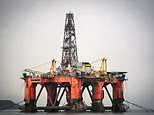
The UK government is set to approve the Jackdaw gas field in the North Sea, with energy secretary Miatta Fahnbulleh expected to recommend the project to the North Sea Transition Authority, paving the way for formal sign-off within weeks. Ministers are also weighing approval of the larger Rosebank oilfield later in the year, with officials exploring ways to direct its proceeds towards clean energy projects, similar to Norway's approach. The decisions mark a significant moment for the government's North Sea strategy, coming after environmental permits for both fields were previously revoked by a court ruling and amid pressure from opposing sides: green campaigners want the projects scrapped, while Donald Trump has urged their development.
Jackdaw, run by Shell, and Rosebank, led by Equinor, could together supply 10% of the UK's oil and gas output at peak production, according to industry estimates. Rosebank, valued at £8.7bn, is the largest undeveloped field in UK waters, holding an estimated 500 million barrels of oil equivalent, though officials have warned that redirecting its revenues into the National Wealth Fund could prove legally complex given how far the approval process has progressed. Campaigners have argued the fields could cause up to £336bn in economic damage from resulting carbon emissions, while granting the environmental permits would not breach Labour's manifesto pledge against new licences, even though many Labour MPs remain opposed. Ultimately, the government proceeded with approval plans for Jackdaw, while a final decision on Rosebank was left pending further environmental assessment.
- Sources
- 2
- Outlets
- 2
- Left · Centre · Right
- 1 · 0 · 1
In short
- Government set to approve Jackdaw gas field, Rosebank oilfield decision pending.
- Fields could supply 10% of UK's peak oil and gas output.
- Officials weighing directing Rosebank revenue into clean energy fund.
How this story developed
- 2 months ago The timeline for approving the Jackdaw gas field has sharpened, with energy secretary Miatta Fahnbulleh expected to recommend approval to the North Sea Transition Authority as soon as Monday, and formal sign-off potentially following about a week later, though some in government think the regulatory process could take several weeks.
- 2 months ago The UK government is expected to approve the Jackdaw gas field in the North Sea this month, according to government sources. Energy Secretary Miatta Fahnbulleh is set to recommend approval as early as next week, with the final decision anticipated around mid-September.
- 2 months ago The UK government is set to approve the Jackdaw gas field in the North Sea, with energy secretary Miatta Fahnbulleh expected to recommend the project to the North Sea Transition Authority, paving the way for formal sign-off within weeks.
Full account
The UK Government is preparing to give the go-ahead to the Jackdaw gas field off Aberdeen this month, according to sources close to the process, in what would mark one of the most significant North Sea energy decisions taken by Labour since it came to power. Energy Secretary Miatta Fahnbulleh is understood to be readying a recommendation to approve the project, with formal sign-off expected to follow within days. The move is being watched closely by the offshore industry, environmental campaigners and Labour's own backbenchers, all of whom have been awaiting clarity since a public consultation on the field's environmental impact closed last month.
Jackdaw was originally given consent by the previous Conservative government in 2022, but that approval was overturned after a successful legal challenge centred on the argument that the environmental impact assessment had failed to account for the emissions produced when the extracted oil and gas are eventually burned. That ruling also affected the neighbouring Rosebank oilfield, and both Shell, which operates Jackdaw, and the Norwegian firm Equinor, which leads Rosebank, have since resubmitted their applications for environmental consent. Because both fields already hold underlying licences to operate, granting the revised environmental permits would not, according to government sources, breach Labour's manifesto pledge not to issue new oil and gas licences — though the distinction has done little to satisfy MPs within the party who object to the projects proceeding at all.
Ministers have pointed to the economic and energy security case for approval, with supporters citing the prospect of thousands of jobs and highlighting that gas extracted from the North Sea is used predominantly to supply the domestic market, unlike oil, which is largely exported. A decision on Rosebank is expected to follow later, with officials reportedly exploring arrangements — modelled partly on Norway's approach — to ensure that any proceeds from the oilfield are channelled towards clean energy investment. The Department for Energy Security and Net Zero has said the North Sea remains a vital national asset for jobs, growth and energy security, while stressing that oil and gas will continue to sit alongside the transition to clean power. In the Commons, Conservative critics have accused ministers of dragging their feet on a decision the industry has been seeking for months, prompting assurances from government that due process would not be short-circuited.
The prospect of approval has drawn opposition from environmental groups and some Labour figures who argue it runs counter to the spirit of the party's climate commitments, with campaigners pointing to the wider economic cost of the carbon emissions the fields would generate over their lifetimes. Others, including senior figures eyeing the Scottish Labour leadership, have backed the developments, framing them as important to jobs and communities in the north-east of Scotland. The Prime Minister has previously signalled a pragmatic stance on North Sea licensing and has spoken of the difficulties faced by workers affected by the shift towards renewable energy, suggesting the government is seeking to balance its net-zero ambitions against economic and political pressures as it finalises its position on both Jackdaw and Rosebank.
Where outlets differ
From the full account, which is AI-written from the sources:
On timing, one outlet frames approval as imminent and tied to the Prime Minister's first party conference as Labour leader in mid-September, while the other sets out a more specific procedural timeline — a recommendation from the energy secretary as soon as the following Monday, with formal approval roughly a week later.
One account emphasises jobs figures (3,500 during construction, 880 over the field's lifetime) and domestic political drama, including a Commons clash between the shadow energy secretary and a climate transition minister, plus the Scottish Labour leadership contest angle.
The other account gives more weight to the Rosebank oilfield decision running in parallel, including a proposed Norway-style mechanism to direct proceeds towards clean energy, a campaigner estimate that carbon pollution from the fields could cause up to £336bn of economic damage, and a reference to the US President urging the Prime Minister to open up the fields — none of which appear in the other report.
The two accounts describe the legal history of the projects slightly differently: one attributes the quashing of the original 2022 approval to a Greenpeace legal challenge, while the other frames it more generally as a judicial ruling requiring companies to account for downstream carbon emissions.
Left-leaning outlets 1
Only here: jackdaw, gasfield, approved, ministers, month
Right-leaning outlets 1
Only here: burnham, approve, north, field, within
Headline columns compared word for word; nothing in them is AI-written.
Steelman: both sides, in good faith
The strongest fair case each way — we don't pick a winner.
The case for
Supporters argue that approving Jackdaw and Rosebank makes sound economic and strategic sense: both fields already hold operating licences, have been through extensive consenting processes, and would generate significant tax revenue, jobs and domestic supply at a time of energy security concerns. They contend that UK-produced gas and oil generally carries a lower carbon footprint than imported LNG or foreign oil, so blocking these projects may simply shift both emissions and economic benefit overseas. Channelling proceeds into clean energy via the National Wealth Fund, as with Norway's model, is seen as a pragmatic way to fund the transition rather than abandoning it, and approving environmental permits does not break Labour's manifesto pledge against new licences, since these licences already exist.
The case against
Opponents argue that approving these fields is fundamentally at odds with the UK's climate commitments and the scale of the crisis, pointing to campaigners' estimate of up to £336bn in economic damage from resulting emissions. They note that a court had already ruled the original approvals inadequate because downstream emissions were not properly accounted for, and see resubmission as an attempt to work around that finding rather than genuinely address it. Many argue that continuing to develop major new oil and gas infrastructure sends the wrong signal about the pace of the transition, entrenches fossil fuel dependence rather than accelerating investment in renewables and green jobs, and risks locking in decades of extraction from what is the largest undeveloped field in UK waters just as the country should be winding such projects down.
Explained simply
UK gas and oil production from the North Sea has been shrinking for years, and the government has to decide how much new drilling to allow while it also tries to cut carbon emissions. Two big projects have become the focus of that decision: Jackdaw, a gas field, and Rosebank, a much larger oil field that would be the biggest undeveloped find in UK waters. Both are run by energy companies (Shell and Equinor) that already hold licences to operate there, but they still need separate environmental approval before work can go ahead.
That environmental approval was pulled back after a court ruled the companies hadn't properly accounted for the emissions caused when the oil and gas they extract is eventually burned. The firms have since resubmitted their applications, and it is this environmental sign-off, not the original licence, that ministers are now weighing up. The energy secretary and the industry regulator, the North Sea Transition Authority, are central to that process.
The decision matters because it sits at the heart of a wider argument about the UK's energy strategy. Supporters say the fields would boost domestic energy supply and jobs; opponents, including environmental campaigners and some Labour MPs, argue new fossil fuel projects are incompatible with climate goals. The government has also faced outside pressure, including from the former US president Donald Trump, on the issue, making the fields a symbol of the broader tension between energy security and climate policy.
Coverage · 2 sources
Bias meters
From 2 rated sources.
Art Business Culture Environment Government Politics Science Software Technology UK World