New Twitter rebrands to Tweet.app after court’s double-edged ruling
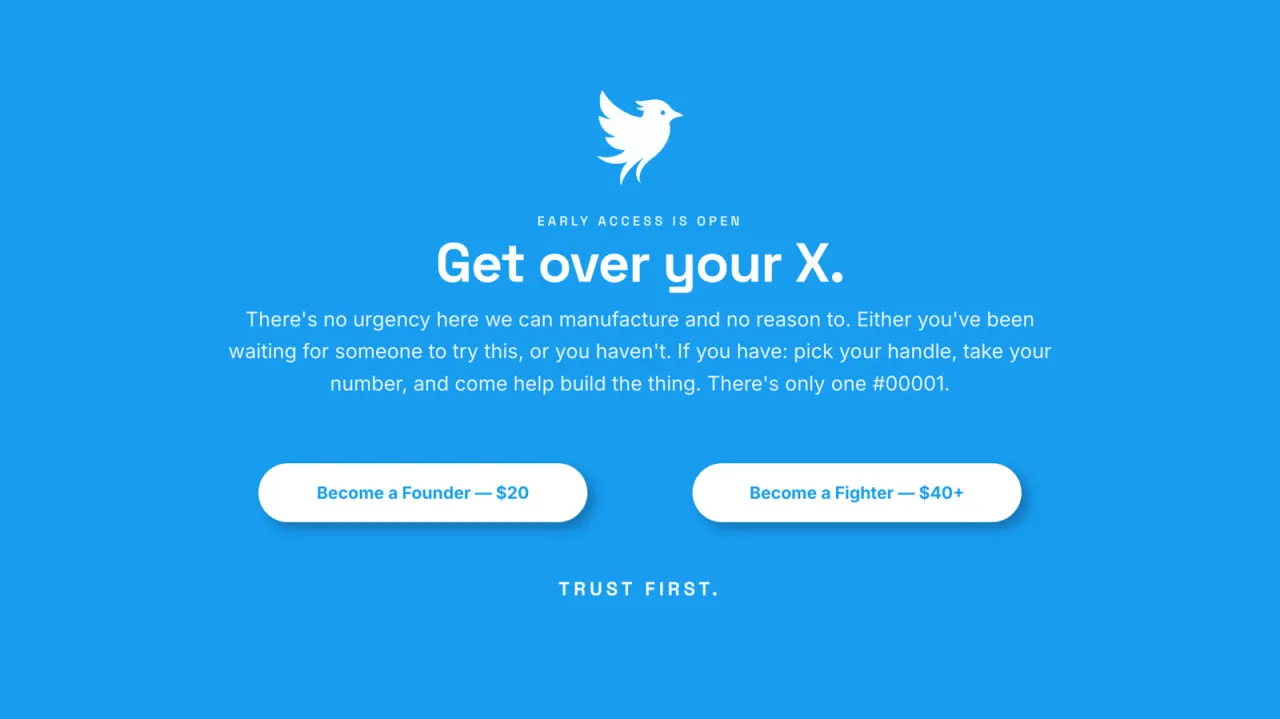
A US federal court has issued a split ruling in a trademark dispute over the revival of Twitter, prompting startup Operation Bluebird to rebrand its new social platform from Twitter.now to Tweet.app. US District Judge Colm Connolly ruled that using the "Twitter" name would confuse consumers and infringe existing trademarks, barring the startup from that branding, but found the company likely to succeed in arguing that X Corp had abandoned both the word "tweet" and its bird logo, leaving those free to use.
The Tweet.app website is live and taking waitlist sign-ups ahead of launch, with more than 172,000 people reportedly registering to reserve a handle for $20, while a $40 "Fighter" tier offers extra perks including a founder badge and number. The underlying trademark infringement case has not been resolved and is expected to proceed to trial, meaning the platform's branding could still face further legal challenges.
In short
- Court blocks "Twitter" name but allows "tweet" and bird logo.
- Startup rebrands new platform from Twitter.now to Tweet.app.
- Over 172,000 have joined the waitlist; trial still pending.
Steelman: both sides, in good faith
The strongest fair case each way — we don't pick a winner.
The case for
Supporters of Operation Bluebird's venture argue that trademark law exists precisely to allow abandoned marks to be reclaimed, and that if X Corp genuinely stopped using the word 'tweet' and its bird logo, no one has a superior claim to deny an entrepreneur the right to build on that goodwill. From this view, the court's finding that those specific elements were likely abandoned validates a legitimate business opportunity: reviving a beloved, discarded piece of internet culture that millions still associate fondly with the original platform's spirit, rather than deceiving anyone.
The case against
Critics take a more sceptical view, arguing that the venture is deliberately trading on residual public confusion between old Twitter and the new platform, evidenced by the court simultaneously barring the 'Twitter' name for exactly that reason. They contend that charging tens of thousands of hopeful users $20 to $40 for handles and 'founder' status before the underlying legal dispute is even resolved is opportunistic and risks leaving paying customers with a rebranded or legally compromised product, prioritising rapid monetisation over caution and clarity for consumers.
Explained simply
Restrictions bought by Twitter/X's owner over the branding of its Elon Musk-owned platform, and the trademark laws that govern who can use a name or logo, sit at the heart of this dispute. A separate startup, Operation Bluebird, has been trying to launch a rival social network evoking the old Twitter, and this required resolving in court whether it could actually use the "Twitter" name, or symbols linked to it. A US federal judge has now ruled on parts of that dispute, with mixed results for the startup.
The case matters because it touches on what happens to a well-known brand and name after a company changes it, in this instance following X Corp's rebrand from Twitter to X. Trademark law generally protects names and logos that are in active use, but rights can weaken or lapse if a mark is dropped or no longer defended, which is the argument being tested here. The outcome affects not just this one startup but sets a marker for how far others can go in reviving discontinued brand identities.
Beyond the legal question, there is a commercial angle: the new platform has been signing up potential users and selling early access ahead of any launch, meaning real money and expectations are riding on how the naming dispute is ultimately resolved at trial.