Trump-linked MAGA Inc pours $10M into Ken Paxton’s Texas Senate race against James Talarico
Developed over time first seen 2 months ago
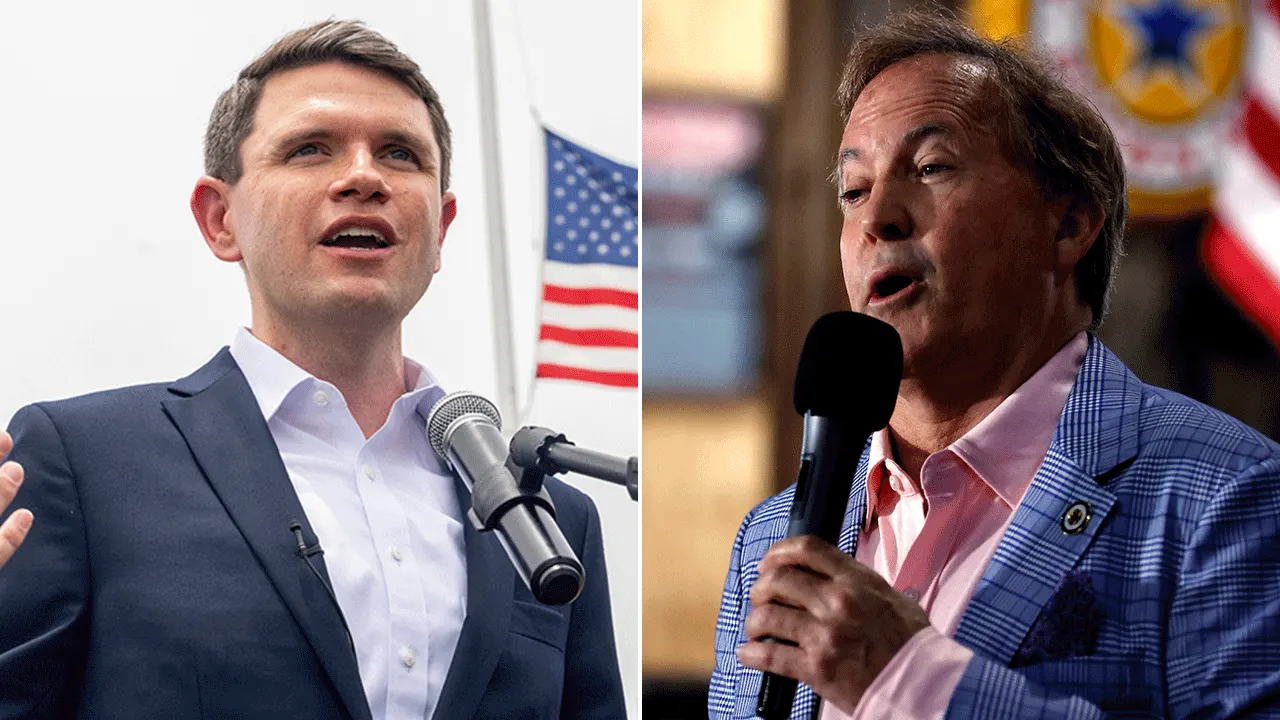
MAGA Inc, the pro-Trump super PAC, has committed $10 million in digital and television advertising to back Republican Ken Paxton in Texas's tightly contested Senate race against Democrat state Representative James Talarico, according to a Federal Election Commission filing. The spending, the group's first major midterm intervention, followed weeks of speculation about whether it would enter the race, and reflects Donald Trump's continued backing of Paxton, whose primary defeat of incumbent Senator John Cornyn earlier this year was already bolstered by the president's endorsement. Polls have consistently shown the contest as a dead heat, making the national money injection a notable factor in one of the cycle's most closely watched Senate races.
The adverts label Talarico "High Tax Talarico" and attack his record on taxation and rural hospitals, while promoting Paxton's own proposals, including doubling the child tax credit, tax breaks for medical expenses and a $50,000 deduction for first-time homebuyers. Talarico's campaign dismissed the effort as a "billionaire-backed dark money" attack and pointed to its fundraising strength, having raised $72 million mostly from small donors, against $16.8 million for Paxton. Trump described MAGA Inc's roughly $400 million in funds as "my money," pledging to spend "whatever amount necessary" to help Republicans, while Talarico used the moment to criticise a forthcoming Republican donor convention in Dallas as symbolic of political corruption.
- MAGA Inc commits $10m in ads backing Paxton in Texas Senate race
- Trump-aligned group targets Democrat James Talarico as "High Tax"
- Talarico's campaign has outraised Paxton, $72m to $16.8m
New here? Start with this
Political money keeps flowing into a Texas Senate contest that's shaping up as one of the most closely watched races of the midterms. Ken Paxton, the state's Republican attorney general, is standing for the Senate seat and faces Democrat James Talarico, a state representative, after Paxton beat sitting Republican Senator John Cornyn in the primary earlier this year with Donald Trump's backing.
MAGA Inc is a "super PAC," a type of American political fundraising group that can spend unlimited sums supporting or opposing candidates, so long as it doesn't coordinate directly with their campaigns. It is closely aligned with Trump, who has said the group holds several hundred million dollars, and its involvement here reflects the president's continued interest in this race after his endorsement helped Paxton in the primary.
The contest matters because control of the Senate, and the balance of power in Washington, depends on individual races like this one, and Texas is not usually considered competitive for Democrats. Both campaigns have raised large sums from different sources, and outside groups like MAGA Inc add another layer of spending on top of what the candidates themselves bring in, ahead of the vote in November.
Both sides, in good faith
The strongest fair case each way — we don't pick a winner.
The case for
Supporters of this kind of spending argue that super PACs are a lawful and long-established way for citizens who share political values to pool resources and make their voice heard in a competitive race. They point out that Talarico's campaign has already raised far more than Paxton's, so outside investment simply helps level the playing field and ensures voters hear about Paxton's proposals, such as expanding the child tax credit and aiding first-time homebuyers. From this perspective, robust spending on both sides is a feature of vigorous democratic debate, not a distortion of it, and disclosure rules mean voters can still judge the source and motive behind the adverts.
The case against
Critics counter that a single super PAC being able to inject $10 million, drawn from a roughly $400 million war chest, into one Senate race illustrates how concentrated wealth can overwhelm the efforts of a campaign built on ordinary donors, undermining the idea that elections should be decided by broad public support rather than a handful of large backers. They argue that such spending, especially when funding sources or influences behind the PAC are not fully transparent to the average voter, risks making elected officials more attentive to major donors than to constituents. For them, the scale of this intervention in a closely fought race raises legitimate concerns about fairness and accountability in the electoral process, regardless of which party benefits.
Full account
Trump's Make America Great Again (MAGA) Inc. super PAC has committed $10 million (£7.9 million) to bolster Republican Ken Paxton's campaign for the US Senate seat in Texas, according to a filing with the Federal Election Commission. The intervention marks the group's first substantial midterm spend of the election cycle and is aimed at helping the state's attorney general see off Democratic challenger James Talarico, a state representative, in a contest that polling suggests remains extremely close.
Records show the money was directed to Del Ray Media LLC, a Republican-aligned media buying firm that reportedly handled around $336 million in advertising during the 2024 election cycle. The funds are understood to be split evenly, with roughly half earmarked for adverts promoting Paxton and the remainder for spots criticising Talarico, running across television and digital platforms statewide. The timing is notable: the donation followed shortly after Trump had appeared at a White House Rose Garden event where, while endorsing Paxton, he made light of the candidate's dress sense and television presence before insisting his record as attorney general outweighed such concerns.
Paxton welcomed the backing on social media, crediting his 'Protecting the Texas Promise Agenda' — which he says lowers costs through measures such as an expanded child tax credit, tax relief on medical expenses and a deduction for first-time homebuyers — and thanking Trump directly for his continued support. A spokesperson for MAGA Inc. framed the spending as necessary to expose what the group called Talarico's 'radical' tax policies, branding him 'High Tax Talarico'. Talarico's campaign dismissed the attacks as the work of a 'billionaire-backed dark money' operation rattled by grassroots momentum, with his press team arguing the scale of outside spending betrayed Republican nerves about the race.
The contest has drawn attention partly because of the financial disparity between the campaigns: Talarico's bid has reportedly raised roughly $72 million, largely from small individual donors, against about $16.8 million raised directly by Paxton, whose earlier primary victory over incumbent Senator John Cornyn was itself widely attributed to Trump's endorsement. Talarico has separately used the moment to needle Republican donors gathering at a Texas party convention, contrasting a costly fundraising gala with a food-collection drive his campaign is organising. MAGA Inc. is reported to hold a war chest approaching $400 million, though this donation is said to be only its second of the current cycle, underscoring how significant the Texas race has become to the group's midterm strategy.
Where outlets differ
The Fox News Digital account leans more heavily on Paxton's and Talarico's competing tax and cost-of-living messaging, includes fuller quotes from Talarico attacking a Republican 'Billionaire Ball' fundraiser, and cites the Texas Tribune for fundraising totals.
The Daily Mail account foregrounds Trump's Rose Garden remarks mocking Paxton's appearance shortly before the donation, gives more granular detail on the $5 million/$5 million ad-spending split and identifies Del Ray Media LLC and its 2024 spending via OpenSecrets, and attributes the Talarico campaign's response to press secretary JT Ennis by name.
Sourcing for quotes differs slightly: Fox attributes the MAGA Inc. spokesperson's comments to its own reporting, while the Daily Mail notes the same spokesperson spoke to Politico.