I witnessed the horror of 9/11 firsthand. Here’s what I learned about God, courage and life
Developed over time first seen 1 day ago
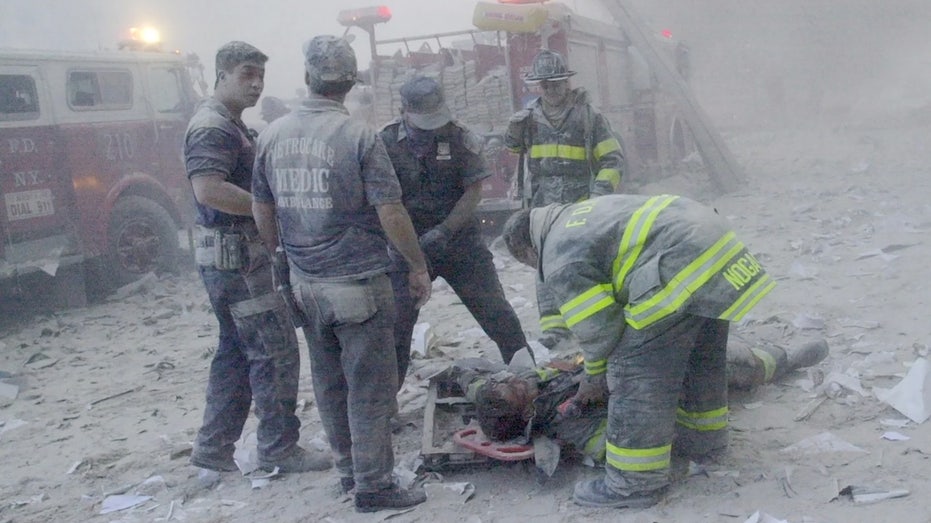
An opinion piece published around the 25th anniversary of 9/11 recounts one man's first-hand experience of the attacks from his office at Merrill Lynch, in the World Financial Center adjacent to the Twin Towers. He describes watching both towers struck and fleeing the scene, framing the day as a turning point that led him to leave a career in finance in 2009 to become an FBI Special Agent, having vowed during the attack to dedicate his life to serving God and his country.
The account details his shock at seeing the North Tower burning, followed by the second plane hitting the South Tower, and a moment of confronting his own mortality amid the chaos. He pays tribute to first responders, including the FDNY, NYPD and Port Authority Police, the passengers of United Flight 93, and rescue workers who have since died from illnesses linked to Ground Zero toxin exposure, while also praising then-Mayor Rudy Giuliani's leadership and criticising what he calls a troubling moral decline among Americans who suggest the US or its victims bore responsibility for the attacks.
- Writer recounts witnessing 9/11 attacks from near the World Trade Center
- Vowed that day to serve God and country, later became FBI agent
- Piece marks 25th anniversary, condemns claims that victims deserved attack
New here? Start with this
This 25th-anniversary reflection is one voice among many marking 11 September 2001, when hijackers flew passenger planes into New York's World Trade Center, the Pentagon, and a Pennsylvania field, killing nearly 3,000 people. The author was a young Merrill Lynch employee working next to the Twin Towers that day and later left a finance career to join the FBI, a decision he ties directly to what he witnessed.
Alongside his own escape from the towers, the piece touches on several threads that run through most 9/11 remembrance writing: the thousands of rescue and clean-up workers who have since died from illnesses linked to toxic dust at Ground Zero, and the leadership of then-New York Mayor Rudy Giuliani, who became a prominent public face of the city's response. These figures and details help explain why the anniversary continues to generate personal essays and debate each year, particularly over how the day should be remembered.
The piece also wades into an ongoing, more contested argument about how 9/11 should be interpreted now, with the author pushing back against views he says wrongly cast America or the victims as somehow culpable. This reflects a broader, long-running disagreement in public discourse about the legacy and meaning of the attacks, rather than a new development specific to this article.
Full account
Twenty-five years after the September 11 attacks, two survivors have shared fresh, deeply personal accounts of the day nearly 3,000 people were killed when hijacked aircraft struck the World Trade Center, the Pentagon and a field in Pennsylvania. One account comes from a former Merrill Lynch employee who was working feet from the Twin Towers and later became an FBI special agent; the other comes from David Kravette, a Cantor Fitzgerald bond trader who narrowly avoided being among the 658 New York staff his firm lost that morning. Together, the two testimonies illustrate both the randomness of survival and the lasting spiritual and emotional reckoning the attacks provoked.
The first account, published as a first-person reflection, describes watching the catastrophe unfold from an office in the World Financial Center, immediately next to the Trade Center complex. The writer recalls hearing an explosion, looking out to see a gaping hole and debris falling from the North Tower, and realising with horror that people were dying inside a building they had walked through only an hour before. After witnessing a second aircraft strike the South Tower, they fled the building, and amid the chaos found themselves confronting a stark question about mortality and faith. The experience, they say, left them with a sense of purpose that ultimately led them to leave a career in finance in 2009 to join the FBI, driven by a conviction to serve their country after seeing extraordinary courage among firefighters, police officers and ordinary civilians that day.
The second account, given to the Daily Mail ahead of the anniversary and also featured in a History Channel documentary, centres on Kravette's escape from Cantor Fitzgerald's offices on the 105th floor of the North Tower. He had gone down to the lobby that morning only because a visiting IT contractor had turned up without identification for an 8am meeting, and Kravette volunteered to vouch for him rather than send a colleague who was close to going on maternity leave. He had taken only a few steps into the lobby when American Airlines Flight 11 struck the tower at 8.46am, sending burning fuel through the ground floor and killing people nearby while stopping just short of him. Kravette described the episode as pure chance, noting that the visitors had initially gone to the wrong tower and been delayed further when a colleague could not produce identification, and that he could not otherwise recall a time he had left his desk so close to nine o'clock.
Both accounts underline how narrow the margin between survival and death was for those working in and around the towers, and both pay tribute to the emergency responders and colleagues who did not make it out. The Fox News-style reflection places greater weight on themes of faith, divine purpose and a broader tribute to first responders and the passengers of United Flight 93, alongside a reminder of the rescue workers who have since died from illnesses linked to Ground Zero exposure. The Daily Mail's report, by contrast, focuses more narrowly on the mechanics of Kravette's survival and the scale of loss at Cantor Fitzgerald, which suffered the heaviest single-employer death toll of any firm that day. Read together, the two accounts offer complementary perspectives on the same morning: one meditative and centred on what the day changed in the writer's outlook on life and service, the other a granular, almost cinematic reconstruction of the small decisions that separated life from death.
Where outlets differ
The Fox News-style op-ed frames the day through a personal, faith-based lens, emphasising spiritual reflection, courage among first responders and the writer's subsequent career change to the FBI, while giving only broad tribute to victims and rescue workers.
The Daily Mail account is more procedural and detail-driven, focused specifically on David Kravette's chain of chance events at Cantor Fitzgerald, the firm's catastrophic losses, and ties the story to a forthcoming History Channel documentary.
The two pieces cover different individuals, workplaces (Merrill Lynch/World Financial Center versus Cantor Fitzgerald/North Tower) and emotional register (introspective and philosophical versus survival-thriller detail).
More coverage