Sheeran calls Gaza devastation unjustifiable amid Macklemore tour dispute
Developed over time first seen 1 day ago
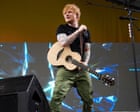
Ed Sheeran's US Loop tour became engulfed in controversy after his support act Macklemore shouted "free Palestine" at a New Jersey concert, prompting stadium owners to remove him from subsequent dates. The fallout was significant: four other supporting acts and Sheeran's backing band Beoga withdrew in solidarity with Macklemore, citing their support for Palestinians. This sparked broader criticism that Sheeran had failed to defend his act against what many characterised as censorship, raising fundamental questions about artistic freedom and political speech within commercial entertainment.
Sheeran resumed touring in Philadelphia, publicly stating that Gaza's situation is "catastrophic and unjustifiable" whilst apologising for mistakes made during the dispute. He revealed serious doubts about whether to continue the tour or remain an artist at all. The practical impact was stark: ticket prices dropped to as low as £24 for the Philadelphia show—compared to his previous tour being among the highest-grossing ever—the concert was delayed from 5:30 pm to 8 pm, and pro-Palestinian demonstrators gathered outside. Whilst some fans remained supportive, others felt his response did not adequately challenge the stadium owners' decision to silence Macklemore.
- Macklemore removed from tour after "free Palestine" shout; support acts withdrew
- Sheeran called Gaza "catastrophic" but faced criticism for not opposing removal
- Philadelphia concert went ahead with delayed start, lower prices, outside protests
New here? Start with this
Ed Sheeran is touring the United States with Macklemore as an opening act. Macklemore was removed from the tour after shouting "free Palestine" at a concert in New Jersey, a decision made by venue owners rather than by Sheeran himself. Several other opening acts withdrew in solidarity, and fans have been divided over whether to attend or boycott the shows.
The controversy reflects the broader Israel-Gaza conflict, where significant numbers of civilians have been killed in recent fighting. It has raised questions about whether musicians should be free to speak out on political causes and what authority venue owners should have over performers. Some believe artists should use their platform for activism, whilst others think they should stay apolitical or that corporate venue operators have the right to control their stages.
Both sides, in good faith
The strongest fair case each way — we don't pick a winner.
The case for
Those who believe artists should use their platforms argue that sufficiently severe humanitarian crises demand moral clarity from public figures, and that silence amounts to tacit acceptance of injustice. They contend that artistic expression and social conscience are inseparable, and that Macklemore's removal represents an unacceptable suppression of free speech that should be resisted rather than accommodated—particularly when the underlying issue involves documented civilian devastation.
The case against
Those who favour artistic neutrality argue that concerts function as rare spaces where audiences with divergent political views can unite through shared appreciation of music, and that injecting divisive geopolitics fractures that unity without necessarily advancing either cause. They hold that artists are neither obliged to become political commentators nor complicit in silence; that choosing a personal boundary between artistic and activist roles is a legitimate autonomy, and that the promoter's personnel decisions, however questionable, do not obligate artists to stage political theatre to protest them.
Full account
Singer Ed Sheeran addressed the humanitarian crisis in Gaza during his first solo concert since controversy engulfed his touring schedule, describing the situation as both catastrophic and indefensible. Appearing on stage in Philadelphia, the 35-year-old artist expressed his emotional response to the scale of civilian suffering, particularly the loss of children's lives, whilst reiterating his desire to maintain concerts as spaces centred on unity rather than political division.
The performance occurred amid significant upheaval surrounding his Loop Tour. Opening act Macklemore had been removed from the bill following his vocal calls for Palestinian freedom at a New Jersey performance earlier in the month, after stadium owners—notably billionaire businessman Robert Kraft—objected to his remarks. In response, four supporting artists subsequently withdrew their participation, citing solidarity with the Palestinian cause and citing the removal as a matter of principle.
Sheeran sought to clarify his position, expressing contrition for the difficult circumstances whilst denying direct involvement in Macklemore's removal and attributing the decision to tour management. He acknowledged uncertainty about whether the tour itself would proceed, describing the preceding week as tumultuous and noting he had questioned his continued involvement in music. His remarks emphasised freedom of speech concerns and characterised the situation as having placed him at the intersection of a deeply significant global debate.
Considerable distinction emerges in how the story was characterised by different outlets. One source focused on the boycott campaign and interviewed protesters outside the venue who questioned whether Sheeran had sufficiently opposed the stadium owners' actions. Another emphasised the censorship question more directly—Sheeran's expressed concern about venues pre-approving performance content, with particular attention to Kraft's reported ultimatum to other stadium proprietors. This second account included Sheeran's wider remarks on October 2023 events in Israel and ongoing concerns regarding the West Bank, alongside his stated commitment to learning from diverse perspectives.
Where outlets differ
Source 1 emphasises boycott calls and protester perspectives; Source 2 emphasises the venue censorship issue and Kraft's ultimatum
Source 2 quotes Sheeran's remarks about West Bank injustice and Jewish historical suffering; Source 1's quoted remarks focus narrowly on Gaza
Source 1 includes named protester interviews questioning Sheeran's response; Source 2 does not include protester perspectives
Source 2 notes Sheeran was reading from a teleprompter; Source 1 presents remarks without this contextual detail
Source 2 provides specific date (19 September) and future tour dates; Source 1 uses 'Saturday' without specificity
More coverage
- Far Out — Ed Sheeran admits “I don’t know enough” about situation in Gaza at first show since Macklemore dispute
- Pitchfork — Ed Sheeran Clarifies Gaza Stance, Again Blames Venues for Kicking Macklemore Off Tour
Read the full article at the source →
Originally published by The Guardian as “Ed Sheeran says situation in Gaza ‘unjustifiable’ in first show since tour plunged into turmoil”.