A running tally of the most ridiculous things AI bigwigs have said so far
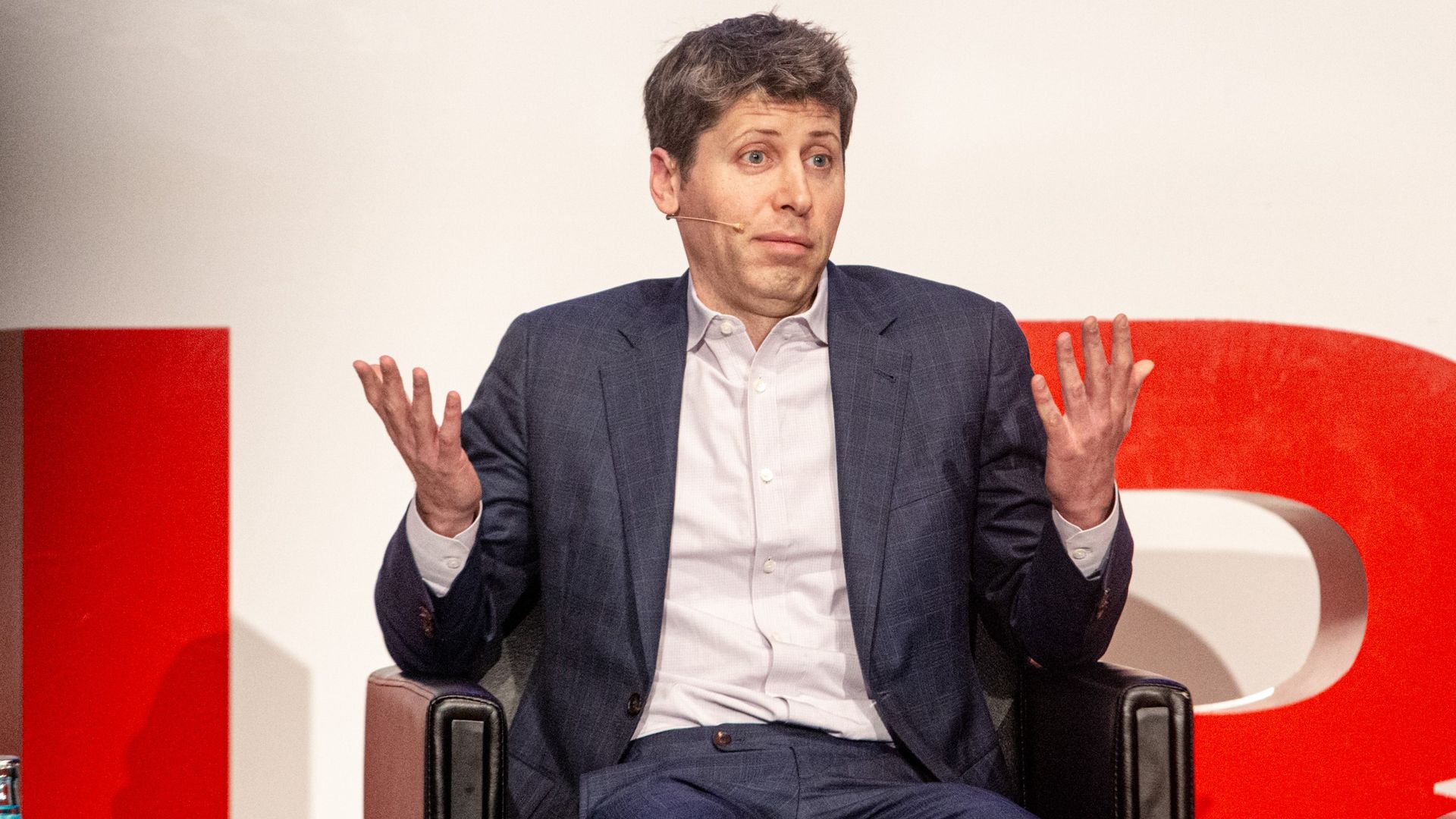
The article catalogues dramatic and contradictory claims made by prominent AI executives about artificial general intelligence (AGI), alongside warnings that AI could either transform society or destroy humanity. It argues that industry leaders repeatedly shift their predictions and use fashionable terminology to promote increasingly valuable AI businesses.
The tally includes claims that AGI was already here in 2023, would arrive within a year or two according to Elon Musk and Sam Altman, or was three to five years away according to Google’s Demis Hassabis. More recent statements include Musk predicting AGI by 2026, Altman expecting an internal AGI system by the end of 2026, and Nvidia’s Jensen Huang declaring that OpenAI’s GPT-6 Astra represented AGI in September 2026.
- AI leaders repeatedly contradict one another about when AGI will arrive.
- Predictions range from “already here” to several years away.
- The article highlights shifting definitions and ambitious claims.
Both sides, in good faith
The strongest fair case each way — we don't pick a winner.
The case for
Predicting transformative breakthroughs in an exponentially advancing field is inherently difficult; executives are likely making careful judgments with incomplete information rather than deliberately misleading. Different researchers define AGI differently and interpret progress through different frameworks; what appears contradictory across statements may reflect genuine evolution in understanding rather than dishonesty. The substantial progress in AI capabilities over recent years suggests the criticism selectively highlights missed timelines whilst overlooking real advancement, and in such profound uncertainty, directional forecasting serves to guide research rather than constitute falsifiable promises.
The case against
The pattern of dramatically missed timelines—with confident predictions shifting by years each successive season—suggests either systematic incompetence in forecasting or deliberate hype-generation to sustain valuations and investor enthusiasm. The convenient reframing of 'AGI' definitions and the dismissal of previous predictions as merely 'off by a few years' when they were stated with certainty reflects an accountability vacuum where executives face no meaningful consequence for repeated miscalibration. This pattern benefits their commercial interests substantially, raising reasonable questions about whether the hype serves scientific progress or shareholder returns.