‘Lanterns’ Episode 7 Ending Explained: Antaan, Sinestro, and Who Killed Hal Jordan?
Developing story first seen 4 hours ago
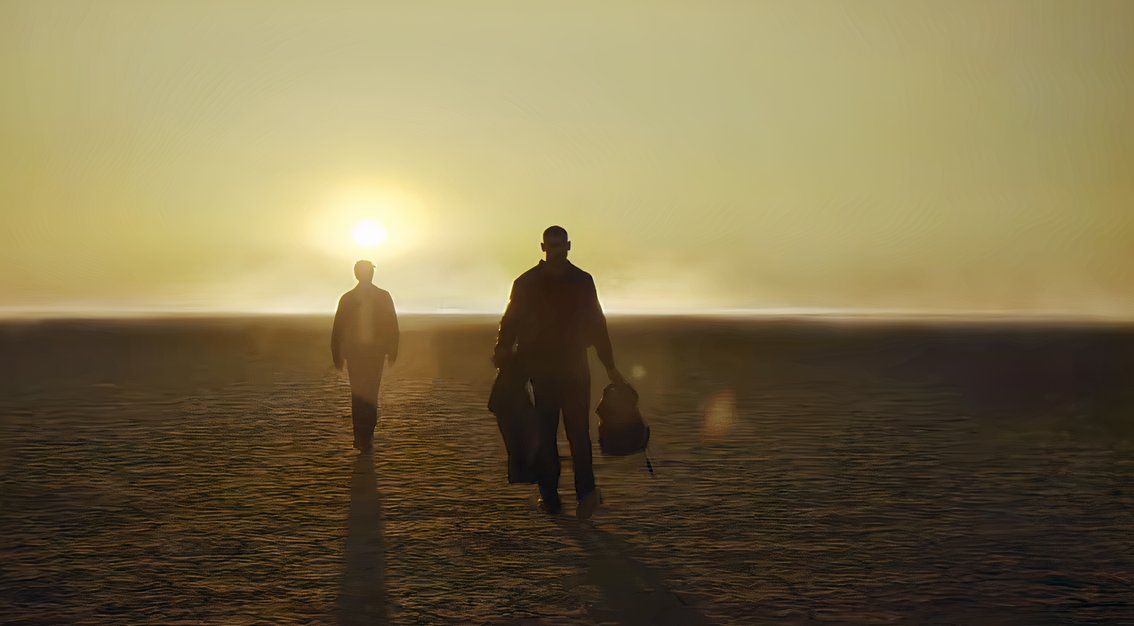
New details in the episode’s ending reveal that Hal’s father gave him the family safe key months before taking his own life, and that Hal’s grandfather also died by suicide. Hal describes this history as pain passed from one generation to the next, casting his own hidden supplies and preparations in a more troubling light. The episode also reunites John Stewart with a copy of Hal’s consciousness and takes them through a portal to the ruined world of Antaan.
The copy, known as the Hal-ogram, helps John open Hal’s storage vault, where they find supplies, a handgun, a canteen and a portal-making black sphere. On Antaan’s barren planet, John recognises the place from memories aliens forced into him earlier in the season; the episode does not name the planet. The penultimate instalment leaves the central mystery unresolved: who killed the real Hal Jordan?
- Hal’s family history of suicide reframes his preparations for death.
- John and the Hal-ogram reach Antaan’s destroyed homeworld.
- The killer of the real Hal remains unknown.
New here? Start with this
This is an episode of the television series "Lanterns" that focuses on the mysterious death of a character named Hal Jordan. The episode reveals that Hal's father gave him a safe key before taking his own life, and that his grandfather also died by suicide, establishing a pattern of suicide across generations of the family. This family history lends troubling significance to the supplies and weapons Hal had secretly accumulated.
John Stewart, a character in the series, encounters a digital reproduction of Hal's consciousness and uses it to access Hal's hidden storage vault. Inside they discover weapons, survival supplies and a mysterious sphere capable of creating portals to other worlds. These discoveries, combined with the revelation of Hal's family history, suggest he was in a deeply troubled state before his death.
John uses the portal sphere to travel to a barren alien planet called Antaan, which is connected to his own past based on memories that were implanted in him during earlier episodes. However, despite the revelations about Hal's family and his secret preparations, the central question of who was actually responsible for Hal's death remains unanswered as the series moves toward its conclusion.
Full account
The seventh episode of HBO's Lanterns brings the investigation into Hal Jordan's death into sharper focus, even as it deepens the enigma surrounding the circumstances. With the narrative now firmly situated in the present day of 2026, the central question has shifted from the identity of the mysterious Manhunter to the far more pressing matter of who murdered the actual Hal Jordan. To progress their inquiry, John Stewart retrieves Hal's Green Lantern ring from his exhumed remains, enabling him to access a digital consciousness backup—the so-called Hal-ogram—that had been stored within the ring since 2006. This penultimate episode delivers substantial dramatic revelations and a striking twist ending, whilst simultaneously addressing a plot thread that arguably required no resolution whatsoever.
The episode's central action revolves around accessing a secure vault that Hal had established in a Rushville storage facility, discovered through leads from the previous instalment. Only Hal himself can authorise its opening, which is precisely why John engineered Hal's burial with his uniform and ring intact. Once the Halogram grants access, the investigators discover surprisingly modest contents: a rucksack containing survival provisions—a firearm and water canteen—along with one of the enigmatic black spheres that have featured throughout the season's narrative arc. This assemblage of items becomes increasingly significant when contextualised within the episode's exploration of family heritage and generational burden.
The episode opens with a 1975 flashback establishing the origins of this safe-deposit concept. Young Hal clashes with his schoolmates over a baseball, an act of stubbornness that prompts his father, Martin Jordan, to intervene physically on his behalf. In the aftermath, Martin bestows upon his son a peculiar key, explaining it as part of a longstanding family custom among military personnel: a 'failsafe' established by Hal's grandfather before wartime service, containing money and sentimental items should the patriarch not return. What initially appears as a touching masculine tradition takes on devastating significance when the narrative reveals Martin had died by suicide several months after giving Hal the key. His accompanying note details unbearable chronic pain and a belief that his family would flourish without him. The episode makes explicit that this pattern of suicide extends back through the Jordan lineage, with Hal's grandfather having similarly taken his own life.
In the present-day investigation, the Halogram's presence permits the rekindling of the distinctive rapport between John Stewart and Hal, albeit with an important variation: this version of Hal represents a younger, less caustic iteration of the character, capable of articulating vulnerabilities his living self would have concealed. The interaction between the two protagonists benefits considerably from this dynamic shift. A particularly affecting sequence features Sheriff Kerry encountering her old connection in this digital form—a scene that showcases the performer's finest work within the series. Despite this emotional authenticity, lingering suspicion surrounds Kerry's potential culpability in Hal's demise, whether as the perpetrator or as someone acting to protect her own interests.
Where outlets differ
Source 1 emphasises the vault contents and the symbolic 'failsafe' inheritance concept; Source 2 focuses more on the loss of Hal's presence and how the Halogram serves as a narrative workaround
Source 1 presents the information as straightforward plot summary; Source 2 offers critical analysis, noting the scene between Kerry and Halogram as Macdonald's strongest performance
Source 2 provides actor names (Jake B. Miller for Martin Jordan) whilst Source 1 does not identify the performer
Source 2 explicitly critiques subplots involving other Rushville residents as lacking dramatic compulsion; Source 1 makes no such editorial judgement
Source 2 references Sinestro parallels in Martin's appearance ('Sinestro-esque mustache') and speculates about Sinestro's role as paternal figure for orphaned Hal; Source 1 does not address this thematic connection
More coverage