What butterfly wings have in common with barbershop poles
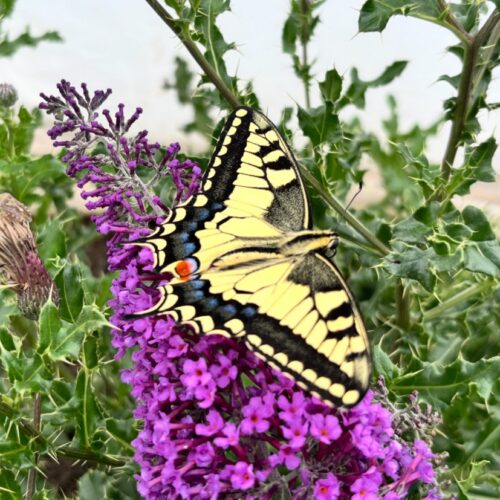
Researchers have discovered that colourful butterfly wing patterns, combined with their flight dynamics, create a visual illusion similar to barbershop pole illusions that makes it difficult for predators to accurately judge the insects' speed and direction. This "motion dazzle" effect works by interfering with predators' visual systems during the critical milliseconds of a predatory attack, causing birds and other predators to miss their targets. The finding helps explain a long-standing puzzle: why brightly patterned butterflies are rarely caught by airborne predators, despite their conspicuous appearance, whereas plainer moths are frequently preyed upon.
The research, published in Nature, builds on broader understanding of motion dazzle as an anti-predator defence used by various animals, including zebras, snakes, lizards, and the humbug damselfish. Butterfly wing patterns are created by structural colour from photonic crystals—arrangements of chitin scales that refract light—rather than pigmentation. Hancock's team combined multiple evidence sources, including high-speed video footage of real butterflies, to test whether these striking patterns serve a defensive function beyond sexual signalling or thermoregulation.
- Butterfly wing patterns create optical illusions that confuse predatory birds' targeting systems
- Motion dazzle effect disrupts predators' ability to judge speed and direction accurately
- Phenomenon parallels zebra stripes and other striped animals' anti-predator defence strategies