‘Shane was rascality personified’: the Pogues on their late frontman, anti-Irish prejudice and the feud over Fairytale of New York
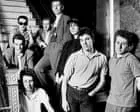
The Pogues' co-founders Spider Stacy and James Fearnley have reflected on their late frontman Shane MacGowan in a Q&A, discussing how the band became known for fierce live performances that drew increasingly larger crowds. They highlighted MacGowan's compassion and awareness of social issues, including his experiences with electroconvulsive therapy as a teenager and his generosity towards homeless people, whilst noting the band may have played a role in softening anti-Irish prejudice that was prevalent in London when Irish immigrant communities faced chronic unemployment and hostility.
The band recalled early gigs at small venues like the Hope & Anchor in 1983 with audiences of 35 people that grew substantially within weeks, and remembered objects ranging from clothing to prosthetic limbs being thrown on stage. They recounted a contentious radio panel discussion in Ireland where traditional musician Noel Hill dismissed their work as a "terrible abortion of words," though other respected Irish musicians including Christy Moore and Paddy Moloney of the Chieftains supported them, with the band responding by naming an instrumental "Planxty Noel Hill" as a pointed rejection of the criticism.
- Pogues' co-founders discuss MacGowan's compassion and the band's role in combating anti-Irish prejudice
- Traditional Irish music establishment rejected them, but other major Irish musicians backed the band
- Band recalled ferocious early live shows and various objects thrown on stage by audiences
New here? Start with this
The Pogues were a British-Irish rock band that emerged in the 1980s, fronted by Shane MacGowan. MacGowan blended punk rock with traditional Irish music in a distinctive way and was noted for his compassion and social awareness. The band became known for fierce live performances that attracted rapidly growing audiences.
In 1980s London, Irish immigrant communities faced significant discrimination, including chronic unemployment and widespread social hostility. The Pogues' rising popularity may have helped soften anti-Irish prejudice during this period by introducing Irish culture to mainstream audiences through their energetic and innovative performances. Their work demonstrated the continued vitality and contemporary relevance of Irish musical traditions.
The band faced criticism from some Irish musicians who viewed their approach as disrespectful to traditional music. Whilst some prominent Irish musicians like Christy Moore and members of the Chieftains supported them, others such as traditional musician Noel Hill dismissed their work. This reflected broader tensions about how Irish cultural identity should be represented and understood.