Scottish soldier’s Normandy grave identified more than 80 years after he went missing
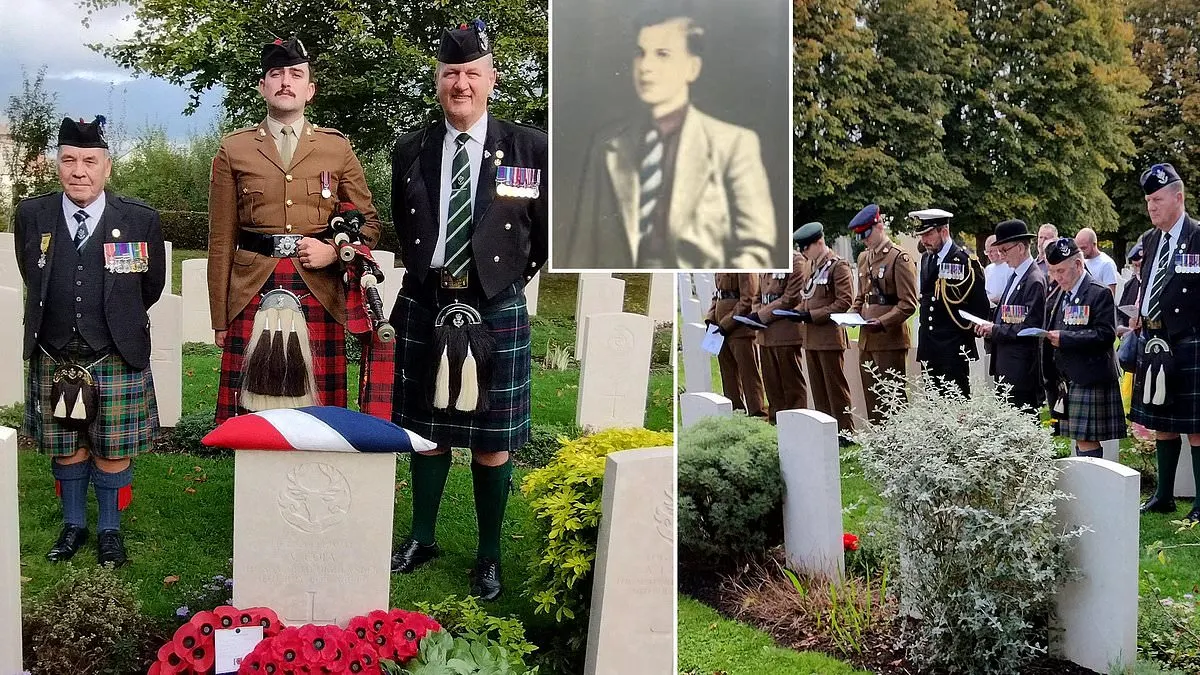
The grave of Private Vincent Coia, a Scottish soldier killed in the Battle of Normandy, has been identified more than 80 years after he went missing. Coia was 19 and had worked as a shop assistant before joining the Seaforth Highlanders; his identification gives his family and others a named grave to visit and remember.
Researchers traced his likely fate through military records and battalion diaries, establishing that he was the only Seaforth Highlander reported missing on 11 June 1944 in the fighting near Hill 112, close to Caen. He was among 35 battalion members killed in that action, and his grave at Bayeux War Cemetery was rededicated with a service attended by military representatives. The same week, five other Second World War soldiers were identified, while DNA work identified two Scottish soldiers who died in the First World War, 108 years ago.
- Vincent Coia’s grave was identified more than 80 years after he went missing.
- The 19-year-old died fighting near Hill 112 in Normandy in 1944.
- His grave at Bayeux War Cemetery has been rededicated in his name.
New here? Start with this
The Battle of Normandy in June 1944 was the start of the Allied invasion of occupied France during the Second World War. It was among the most intense and costly operations of the war, with tens of thousands killed or injured, and in the chaos of battle many soldiers simply disappeared with no record of their fate.
Private Vincent Coia was a 19-year-old Scottish soldier with the Seaforth Highlanders when he went missing on 11 June 1944 near Caen, France. He had previously worked as a shop assistant and was one of 35 battalion members killed in that day's fighting, but unlike the others, what happened to him remained unknown.
Many families of fallen soldiers from the Second World War were left without a grave to visit or a confirmed place of burial, which meant their loss could not be formally remembered in the traditional way. Identifying soldiers who have remained unknown for decades allows families to have a confirmed burial place and ensures that the war dead are remembered by name rather than as anonymous casualties.
Read the full article at the source →
Originally published by Daily Mail as “Honoured at last, the heroic teenage shop boy who fell fighting the Nazis”.