Bandwidth sets a connection’s capacity, while speed reflects current data transfer rate
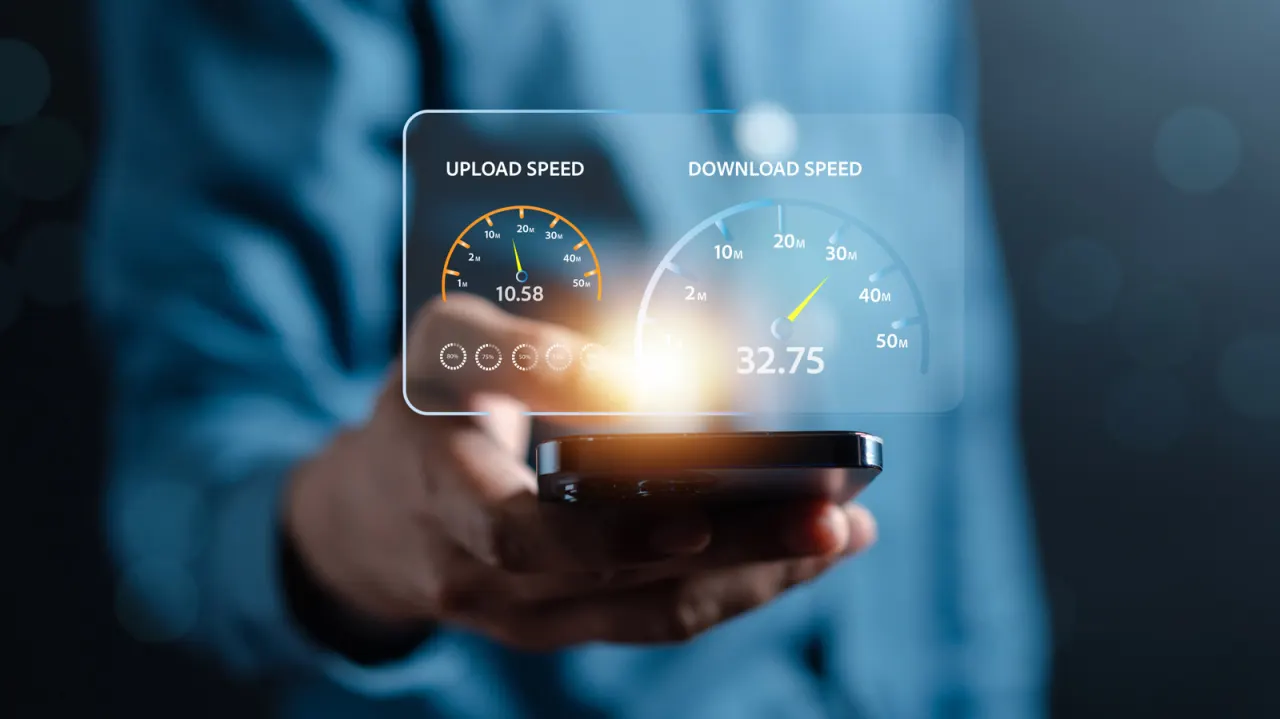
Many people confuse internet speed and bandwidth, though ISPs often use these terms interchangeably. Internet speed refers to the amount of data your network sends and receives at any moment, whilst bandwidth is the theoretical maximum capacity your connection can carry per second. Understanding the difference is crucial for selecting an appropriate internet plan and troubleshooting connection problems.
Your bandwidth acts like a highway with a fixed number of lanes, whilst internet speed is like cars reaching their destination each second. A 100 Mbps bandwidth plan shared by five household members (three streaming 4K video at 25 Mbps each, one video calling at 4 Mbps, and one downloading a game) quickly reaches capacity, causing buffering and freezing. What speed tests actually measure is throughput, the real data reaching your device, which can never exceed bandwidth. Latency, measured in milliseconds (ping), describes how long data takes to travel to a server and back, and is particularly important for gaming and video calls.
- Bandwidth is your plan's maximum capacity; speed is actual data transfer rate.
- Multiple devices streaming, calling and downloading simultaneously exhaust bandwidth limits.
- Latency (ping) affects real-time applications and is separate from speed.
New here? Start with this
Many people use "internet speed" and "bandwidth" interchangeably, but they describe different aspects of your connection. Bandwidth is the theoretical maximum amount of data your connection can carry each second, whilst speed refers to how much data is actually being transmitted at any given moment. Understanding the difference is important for anyone choosing an internet plan or dealing with connection problems.
A useful way to think about it is imagining bandwidth as a motorway with a fixed number of lanes and speed as how many cars are travelling down it each second. In many households, multiple devices streaming video, downloading files or video calling simultaneously can push your connection to its bandwidth limit. When this happens, your actual speed drops significantly, leading to the buffering and freezing that frustrates users.
Another important measure is throughput, which is the actual speed of data reaching your device and can never exceed your available bandwidth. Latency, measured in milliseconds, describes how long data takes to travel to a server and back to you, and this matters significantly for gaming and video calls where both capacity and responsiveness are crucial.
Read the full article at the source →
Originally published by Engadget as “Internet speeds vs. bandwidth: What’s the difference?”.