Trump names intelligence chief Jay Clayton as new White House AI czar
Developing story first seen 5 hours ago
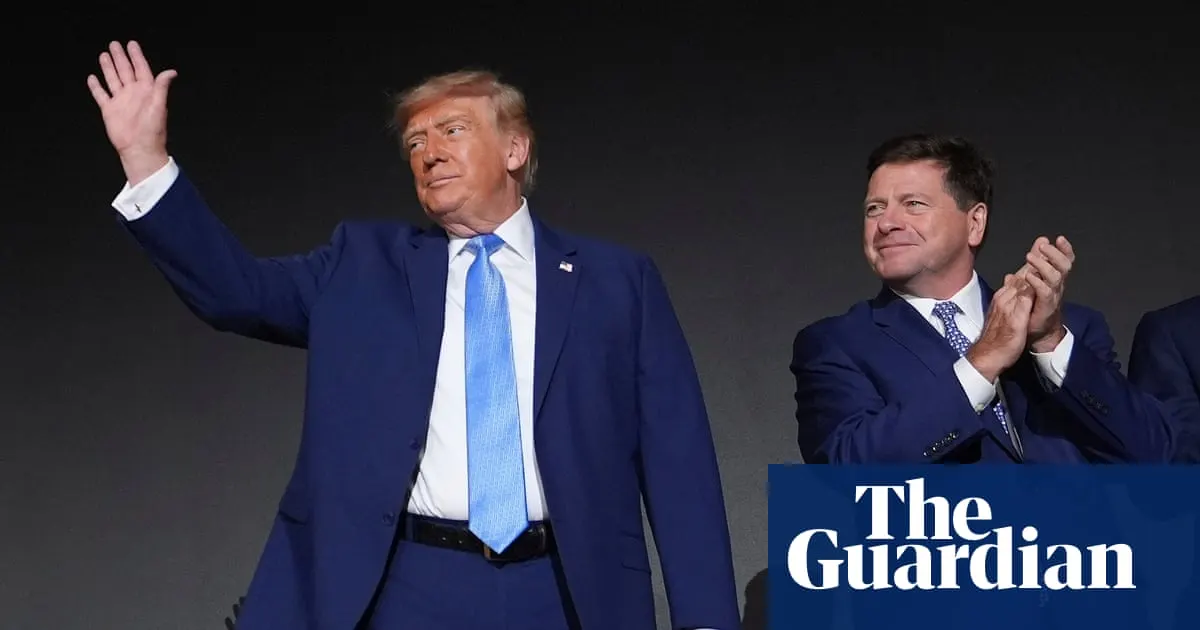
Donald Trump has named national intelligence director Jay Clayton as the White House’s new AI czar, adding oversight of artificial intelligence to his existing role. Clayton will lead a body Trump calls the “Super Intelligence Force”, which is intended to coordinate the federal government’s engagement with groups affected by AI.
At his Senate confirmation hearing, Clayton called AI both a “gamechanger” and “a threat”, saying officials should get to grips with technologies that are both an opportunity and a risk. Trump says continued AI development is important to competing with China, while industry leaders and others have raised concerns about safety and the pace of development. Clayton previously led the Securities and Exchange Commission and served as Manhattan’s top federal prosecutor; venture capitalist David Sacks held the AI czar role until March 2026.
- Jay Clayton will combine AI oversight with his intelligence director role.
- He is to lead Trump’s “Super Intelligence Force”.
- Trump says AI development matters in the competition with China.
New here? Start with this
Artificial intelligence is a rapidly developing technology that is increasingly used across society and the economy. Governments worldwide are grappling with how to regulate and engage with AI, balancing its potential benefits against concerns about safety and the pace of technological change.
The US government has created a new White House body called the "Super Intelligence Force" to coordinate how federal agencies work with artificial intelligence. The body will engage with AI companies, consumer groups, public interest organisations and others as the administration shapes its approach to AI policy.
Jay Clayton, appointed to head the new body, is the current national intelligence director and formerly led the US Securities and Exchange Commission and served as Manhattan's top federal prosecutor. He brings extensive experience in financial regulation, law enforcement and intelligence to the role of coordinating government AI policy.
Both sides, in good faith
The strongest fair case each way — we don't pick a winner.
The case for
Clayton brings extensive experience across national security, financial regulation, and federal prosecution, equipping him to manage the complex coordination whole-of-government AI policy requires. The administration's framing of AI as both a strategic imperative (particularly regarding competition with China) and a genuine risk meriting careful management reflects defensible priorities. The 'Super Intelligence Force' model of engaging diverse stakeholders—companies, public interest groups, infrastructure providers—suggests an effort toward balanced consideration of various perspectives in governing this consequential technology.
The case against
Appointing an intelligence professional to lead AI governance risks subordinating technical safety and civil liberties concerns to national security priorities, potentially favouring surveillance and strategic advantage over the robust safety oversight that leading AI researchers argue is essential. Critics worry that law enforcement and national security expertise, whilst valuable in other contexts, may not adequately prioritise alignment and existential risk concerns that technologists identify as central to responsible AI development. Moreover, the rapid turnover in this role—Sacks completed only 18 months before hitting employment limits—suggests structural instability that undermines the sustained leadership safety-focused governance demands.
Full account
President Trump has selected Jay Clayton, who holds the position of director of national intelligence, to head a newly established federal initiative addressing artificial intelligence policy, branded as the 'Super Intelligence Force.' The designation, announced through Trump's Truth Social account on Sunday, grants Clayton responsibility for orchestrating the federal government's approach to AI matters and coordinating with private companies, advocacy groups, and other stakeholders.
Clayton brings significant experience in financial regulation and law enforcement. He led the Securities and Exchange Commission throughout Trump's earlier administration and previously directed prosecutorial operations in Manhattan. In his recent Senate confirmation hearing for the intelligence director role, Clayton described artificial intelligence as presenting both substantial opportunities and dangers, emphasising that policymakers must adequately comprehend challenges that combine growth potential with risk.
Under the Super Intelligence Force framework, federal departments will work with a range of external partners including consumer advocates, faith organisations, operators of essential services and technology enterprises. Trump has assembled a leadership group comprising Andrew Ferguson from the Federal Trade Commission, Emil Michael of the Department of Defence's research and engineering division, and Scott Kupor of the Office of Personnel Management, with Clayton as head. The unit has been tasked with completing an assessment of artificial intelligence risks and benefits within four months, with findings delivered to Trump and his chief of staff.
This appointment succeeds Trump's earlier January initiative establishing an AI and cryptocurrency czar position, which venture capitalist David Sacks held for roughly 15 months. The appointment underscores Trump's determination to preserve American technological leadership relative to China whilst engaging with industry concerns about rapid AI advancement. The administration recently signed an accord with six technology executives establishing frameworks for monitoring how AI systems are deployed and addressing safety considerations.
Where outlets differ
Source 1 highlights Clayton's Senate testimony characterising AI as both opportunity and threat, whereas Source 2 does not reference this hearing
Source 1 discusses the previous AI czar role held by David Sacks until March 2026, whilst Source 2 omits this transition
Source 2 identifies specific team members appointed to lead the force, information not named in Source 1
Source 2 reports Trump polled followers about rebranding artificial intelligence terminology, a detail absent from Source 1
Source 1 emphasises Trump's focus on competing with China in AI development, whilst Source 2 highlights industry calls for slower AI deployment