Trump Appoints Intelligence Director Jay Clayton to Lead New White House AI Coordination Office
Developing story first seen 1 hour ago
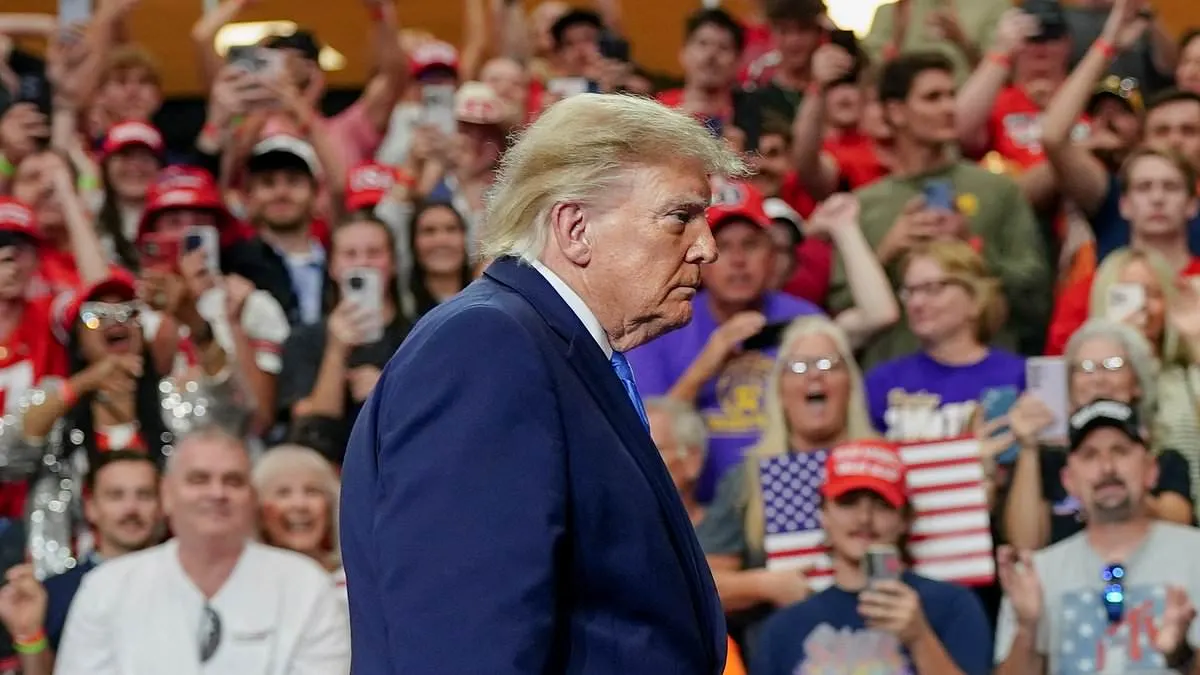
Donald Trump has appointed Director of National Intelligence Jay Clayton to lead a new White House AI coordination office, adding the role to his intelligence post. The appointment puts a senior official with experience in federal law enforcement and financial regulation in charge of coordinating the government’s engagement with AI as the technology is seen as both an opportunity and a potential threat.
Trump called the new body the “Super Intelligence Force” and said it would engage with consumers, public interest and religious groups, critical infrastructure providers and AI companies. The move follows a September announcement of an AI “Force” and comes amid industry warnings about rapid development and safety risks; Trump has argued that advancing AI is vital to competing with China. Clayton’s predecessor in the AI and cryptocurrency czar role, David Sacks, left it in March 2026 after reaching his employment limit as a special government employee.
- Jay Clayton will lead the White House’s new AI coordination office.
- The office is tasked with coordinating engagement across government and society.
- Trump has prioritised AI competition while facing concerns about safety.
New here? Start with this
Artificial intelligence refers to computer systems designed to perform tasks that normally require human thinking, such as learning from data or recognising patterns. Governments around the world regard AI as strategically important because nations that lead in its development may gain significant economic and security advantages. However, officials also worry about potential harms from AI and believe coordinated policy-making is necessary to manage these risks.
The Trump administration has created a new White House office to coordinate how federal government agencies approach artificial intelligence. This body will work to ensure that different departments and agencies pursue consistent AI policies and strategies. The office will also liaise with technology companies, consumer organisations, and other groups interested in AI's development.
The new office is headed by Jay Clayton, who serves as Director of National Intelligence. Placing a senior national security official in charge underlines that the administration views AI as an issue comparable in importance to traditional intelligence matters. The appointment suggests the government intends to treat AI development and governance as a high-priority concern requiring leadership from experienced policy-makers.
Both sides, in good faith
The strongest fair case each way — we don't pick a winner.
The case for
Establishing a dedicated White House AI coordination office is sound policy because the technology affects multiple government domains—national security, competitiveness, and public welfare—requiring coherent federal strategy. The U.S. faces genuine technological competition, making government coordination strategically important. The intelligence director's involvement reflects AI's legitimate security dimensions. Engaging industry, civil society, and consumers ensures policy is informed by expertise and diverse interests whilst supporting American innovation.
The case against
A centralised White House office risks introducing bureaucratic friction that typically impedes innovation, which flourishes through competition and decentralisation. Individual agencies should develop AI expertise suited to their specific missions rather than routing decisions through a central body. Intelligence community leadership raises justified concerns that military and security priorities will dominate over civil liberties and privacy protections. Market-driven development with light regulatory oversight and voluntary industry standards better protect both innovation and public welfare.
Full account
Donald Trump has appointed Jay Clayton, the director of national intelligence, to lead a newly established White House office focused on co-ordinating the country's artificial intelligence policy. Announced via social media on Sunday, the initiative is branded as the 'Super Intelligence Force', tasked with overseeing federal engagement with the technology across multiple sectors.
Clayton will head a multi-agency task force including the chair of the Federal Trade Commission, Andrew Ferguson; the Pentagon's chief technology officer, Emil Michael; and the director of the Office of Personnel Management, Scott Kupor. The group reports directly to Trump and White House Chief of Staff Susie Wiles, with responsibilities encompassing co-ordination with consumers, public interest groups, religious organisations, critical infrastructure operators and artificial intelligence companies.
The appointment reflects Trump's rebranding initiative, which designates artificial intelligence as 'super intelligence' in government communications. This terminology shift was announced following a White House summit with technology executives on Tuesday, during which the president argued the new terminology more accurately reflects the technology's nature. Tech entrepreneur Elon Musk has since endorsed the linguistic change, rebranding SpaceX's own AI division accordingly.
Clayton, who previously chaired the Securities and Exchange Commission under Trump and served as the chief federal prosecutor in Manhattan, acknowledged during his Senate confirmation hearing that artificial intelligence presents both significant opportunity and considerable risk. He characterised the situation as requiring governmental engagement: 'when something's both an opportunity and a threat, you better get your arms around it.' The appointment succeeds David Sacks, a venture capitalist who held the AI and cryptocurrency czar position until March 2026, when employment restrictions limited his tenure. Trump had previously identified Clayton as a suitable candidate in September, describing him as 'a good man'.
Where outlets differ
Source 1 emphasises Trump's strategic competition with China as the rationale for AI leadership, whilst Source 2 concentrates on the administrative appointment and Clayton's professional background
Source 1 highlights warnings from AI researchers and existential concerns, whilst Source 2 focuses on Clayton's pragmatic characterisation of AI as both opportunity and threat
Source 1 names specific technology executives invited to the summit (Zuckerberg, Huang, Amodei), whilst Source 2 states Trump signed an accord with six unnamed executives
Source 1 details all four task force members, whilst Source 2 focuses primarily on Clayton's appointment without naming the other members
Source 2 provides context on the previous AI czar position and David Sacks' tenure until March 2026, whilst Source 1 does not address the prior arrangement
Coverage
- Daily Mail — Trump appoints officials to coordinate US government engagement with AI companies
- The Guardian — Trump names intelligence chief Jay Clayton as new White House AI czar