Badenoch Charts New Conservative Course with Policy Overhaul at Birmingham Conference
Developed over time first seen 2 hours ago
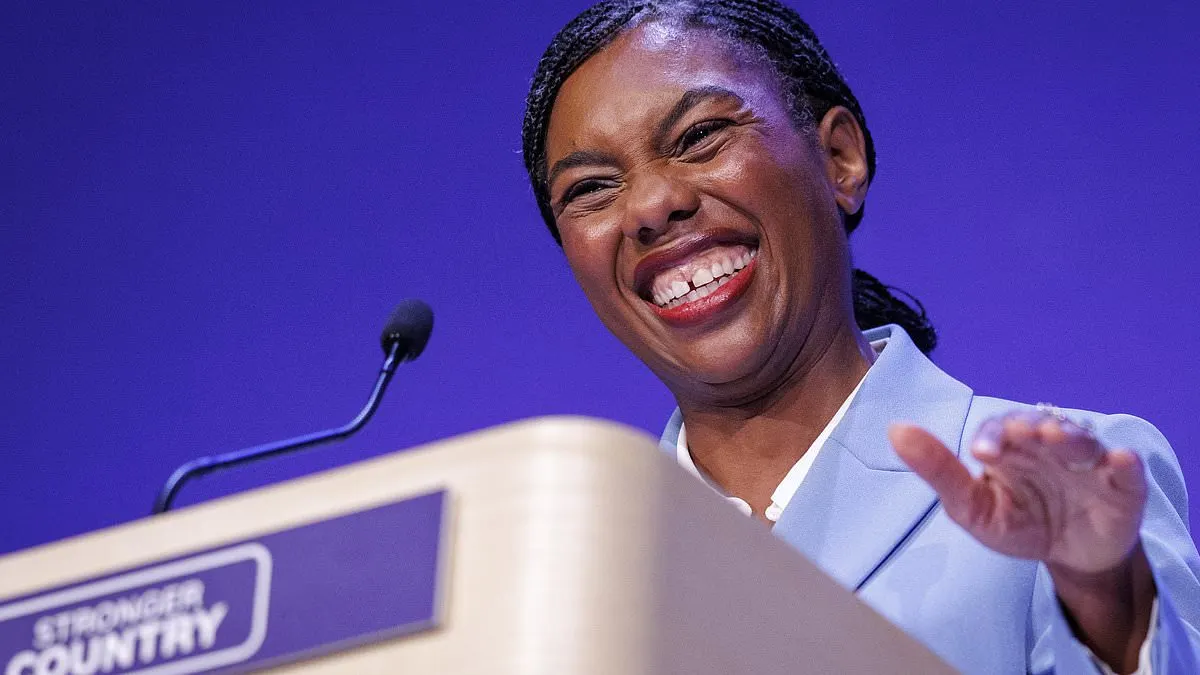
Conservative leader Kemi Badenoch addressed the party's annual conference with an ambitious policy platform aimed at positioning her party for a possible return to government within the next year. Drawing on strategic principles from Margaret Thatcher's 1970s leadership, Badenoch articulated an agenda centred on economic management, public safety, and migration control, all framed as a return to "common sense" governance that responds to voter priorities.
Under Badenoch's stewardship, the Conservative Party has regained internal confidence following recent electoral defeat, though the route back to power presents substantial challenges. The party must broaden its electoral appeal and build unity within the centre-right political spectrum to capitalise on improved morale. As part of this repositioning, Conservatives have put forward commitments on fiscal policy and law enforcement, whilst also strengthening the party's senior team in preparation for a potential near-term election.
- Badenoch launches comprehensive Conservative policy reset focused on economy, security, and border management
- Party targets voter expansion and centre-right unity ahead of possible early election
- Badenoch's leadership has restored party confidence but significant electoral hurdles remain
New here? Start with this
The Conservative Party, currently in opposition after losing recent elections to Labour, has presented a new policy platform under its leader Kemi Badenoch. At the party's annual conference in Birmingham, Badenoch outlined plans focused on economic management, public safety, and migration control, which she described as a return to "common sense" governance based on voter priorities.
The Conservatives suffered a significant electoral defeat, but have recently rebuilt internal unity and now see potential for a return to government within the next year. Badenoch's approach draws strategic principles from Margaret Thatcher's 1970s leadership, reflecting an attempt to reconnect with voter concerns and strengthen the party's broader electoral appeal.
For these policies to succeed, the Conservative Party must broaden its appeal beyond current supporters and build wider unity within the centre-right political spectrum. The coming period will be crucial to whether these proposals resonate with voters and whether the party can translate its improved morale into electoral gains.
Full account
Kemi Badenoch used the opening of the Conservative Party conference in Birmingham to set out a new direction for the party, publishing a 95-page document, The Right Way, that calls for a return to what she describes as ‘common sense’ Conservative principles. She told activists the party could win the next general election if it rebuilt its approach to the economy, law and order and border control. Conservative leaders are preparing for the possibility of an early election, although Prime Minister Andy Burnham has said he does not intend to call one before 2029.
Badenoch’s account of the party’s recent record was unusually critical. She said the last Conservative government had allowed taxes and immigration to rise and had committed to net zero without a workable plan. She argued that the party had failed when it departed from its own principles. In interviews, she described herself as an ‘old-school Conservative’ who wanted work and effort to be rewarded, while defending proposals to reduce foreign aid and benefits spending.
The opening policy announcements included a pledge to create 50,000 prison places and an expansion of eligibility for free childcare. Badenoch said the Conservatives would retain the pension triple lock, despite calls from some senior party figures to reconsider it. The party also signalled that it might abolish inheritance tax. Shadow Chancellor Andrew Griffith was due to present plans to reduce regulation, change planning rules and remove major environmental bodies. Conservatives claimed the planning changes could cut £50,000 from the price of a new home; that figure is a party estimate.
Badenoch linked her spending priorities to defence, challenging Burnham’s suggestion that higher defence expenditure need not affect benefit recipients. Her attempt to sharpen the Conservatives’ identity comes amid difficult polling and competition from Reform UK. The conference proposals offer an outline of the party’s intended course, but several measures remain to be detailed, including how they would be funded and implemented.
Where outlets differ
Source 1 reports the conference announcements, Badenoch’s criticism of the previous Conservative government and the possibility of an early election. Source 2 is an editorial that praises her leadership and argues for her political approach; its assessments of Labour, Reform UK and the Greens are opinion rather than established facts. It gives fewer details of the Birmingham proposals and discusses the Green Party conference, which is separate from the main story.
Coverage
- Daily Mail — Badenoch sets out Conservative policy reset at party conference
- Daily Mail — Badenoch lifts Conservative morale but party faces steep electoral challenge
Art Business Culture Economy Elections Government Politics World