Anti-migrant protesters scuffle with police after nearly 150 small boat arrivals use ‘new route’ to land at historic naval port
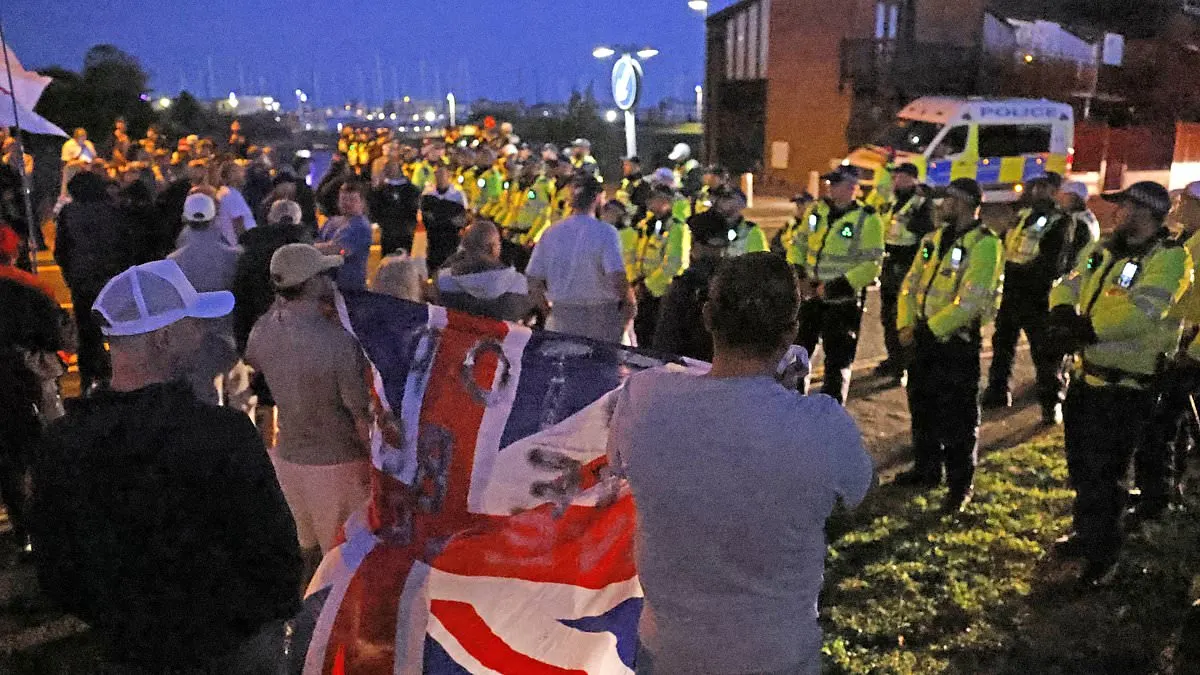
Nearly 150 migrants landed on Hampshire's coast on Sunday after crossing the Channel in a small boat from Normandy, using what officials described as a "new route". Around 300 anti-migrant protesters gathered near Haslar Marina in Gosport, with scuffles erupting between demonstrators and police, flares being set off, and chants of "send them back". The incident reflects escalating tensions surrounding small boat arrivals to the south coast.
The Home Office said 149 migrants were believed to be on board and will be processed in Kent following health, security and biometric checks. This marks the third such departure from further west along the French coast within a month, representing a shift in crossing patterns as longer journeys mean boats can spend extended periods at sea before reaching unpredictable landing points. Police recently dealt with a similar incident in Gosport when a dinghy carrying 51 people eventually reached Dover after more than 30 hours at sea.
- 149 migrants arrived in Hampshire on Sunday via small boat from Normandy.
- Anti-migrant protesters clashed with police at Gosport, setting off flares.
- Crossings from further west along French coast represent emerging new trend.
New here? Start with this
Migrants have been attempting to reach the UK by crossing the English Channel in small boats, often departing from French ports like Normandy. These journeys have increased significantly in recent years and are extremely dangerous, with dozens or hundreds attempting crossings regularly. The phenomenon has become highly contentious in British public debate.
When boats arrive on UK shores, the Home Office intercepts the migrants and conducts health, security and biometric checks before processing them through the immigration system. The arrivals have prompted public backlash, with anti-migrant protesters gathering at landing sites, sometimes leading to confrontations with police. Those opposing these arrivals have become increasingly visible in such incidents.
The issue reflects fundamental disagreements about UK immigration policy, border security and how to respond to people seeking to enter the country by sea. Crossing patterns have shifted over time, meaning arrival locations and timing are unpredictable, complicating efforts by authorities to manage the situation. These tensions between migration, public opposition and official response remain a significant political issue in the UK.
Both sides, in good faith
The strongest fair case each way — we don't pick a winner.
The case for
Those arriving are exercising their legal right to seek asylum from persecution or hardship, and the appropriate response is orderly processing through established legal channels with proper security checks—which is precisely what authorities are doing. Large anti-migrant protests and clashes with police create public disorder rather than addressing policy concerns, undermining the rule of law. Democratic societies should protect vulnerable people through lawful procedures and serious policy discourse rather than street-level confrontations.
The case against
The UK faces legitimate questions about whether it can sustainably process the scale of small boat arrivals given existing pressures on housing, public services and infrastructure. Citizens have the democratic right to express concerns about border control and immigration policy; established legal asylum routes exist, and small boat crossings may be encouraged by the perception that reaching UK shores leads to processing and settlement. Nations retain the fundamental right to control their borders and manage immigration through democratic processes, and public concerns deserve serious engagement rather than dismissal.