‘Why would anyone start a business in the UK now?’ Jeremy Clarkson hammers Labour in surprise appearance at Tory conference
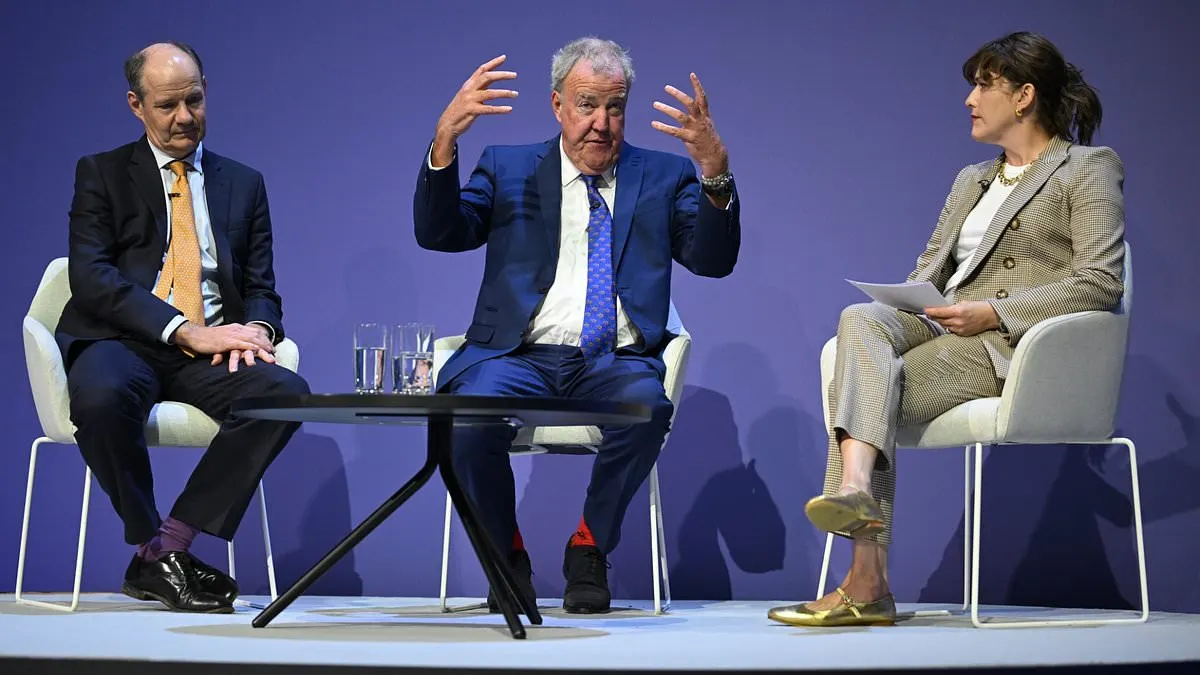
Jeremy Clarkson made a surprise appearance at the Conservative Party conference in Birmingham, where he publicly criticized the Labour government's policies towards farming and small business. Speaking alongside the shadow environment secretary, Clarkson argued that the government's inheritance tax changes and regulatory burdens make starting new businesses in Britain unviable, using his own farm's struggles as evidence. The appearance underscores the Conservatives' efforts to gain farming voters' support and highlights the heated debate over agricultural taxation.
Clarkson revealed that his Oxfordshire farm produced only "three ounces of hen food" this year despite working hard throughout the seasons, whilst rising costs for his Farmers' Dog pub and other business ventures continue to mount. He also criticized planning officers and disclosed that Environment Secretary Angela Eagle had postponed a meeting with his land agent three times. As a vocal supporter of farmers who attended protests against the inheritance tax changes last year, Clarkson noted that he remains fortunate to have alternative income streams through television and newspaper work, unlike ordinary farmers facing relentless pressures from weather, energy costs and taxation.
- Clarkson appears at Tory conference, criticises Labour's farming and business policies
- His Oxfordshire farm produced barely any harvest this difficult year
- He questions whether starting businesses in UK remains viable anymore
New here? Start with this
Jeremy Clarkson is a television presenter who owns farms in England and has become a prominent voice in debates about farming policy. He is known for his media work and has increasingly positioned himself as an advocate for farmers facing economic and regulatory pressures. Farming issues have become increasingly prominent in national political discussion.
The core issue is inheritance tax, which applies when farmers pass land and assets to the next generation, and this has raised concerns among farming families about farm viability. Farm businesses also contend with rising costs and regulatory requirements. These challenges have created a political divide between the Labour government and the Conservative Party, each seeking support from farming voters.
Farming represents an important political constituency, and both major parties are competing for farmers' support through different policy positions. Public campaigning by farming representatives and advocates has raised the profile of agricultural issues in recent years. Public figures with connections to farming can therefore wield considerable influence in these political debates.
Both sides, in good faith
The strongest fair case each way — we don't pick a winner.
The case for
Inheritance tax changes and regulatory accumulation combine with rising input costs to make farming and small businesses genuinely unviable in Britain compared to competitor nations. For agriculture especially, where returns depend on long-term planning and margins are thin, this policy environment forces consolidation into corporate ownership rather than family or entrepreneurial enterprise. The government's policies prioritise other objectives over the economic viability of productive sectors that rural communities depend upon.
The case against
Inheritance tax and regulation serve important public purposes—funding public services and protecting environmental standards, food safety, and workers' welfare. These are targeted measures: the inheritance tax applies primarily to substantial estates, and regulations reflect legitimate societal values about sustainability and workers' rights. Comparable developed nations maintain similar policies whilst remaining economically competitive, suggesting the challenge is calibrating policy efficiently rather than abandoning these essential tools.