Israel prepared to intercept Flydubai jet after alleged hijacking attempt
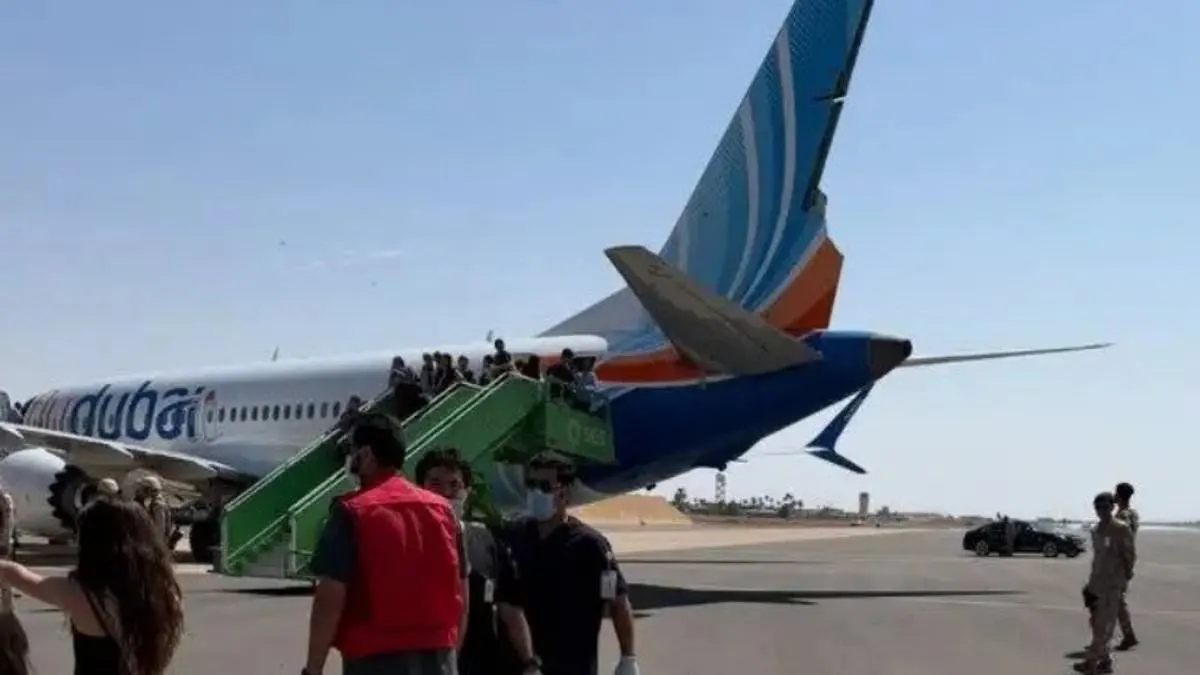
Israel confirmed it was prepared to shoot down a Flydubai flight from Dubai to Tel Aviv after its Omani co-pilot attacked the captain with an emergency axe in an alleged attempted hijacking. The co-pilot, reportedly named Hamam al-Hammami, was believed to be a radicalised extremist who intended to crash the plane into Ben Gurion Airport or a tower block in Tel Aviv. Under Israeli security protocol, only Prime Minister Benjamin Netanyahu could have authorised shooting down the aircraft, which carried over 150 Israeli citizens and posed an unprecedented security risk.
The captain, Smit Machchhar, fought back after being attacked and managed to unlock the cockpit door after the plane descended 14,000 feet in just 29 seconds. Passengers and crew members overpowered the co-pilot, preventing the intended crash and allowing the aircraft to land safely in Tabuk, Saudi Arabia. The Israeli Air Force initiated standard procedures by scrambling fighter jets and closing airspace, though the jets were recalled once the plane turned away from Israeli territory, with al-Hammami remaining in the UAE for questioning.
- Israel prepared to shoot down hijacked flight to prevent potential 9/11-style attack on Tel Aviv.
- Omani co-pilot attacked captain with emergency axe in attempted hijacking but crew overpowered him.
- Aircraft with 150 Israeli citizens aboard landed safely in Saudi Arabia after heroic crew defence.
New here? Start with this
A Flydubai aircraft flying from Dubai to Tel Aviv experienced a serious security incident when the co-pilot allegedly attacked the captain in the cockpit using an emergency axe. The co-pilot was believed to be attempting to seize control and crash the plane into Tel Aviv. Israel confirmed that military measures, including fighter jets, were prepared in case the situation could not be resolved safely.
The captain, Smit Machchhar, fought back and alerted other crew members who came to assist him. Passengers and crew members then overpowered the co-pilot, preventing him from achieving his alleged objective. The aircraft diverted to Saudi Arabia, where it landed safely and the co-pilot was detained.
The incident raises important questions about how airlines recruit, screen and monitor their crews, given the access and responsibility such roles carry. It also reflects the security environment that shapes aviation operations in regions facing heightened risks. These exceptionally rare incidents demonstrate how authorities may deploy extraordinary security measures to prevent aircraft being used as weapons.
Both sides, in good faith
The strongest fair case each way — we don't pick a winner.
The case for
Israel faces genuine and severe security threats, and a radicalized extremist who has breached the flight deck with a weapon and declared intent to crash into a populated city represents an imminent, uncontrollable danger. Once a hijacker takes control of an aircraft, the situation becomes unpredictable and potentially unrecoverable; civilian passengers and crew cannot be relied upon to maintain control indefinitely. Preparing lethal military responses reflects responsible security stewardship when ground civilians cannot defend themselves against a high-speed aircraft attack.
The case against
Once crew and passengers had demonstrably subdued the co-pilot, the immediate threat was contained, making shooting down the aircraft disproportionate and counterproductive. Using lethal force would have killed over 150 civilians, including Israeli citizens, to prevent a threat that had already been neutralized through civilian action. Proportionality and international humanitarian law require exhausting less lethal options and avoiding mass casualties when the actual danger has been resolved.
Business Culture Markets Middle East Travel World
Read the full article at the source →
Originally published by Daily Mail as “Israel ‘was prepared to shoot down hijacked Flydubai jet’ to prevent an ‘Israeli 9/11’”.