Cornell Sexual Assault Case Escalates as Protesters Vandalize Campus, Defense Challenges Investigator’s Impartiality
Developed over time first seen 1 hour ago
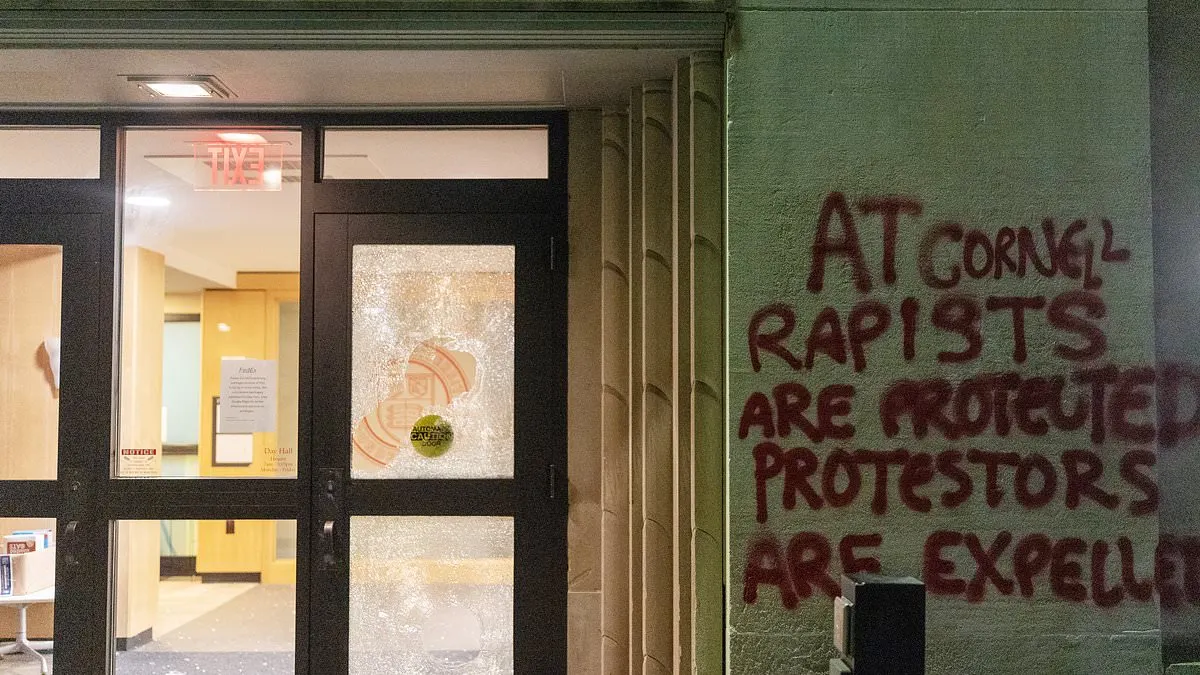
Cornell University's administration building was vandalized overnight by protesters expressing anger over the institution's response to a 2024 gang rape case involving seven fraternity members. The incident, marked by red paint damage and broken windows alongside messages criticizing the university, reflects mounting pressure on the institution to demonstrate stronger accountability and support for the alleged victim.
The situation has grown more contentious as a defense lawyer for one of the accused fraternity members called for New York Attorney General Letitia James to recuse herself from the investigation. The attorney alleges that James's public Facebook posts expressing support for the alleged victim and presenting the allegations as established fact have undermined her impartiality and compromised the integrity of the probe.
- Cornell building vandalized by protesters over university's handling of 2024 fraternity sexual assault allegations
- Defense attorney seeks recusal of AG Letitia James, claiming her public social media statements supporting the alleged victim compromise investigation impartiality
- Case highlights competing concerns around survivor advocacy and fair investigation procedures
New here? Start with this
A gang rape case at Cornell University involving seven fraternity members has been under investigation since 2024 by New York State authorities. The alleged victim and questions about university accountability in handling sexual assault allegations have become central to broader discussions about institutional responsibility.
Campus protests have recently intensified, with demonstrators vandalising Cornell's administration building to express frustration with the university's response to the case. The vandalism reflects anger among some students and staff over concerns regarding the institution's handling of the matter and victim support.
The investigation has become more contested after a defence lawyer for one of the accused fraternity members asked New York Attorney General Letitia James to recuse herself from the investigation. The lawyer alleges that James's public social media posts expressing support for the alleged victim undermine her impartiality in the case.
Both sides, in good faith
The strongest fair case each way — we don't pick a winner.
The case for
The Attorney General's role is fundamentally to champion victims of crime and institutional accountability, particularly in cases where universities have demonstrably failed survivors of sexual assault. Expressing support for an alleged victim does not undermine investigative capacity or prevent thorough examination of evidence; rather, it reflects appropriate commitment to taking sexual violence seriously. The defence's recusal request may represent tactical manoeuvring to undermine an investigation into serious allegations, especially given documented patterns of universities failing to hold perpetrators accountable.
The case against
A fair and credible investigation requires the lead investigator to remain impartial and avoid prejudging the case before evidence is fully examined. Public statements declaring allegations as established fact or expressing predetermined views about victim credibility create a reasonable appearance of bias that compromises the investigation's integrity. Due process principles demand that accused individuals receive investigation by officials who have not already publicly committed to their guilt, regardless of allegation seriousness; if public statements have suggested conclusions before investigation is complete, recusal protects both procedural integrity and the validity of eventual findings.
Full account
Cornell University is investigating damage to Day Hall, its main administration building, after red graffiti appeared on its walls and a glass door was broken. Messages painted on the building criticised the university’s handling of sexual assault complaints. The damage came ahead of a planned ‘Justice for Survivors’ demonstration by student groups calling for changes to Cornell’s complaint process and further action over allegations arising from a party at the Chi Phi fraternity house. University spokesperson Kyle Kimball said the concerns behind the protest deserved to be heard, but that damaging property was not the answer. He said Cornell would investigate under university policy and applicable law.
The allegations concern an October 2024 party at which a student, identified in court documents as Jane Doe, says multiple men sexually assaulted her after she was pressured to drink alcohol and take drugs. She has sued Cornell, seven former students, the fraternity and others. Her lawsuit alleges that she became incapacitated and that a message was sent inviting other fraternity members to participate. Lawyers for two of the former students have denied that their clients took part in a sexual assault, while some accused students told Cornell investigators that the sexual activity was consensual. The allegations remain contested, and no criminal charges have been filed.
The case has also prompted a dispute over who should lead the renewed criminal investigation. After the Tompkins County district attorney declined to prosecute, New York Governor Kathy Hochul appointed Attorney General Letitia James as special prosecutor. Andrew Miltenberg, a lawyer for Gillio Lopes, one of the men named in the lawsuit, has called for James to step aside. Before her appointment, James wrote on Facebook that what the woman had been forced to endure was ‘horrific and unacceptable’ and expressed support for survivors. Miltenberg argues that the wording appeared to accept the allegations as fact before an investigation. He has proposed that a senior prosecutor who has made no public comment on the case take charge instead. Asked about the post at a news conference, James declined to comment on it.
The developments have put two questions in public view: how Cornell responded to the student’s report and whether the new investigation will be seen as impartial by all involved. The student says she told campus police in November 2024 that she was certain she had been raped; the absence of charges and the university’s handling of the matter have since drawn wider scrutiny. The planned protest seeks changes to Cornell’s procedures, while the damage to Day Hall is the subject of a separate university investigation. Miltenberg’s objection concerns James’s earlier public statement. Neither the civil allegations nor his claim that she cannot lead a fair investigation has been resolved in the material provided.
Where outlets differ
Source 1 concentrates on the damage to Day Hall, the planned student protest and criticism of Cornell’s response to the assault allegations. Source 2 concentrates on the defence lawyer’s challenge to Letitia James’s impartiality and the decision to appoint her after the local district attorney declined to prosecute. The reports address different developments rather than giving conflicting accounts of the same event.