Cornell teachers say they’re barely able to manage classes attended by two students who remain at college after being sued by Jane Doe in gang rape lawsuit
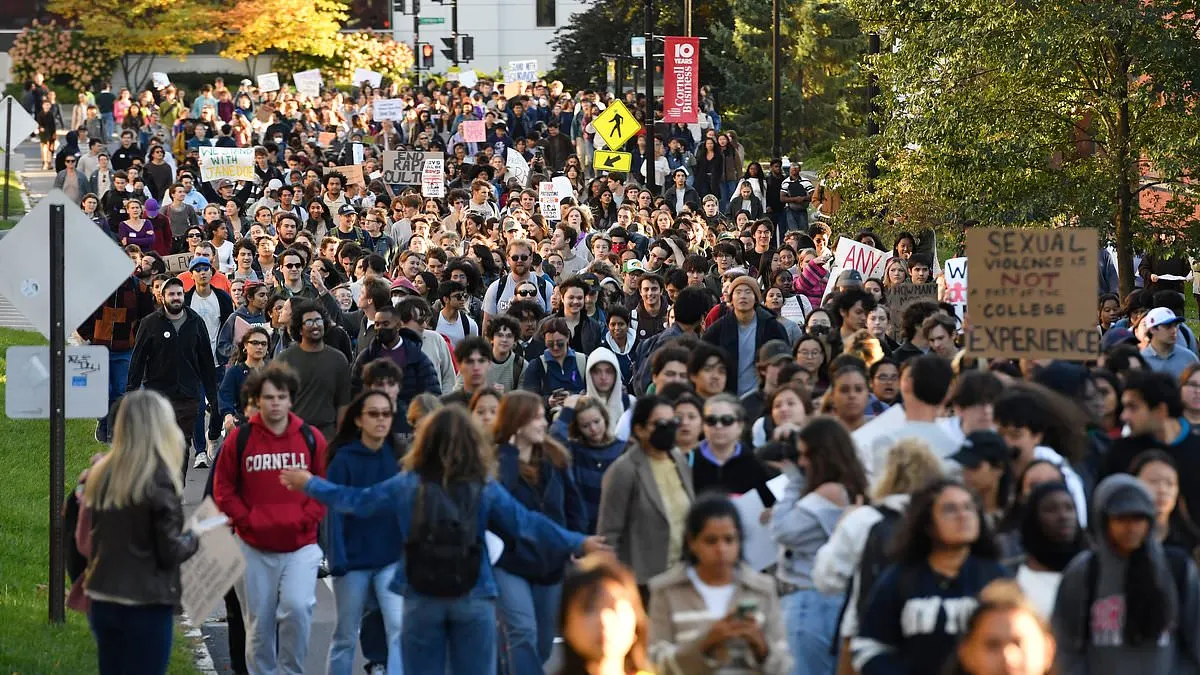
Cornell instructors say they are struggling to manage classes attended by two students who remain enrolled after being accused in a lawsuit of sexual assault. The case has prompted campus protests and a planned faculty senate no-confidence vote, putting renewed scrutiny on how the university handled the allegations.
The lawsuit, filed in September, alleges that seven Chi Phi fraternity members assaulted Jane Doe at an off-campus house in 2024; all seven have denied wrongdoing. Cornell’s Title IX process expelled two students and suspended others, including Winston Lee and Gillio Lopes, who are believed to have returned. The university has hired former US deputy attorney general Sally Yates to review its response and broader policies on sexual misconduct.
- Cornell instructors say two accused students’ presence is complicating classes.
- Seven fraternity members are named in the 2024 assault lawsuit.
- Former official Sally Yates is reviewing Cornell’s response.
New here? Start with this
In September, a lawsuit was filed against seven members of Cornell University's Chi Phi fraternity, alleging they assaulted a woman at an off-campus house in 2024. All seven have denied the allegations. The case has reignited concerns about sexual misconduct on campus and how universities investigate and respond to such claims.
Cornell's internal Title IX process, which handles sexual misconduct cases, resulted in the expulsion of two students and suspension of others. However, two of the suspended students—Winston Lee and Gillio Lopes—reportedly remain enrolled at the university, continuing to attend classes. Their continued presence on campus has become a focal point of tension, with lecturers reporting difficulties managing classes where these students are present.
The situation has prompted organised protest on campus and triggered a planned no-confidence vote regarding university leadership's handling of the matter. Cornell has brought in Sally Yates, a former deputy attorney general of the United States, to review how the university responded to these allegations and to examine its broader policies on sexual misconduct. The case highlights wider debates about institutional accountability and student safety at universities.
Both sides, in good faith
The strongest fair case each way — we don't pick a winner.
The case for
Universities have a duty to provide a safe learning environment for all students, and serious allegations of sexual assault create legitimate safety concerns for accusers who may encounter their alleged assailants in classrooms and shared spaces. Interim suspension pending adjudication protects vulnerable parties during investigation without prejudging guilt and is a standard protective measure in such cases. The accuser's right to pursue education without facing those they have accused represents a fundamental fairness principle that institutions should prioritise during the investigative period.
The case against
Due process requires that accusations be distinguished from findings of guilt, and removing students from campus based solely on allegations rather than established wrongdoing undermines the presumption of innocence. The accused also possess rights, including the ability to continue their education, and universities should implement protective measures such as class separation rather than punitive sanctions before full adjudication. A fair institutional response requires that serious sanctions be imposed only after proper investigation and legal proceedings have reached conclusions.