AI/ML is becoming a performance factor in motorsport
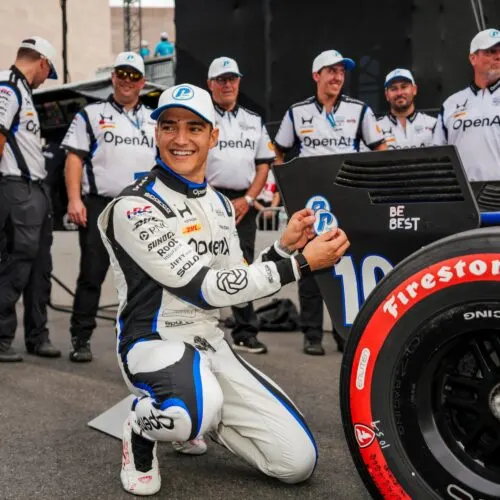
Chip Ganassi Racing has worked with OpenAI on optimising Álex Palou’s IndyCar car setups, giving the technology company a role beyond sponsorship. The collaboration matters because it shows how AI and machine learning tools are becoming part of the engineering work that can shape performance in motorsport.
Palou won his fifth championship in six seasons in 2026, taking six of the season’s 18 races and claiming eight poles; his win tally was twice that of any other driver. The article places the partnership alongside other uses of AI in racing, including General Motors’ analysis of radio and crash data, and research by IBM and Dallara on using computational fluid dynamics to speed up aerodynamic development.
- OpenAI has helped Ganassi optimise Palou’s IndyCar setups.
- Palou won six of 18 races and his fifth title in six seasons.
- AI tools are spreading across motorsport engineering.
New here? Start with this
Artificial intelligence and machine learning are increasingly being used to improve racing car performance. Teams are using these technologies to analyse data and refine how their cars are physically configured and designed, with computers handling calculations that would take far longer through traditional methods. This marks a shift in professional motorsport, where computer analysis is becoming central to the engineering work that shapes how competitive a car will be.
Chip Ganassi Racing has partnered with technology company OpenAI to apply artificial intelligence to optimising car setups for its IndyCar driver Álex Palou. Other teams are using AI in comparable ways, including General Motors analysing radio communications and crash data, and a collaboration between IBM and car manufacturer Dallara using computer simulations to accelerate the aerodynamic design process. These examples show that artificial intelligence is moving beyond sponsorship roles to play a genuine technical part in how modern racing cars are engineered.
The significance is that teams with access to advanced AI tools may gain real competitive advantages over those without such resources. As these systems become more widespread in professional racing, they could fundamentally reshape how teams develop their vehicles and compete at the highest levels of motorsport.
Both sides, in good faith
The strongest fair case each way — we don't pick a winner.
The case for
Supporters of AI integration in motorsport argue it represents a natural technological evolution, following the trajectory established by telemetry systems and computational fluid dynamics in recent decades. These tools help teams optimise performance efficiently whilst potentially democratising access to sophisticated analysis that elevates the entire sport's technical standard. The technology accelerates innovation and problem-solving, ultimately enhancing racing through superior strategic preparation.
The case against
Opponents raise legitimate concerns about competitive fairness, particularly if advanced AI remains available only to well-funded teams, creating technological advantages unconnected to driver skill or engineering expertise. There is also concern that excessive algorithmic optimisation could gradually erode the human creativity that defines motorsport engineering, potentially undermining the principle that driver ability should be the paramount competitive factor. Some worry such a trend could fragment the sport between technologically equipped teams and those without such resources.