Chinese firms race to lead the global robotaxi market
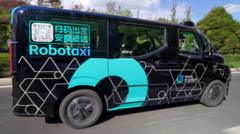
Chinese technology and car companies are rapidly scaling up driverless "robotaxi" services, with firms such as Baidu, WeRide and Pony.ai already running commercial rides in designated areas of cities like Beijing. The central question the article poses is whether China can turn autonomous driving into a globally dominant industry, just as it did with electric vehicles — a prospect that matters because it could reshape the future of transport and intensify US-China competition in a major emerging technology.
China's advantage lies in the industrial ecosystem built around its EV boom: established carmakers such as BYD, Chery, Geely and SAIC build the vehicles while specialist firms supply the software, and shared supply chains for batteries, sensors and chips lower costs and speed development. Complex local traffic and supportive government pilot schemes also generate valuable data, though harsh overseas conditions could slow expansion abroad. Their main rival is Alphabet's Waymo, still seen as the commercial and user-experience leader, while Uber and Lyft are now partnering with Chinese firms. The technology also raises concerns about job displacement and, in China, questions over public opinion given state censorship.
- China is scaling commercial robotaxis, aiming to repeat its EV dominance.
- Shared EV supply chains cut costs and speed development.
- Alphabet's Waymo remains the benchmark rival on user experience.
Art Asia Celebrity Culture Entertainment World
Read the full article at the source →
Originally published by BBC World as “Can China repeat its EV success with robotaxis?”.