Entertainment news and discussion on TalkFuse.
Disaster Movies Learned the Wrong Lesson From ‘Independence Day’
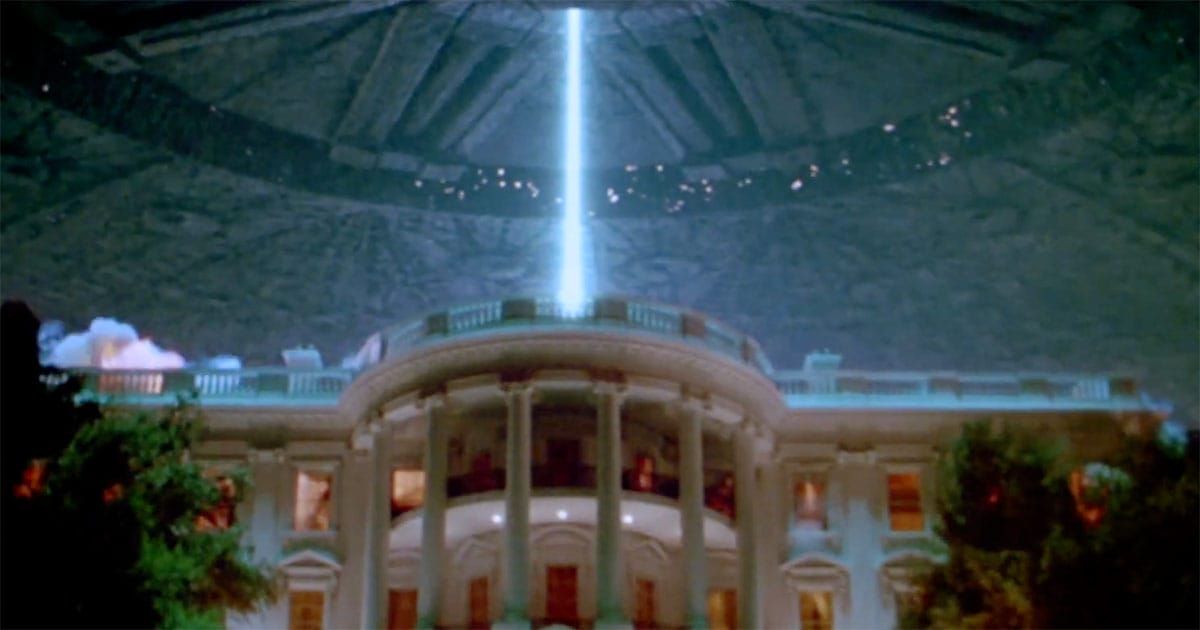
A Collider opinion piece argues that Roland Emmerich's 1996 blockbuster Independence Day has been widely misunderstood by the disaster movies that followed it, including several made by Emmerich himself. While the film became famous for its groundbreaking destruction sequences, such as the alien ship obliterating the White House, the author contends its real strength lay in its well-developed characters and human stakes, something later imitators failed to replicate.
The piece traces how Independence Day spends roughly the first act establishing distinct storylines, including Jeff Goldblum's environmentalist, Will Smith's fighter pilot, Randy Quaid's crackpot survivor and Bill Pullman's president, before bringing them together for the climactic attack on Washington DC, Los Angeles and New York. It argues the destruction itself was never meant to be a crowd-pleasing spectacle but a sobering, devastating blow, reflected in the president's line about needless deaths, and that subsequent Emmerich films such as The Day After Tomorrow, 2012 and Moonfall focused on spectacle over character, leading to weaker critical reception.
In short
- Independence Day succeeded through character depth, not just special effects.
- Later disaster films, including Emmerich's own, copied spectacle but missed the point.
- The film treated mass destruction as tragic, not celebratory, spectacle.
Steelman: both sides, in good faith
The strongest fair case each way — we don't pick a winner.
The case for
Independence Day exemplified how spectacle gains emotional resonance through investment in characters; the destruction mattered because audiences cared about the people affected. Later films, including Emmerich's own, abandoned this foundation in pursuit of ever-larger destruction sequences, mistaking the vehicle for the destination. Without character stakes, disaster films become merely technical exhibitions rather than genuine dramas, and their critical failure directly reflects audiences' recognition that spectacle alone cannot sustain emotional engagement.
The case against
The disaster film genre is fundamentally built on spectacle and destruction, which are entirely legitimate attractions requiring no character justification. Audiences have consistently demonstrated enthusiasm for innovative visual effects and large-scale destruction through decades of box office success, proving that the genre functions precisely as intended. Imposing character-drama standards onto films designed primarily to showcase destruction sequences mistakes the genre's actual purpose; later films succeeded in delivering what audiences came for, and their popularity indicates filmmakers understood the genre accurately.
Explained simply
Independence Day is a 1996 science fiction film directed by Roland Emmerich that became hugely successful largely due to its groundbreaking sequences of alien destruction, including the obliteration of Washington DC and other major cities. Its commercial success and visual spectacle proved enormously influential on subsequent Hollywood blockbusters.
A new opinion piece argues that the disaster films that followed Independence Day fundamentally misunderstood what made the original successful. Whilst the destruction sequences attracted most attention, the piece contends that the film's real strength lay in its careful character development during its first act, establishing several distinct storylines before the climactic alien invasion. The author suggests the destruction was meant to convey devastating loss rather than crowd-pleasing spectacle.
The commentary identifies Emmerich's own later films such as The Day After Tomorrow, 2012 and Moonfall as examples of this trend towards prioritising visual destruction over character development. According to the piece, this shift helps explain why these later disaster films received weaker critical responses than the original Independence Day.