Bayeux Tapestry in ‘wonderful state’ after journey to London, French minister says
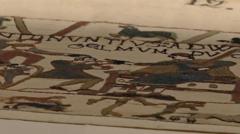
The Bayeux Tapestry, on loan to the British Museum from France, is in "wonderful state" following its journey to London, French Culture Minister Catherine Pégard has said after inspecting it in person. The visit was intended to reassure sceptics, particularly in France, who had voiced concern that the fragile 11th-century embroidery was too precious to move from Bayeux to the UK ahead of its September display. Both French and British conservators say the transfer, the tapestry's first return to England in 1,000 years, has been carried out without damage.
Pégard viewed the artwork alongside British Museum chair George Osborne, who praised the "amazing job" done by French and British experts in transporting and unfurling the delicate 70-metre piece. It took conservation teams roughly 18 painstaking hours to unroll the tapestry from its protective, mattress-padded folding stand after it arrived by lorry from Normandy on 10 July. Curator Professor Michael Lewis, who first proposed the loan in 2013, said there was "no evidence" of any damage and described the Franco-British collaboration as "remarkable"; much of the piece remains covered in protective polyester sheeting to guard against light damage before the exhibition opens.
In short
- Bayeux Tapestry arrived safely in London for September British Museum display
- French minister inspected it, says condition reassures earlier damage concerns
- Conservators spent 18 hours unfurling the delicate 70-metre embroidery
Steelman: both sides, in good faith
The strongest fair case each way — we don't pick a winner.
The case for
The flawless transfer and excellent current condition of the Bayeux Tapestry vindicate the decision to loan it. This successful Franco-British collaboration demonstrates that with expert conservation care and modern techniques, even priceless medieval artifacts can be safely transported for international display, enriching global audiences and strengthening cultural ties between nations whilst allowing people worldwide to experience this cornerstone of Norman-English history.
The case against
Whilst the transfer has succeeded this time, the Bayeux Tapestry is an irreplaceable 11th-century treasure that belongs permanently in Normandy, its historical home for nearly a thousand years. Subjecting such fragile objects to transport risks—however carefully managed—sets a dangerous precedent that national cultural patrimony can be borrowed by other nations; such treasures should remain in their homelands, ensuring future generations of French citizens maintain direct access to their own heritage.
Explained simply
The Bayeux Tapestry is an 11th-century embroidered artwork from Normandy in France that depicts the Norman conquest of England in 1066. It is one of the most significant historical documents of the medieval period and has remained in France for nearly 1,000 years, making it an iconic part of French cultural heritage.
The tapestry is extremely fragile and valuable, which made the idea of moving it controversial. Many people in France worried that transporting such a delicate and precious artwork across the Channel risked damaging it irreparably. The work measures 70 metres in length and its condition is carefully maintained in its permanent home in Bayeux.
This loan represents a rare diplomatic and cultural agreement between France and Britain. The tapestry's journey to England marks its first return to British soil in over a thousand years, making any exhibition a significant cultural moment. The decision required collaboration between French and British experts to determine whether such a move was safe.
Entertainment Government Politics