39th Tokyo International Film Festival Announces 15-Film Competition With Seven World Premieres
Developing story first seen 2 hours ago
The 39th Tokyo International Film Festival spans 26 October to 4 November 2026, with a 15-film competition as the centrepiece that will award the Tokyo Grand Prix. The festival's full programme encompasses world premieres, Asian premieres, special screenings and retrospectives, drawing talent from multiple continents and creative traditions.
The competition slate includes seven world premieres from directors representing Asia and Europe, showcasing diverse narratives and filmmaking approaches. Alongside the main competition, the festival features dedicated sections and special presentations that reinforce Tokyo's position as a key venue for international cinema.
- 39th Tokyo International Film Festival (26 October–4 November 2026) features a 15-film main competition awarding the Tokyo Grand Prix
- The competition includes seven world premieres from directors across Asia and Europe
- Festival programme encompasses special sections, retrospectives and international premiere selections
New here? Start with this
The Tokyo International Film Festival is one of the world's major annual film festivals, held in Japan's capital city. Film festivals are significant venues where films are premiered to industry professionals and audiences, and compete for recognition and awards. Tokyo's festival is particularly important because it attracts filmmakers and productions from Asia, Europe and beyond, making it a key event for the international cinema calendar.
This year's festival features a 15-film competition vying for the Tokyo Grand Prix, the festival's top prize. Seven of these films will be shown for the first time anywhere at the festival, which is notable because securing a world premiere at a prestigious international festival is considered a major achievement for filmmakers and generates significant industry attention and publicity.
Beyond the main competition, the festival programme includes dedicated sections and retrospectives that showcase different types of cinema and film history. The breadth of the programme reflects how Tokyo positions itself as a destination for diverse, high-quality filmmaking from multiple regions and artistic traditions.
Full account
The 39th Tokyo International Film Festival has unveiled its competitive programme, featuring fifteen feature films vying for the Tokyo Grand Prix and the Governor of Tokyo Award. The selection presents a mixture of established auteurs and emerging talent, with seven films receiving their world premieres at the festival, running from 26 October to 4 November. The competition encompasses works by both acclaimed and lesser-known directors from across Asia and beyond, establishing a truly international slate.
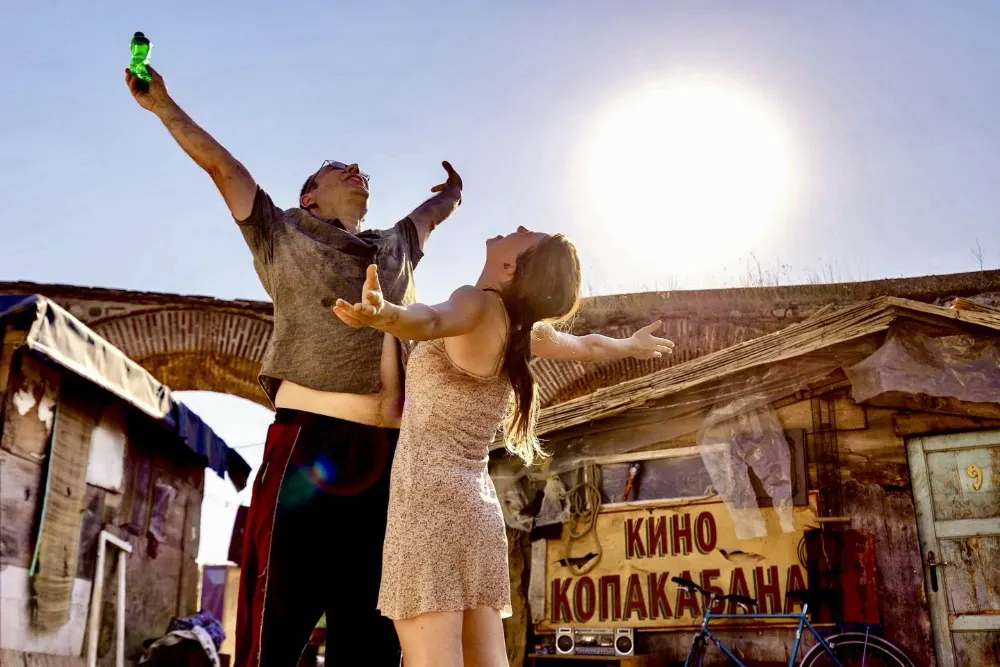
Among the world premiere selections are significant works from Indonesia, with Garin Nugroho's historical drama Red Before Dawn joining the line-up. Two Chinese productions also debut globally at the festival: Qiu Jiongjiong's ambitious multi-national co-production Fuxi: Four Tales of Feasting, a collaboration between Hong Kong, Taiwan, Japan, Saudi Arabia and Qatar, and Wang Jiangyong's France-Hong Kong co-production The Night That Binds Us. Japanese cinema contributes three world premieres—Akira Ikeda's Taiwan-Japan co-production The Canary's Lullaby, Akira Yamamoto's domestic drama The Intertwining, and Yukiko Mishima's Two Cigarettes, Three Nights. Macedonian filmmaker Milcho Manchevski brings his ensemble piece Sister Brother Manhole Cover to the festival. The remaining eight competition entries arrive as Asian premieres, including works by directors such as Lisandro Alonso, Samuele Rossi, Teodora Ana Mihai and Bahman Ghobadi.
The festival's Asian Future competition, dedicated to rising filmmakers, comprises ten titles with eight receiving world premieres. Among them is Indonesian director Ariani Darmawan's feature debut Jani Be Good, marking her return to filmmaking after a fifteen-year absence. The intimate domestic drama, set over four days in December, centres on four women across three generations, with particular focus on thirteen-year-old Jani as she navigates her relationships within the household. Darmawan collaborated with screenwriter Cyntha Hariadi, who adapted her work from a short story collection, developing the narrative over three years. The film was produced by Jakarta-based Palari Films, which has previously supported significant regional talent. Other Asian Future selections include Iranian contributions and films from Japan, the Philippines, South Korea, India and Kazakhstan.
Programming beyond the main competition remains expansive, with the Gala Selection screening fourteen titles including Martin McDonagh's Oscar-tipped Western Wild Horse Nine, Cristian Mungiu's Palme d'Or-winning Fjord and Wayne Wang's Diary of a Mad Old Man. The festival will open with Zeze Takahisa's music drama Sukiyaki and close with South Korean director Yeon Sang-ho's zombie action film Colony, whilst Takashi Yamazaki's Godzilla Minus Zero serves as the centrepiece screening. Additional sections include the reintroduced Crosscut Asia programme dedicated to Southeast Asian cinema, Nippon Cinema Now showcasing contemporary Japanese filmmaking, and a retrospective honouring filmmaker Kenji Mizoguchi on the seventieth anniversary of his death.
The competitive slate has drawn observations regarding representation, with four female directors selected for the fifteen-film main competition, whilst Japan accounts for the largest national contingent with three entries. The festival will host notable international figures, including Cate Blanchett in support of displacement-themed short films, directors Mohammad Rasoulof and Mipo O as recipients of the Kurosawa Akira Award, and Australian filmmaker Rolf de Heer as head of the main competition jury. The accompanying TIFFCOM contents market operates concurrently from 28 to 30 October.
Where outlets differ
Source 1 emphasises the artistic development and personal context of Ariani Darmawan's 'Jani Be Good', including extensive production details and directorial motivation, whilst sources 2-4 treat it as one title within festival-wide coverage
Sources 3 and 4 explicitly note the gender imbalance in the main competition (four female directors out of fifteen), whereas source 1 does not address representation
Source 4 provides guest information and jury details (Cate Blanchett, Mohammad Rasoulof, Mipo O, Rolf de Heer) absent from other sources
Sources list different subsets of gala films, with sources 3 and 4 providing more comprehensive gala selection details than sources 1 and 2
Source 3 places greater emphasis on animation programming and the Mizoguchi retrospective; source 4 highlights the Crosscut Asia section reintroduction and new Nippon Cinema Now awards
Coverage
- Variety — Venice Golden Lion Winner Milcho Manchevski’s ‘Sister Brother Manhole Cover’ Heads to Tokyo for World Premiere, Trailer Unveiled (EXCLUSIVE)
- Variety — Indonesian Director Ariani Darmawan Ends 15-Year Hiatus With ‘Jani Be Good,’ Debuts Trailer Ahead of Tokyo World Premiere (EXCLUSIVE)
- Variety — Garin Nugroho, Mishima Yukiko, Qiu Jiongjiong Titles Among 15 in Tokyo Film Festival Competition
- The Hollywood Reporter — Tokyo Film Festival Reveals Full 2026 Lineup
- Deadline — Tokyo Film Festival Unveils Competition Line-up With World Premieres From Garin Nugroho, Milcho Manchevski & Qiu Jiongjiong
Americas Art Asia Celebrity Culture Entertainment Europe Film Motorsport Sport World