AfD candidate becomes first far-right speaker of German state parliament
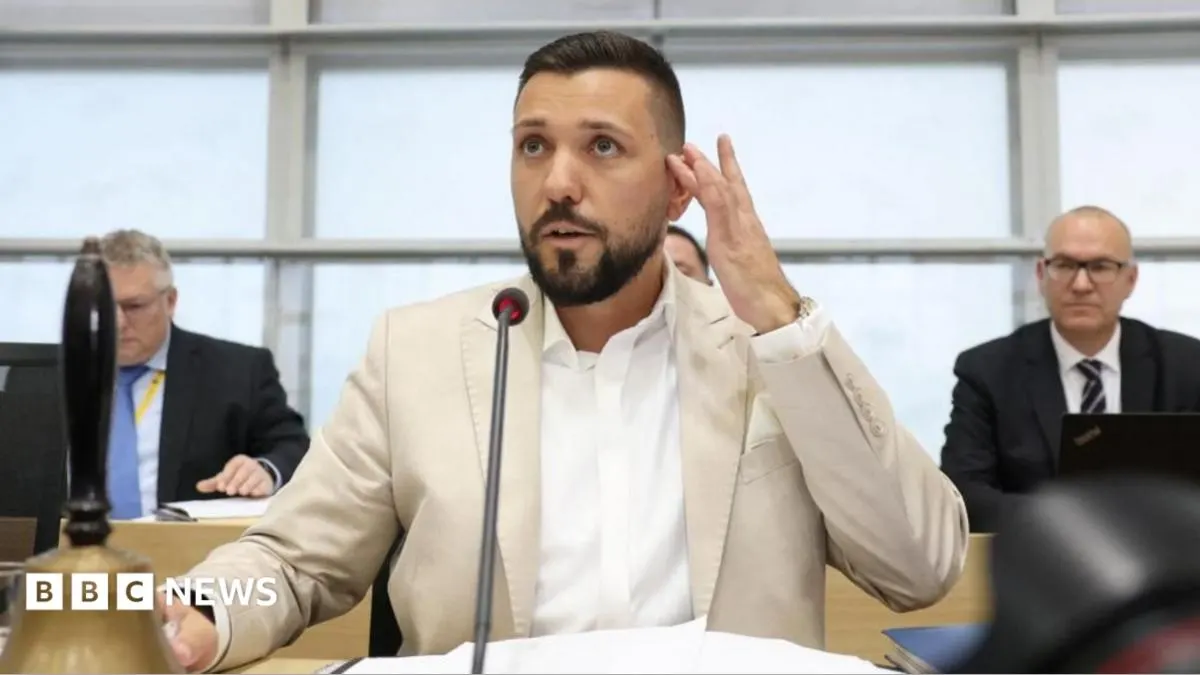
Tobias Rausch, a 35-year-old estate agent and AfD candidate, has been elected speaker of Saxony-Anhalt's regional parliament in eastern Germany. This marks the first time since World War Two that a far-right party has secured this position, breaking a long-standing post-war political consensus against working with the far right. The election was immediately condemned as a watershed moment by political opponents, with regional Green leader Susan Sziborra-Seidlitz stating that "a line has been crossed", whilst over 300 protesters gathered outside parliament holding banners with the warning "Never again is now".
Although the AfD fell three seats short of a majority in last month's state election, Rausch comfortably won Tuesday's vote with support from 9 MPs beyond his own party, including five from the hard-left BSW. Notably, four additional MPs voted for him, though their identities remain unclear, sparking speculation that some conservative CDU members may have backed him despite their party's public position against working with the AfD. The AfD has been classed as "right-wing extremist" by German domestic intelligence and is known for its pro-Russian stance and anti-immigrant policies, including plans to segregate child refugees in schools.
- Far-right AfD politician first elected German state parliament speaker since WWII
- Vote broke post-war political firewall with mysterious cross-party support
- Over 300 protesters gathered, calling the result a watershed moment
New here? Start with this
The AfD is a far-right political party that has grown significantly across Germany in recent years. Since the end of World War Two, Germany has maintained an unofficial but deeply held political consensus that mainstream parties should not work with far-right organisations, viewing such co-operation as a threat to democracy. Tobias Rausch's election as speaker of a state parliament in eastern Germany marks a breach of this long-standing principle.
Rausch won the speaker position with backing from politicians outside his own party, including members of the hard-left BSW and possibly some from the conservative CDU, whose leadership officially opposes such arrangements. The AfD fell short of a majority in last month's regional elections but nonetheless secured this position, reflecting some politicians' willingness to abandon the traditional post-war consensus. This shift represents a significant change in how German regional politics operates.
The AfD has been classified as "right-wing extremist" by German domestic intelligence services, citing its anti-immigrant policies and pro-Russian stance. Those who oppose the new arrangement fear it normalises extremism and threatens democratic norms, whilst others contend that any party winning significant electoral support should have a role in parliament. The outcome has triggered strong reactions from political opponents and protesters, reflecting the depth of feeling about this development.
Both sides, in good faith
The strongest fair case each way — we don't pick a winner.
The case for
Democratic legitimacy requires accepting electoral outcomes and incorporating elected representatives into governance, even when unpopular. Blanket exclusion risks radicalising voters and undermining faith in democratic institutions. Bringing the AfD into institutional responsibilities, where their performance can be tested publicly, may encourage moderation and integration. Excluding significant portions of the electorate from representation based on party affiliation poses its own democratic problems.
The case against
Post-1945 German democracy rests on the doctrine of 'militant democracy'—the principle that constitutional systems must defend themselves against movements that would destroy democracy itself. The AfD's classification as extremist by German intelligence and its advocacy for policies like segregating migrant children represent incompatibility with constitutional values. Historical experience from Weimar demonstrates that normalising far-right movements in institutions leads to capture and radicalisation rather than moderation. Principled enforcement of democratic boundaries is not anti-democratic but essential to democracy's survival.
Read the full article at the source →
Originally published by BBC World as “AfD candidate elected speaker of German regional parliament for first time”.