
Alan Turing short story sheds new light on WW2 codebreaker
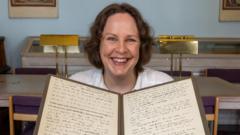
A newly transcribed short story by Alan Turing is said to reveal a more playful, humorous and sexually expressive side of the wartime codebreaker than the familiar image of an isolated mathematical genius. Cambridge literature professor Sarah Dillon argues that the previously unpublished work offers fresh insight into Turing’s life during a traumatic period following his conviction for gross indecency.
The six-page handwritten story, Pryce’s Buoy, was likely written in late 1952 or early 1953 and features a gay scientist and a working-class sex worker. Dillon believes it fictionalises an encounter connected to Turing’s 1952 arrest, after which he was forced to undergo hormone treatment; he died by suicide in 1954, aged 41. The analysis also finds that Turing drew on the style of Hemlock and After, a gay novel by fellow Bletchley Park veteran Angus Wilson.
- Newly studied story portrays Turing as playful and sexually expressive.
- It may reflect events surrounding his 1952 conviction.
- Turing’s literary influences offer further insight into his later life.