Ambrosia Sky Review: Steam’s Fascinating Sci-fi Shooter Tackles the Tough Questions
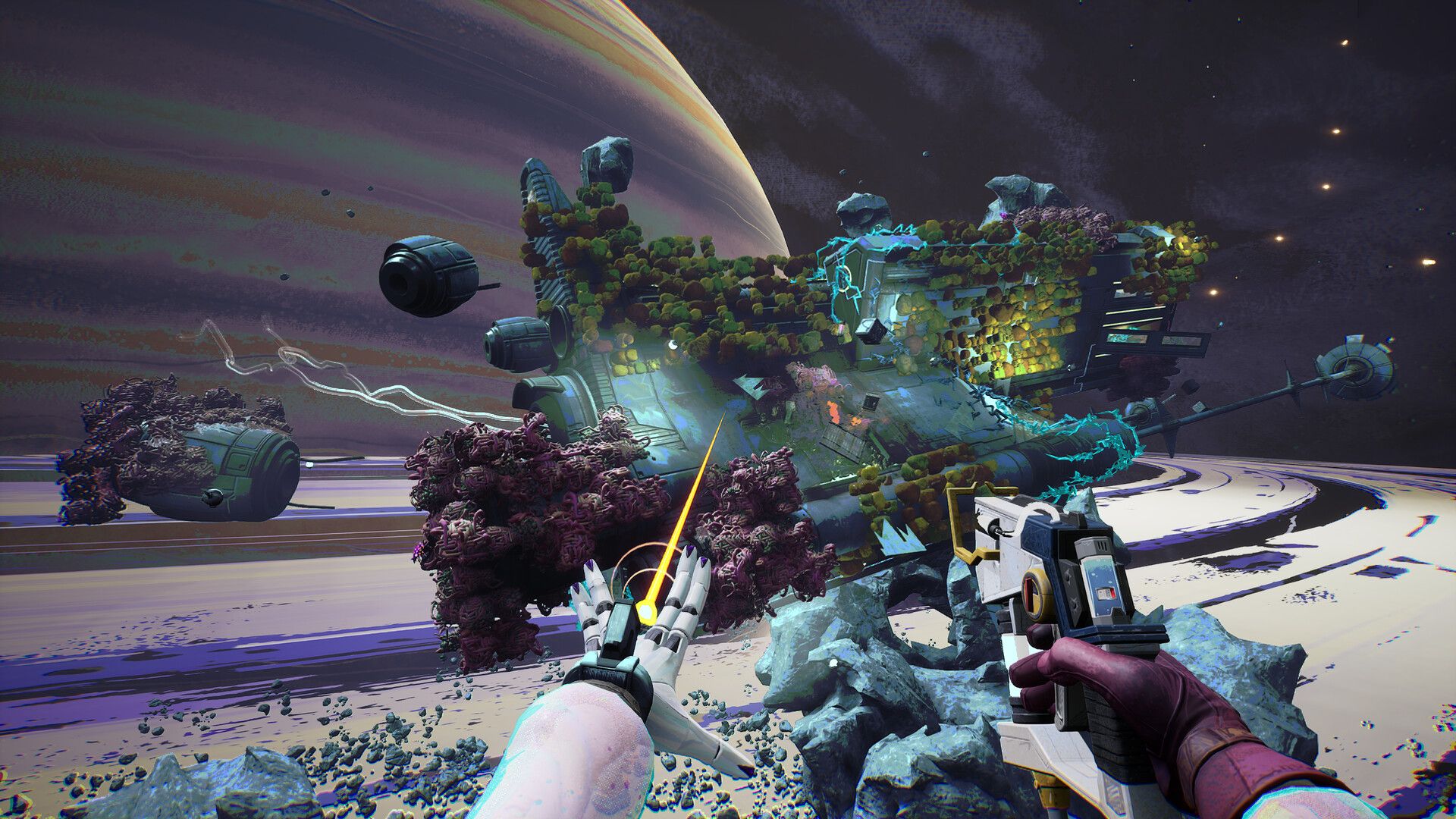
Ambrosia Sky is a first-person science-fiction cleaning game that uses a fungal disaster on an asteroid colony to explore why people remain in dangerous places. The review finds its empathetic treatment of victims compelling, asking players to understand the lives behind abandoned ships rather than judge those who stayed, although the story becomes burdened by too many science-fiction ideas.
Now complete after an episodic launch began with Part One in 2025, the game combines exploration and zero-gravity movement with spraying away hazardous fungal growth. Its strongest missions are interconnected environmental puzzles, but more linear sections feel thin and its upgrade system offers little meaningful choice because the basic spray resolves most obstacles. The reviewer also notes that Blackbird Interactive, developer of Hardspace: Shipbreaker, assisted Soft Rains on the final release.
- A thoughtful sci-fi cleaner explores crisis, loss and staying behind.
- Puzzle-heavy zero-gravity levels are its strongest feature.
- Weak upgrades limit its promised player agency.
New here? Start with this
Ambrosia Sky is a science-fiction game set among asteroid colonies, where people live and work far from Earth. Players explore abandoned places in first person, using equipment to remove dangerous fungal growth while moving through areas with little or no gravity.
The game was made by Soft Rains, with assistance on its final release from Blackbird Interactive, the studio behind the space salvage game Hardspace: Shipbreaker. It was released in episodes, beginning with Part One in 2025, before being completed as a full story.
Its setting uses a disaster to examine why workers and residents may stay in isolated, hazardous communities despite the risks. The game asks players to piece together the lives of people who have disappeared through the spaces and objects they left behind.