Astronomers spot exomoon candidate that’s almost as massive as Jupiter
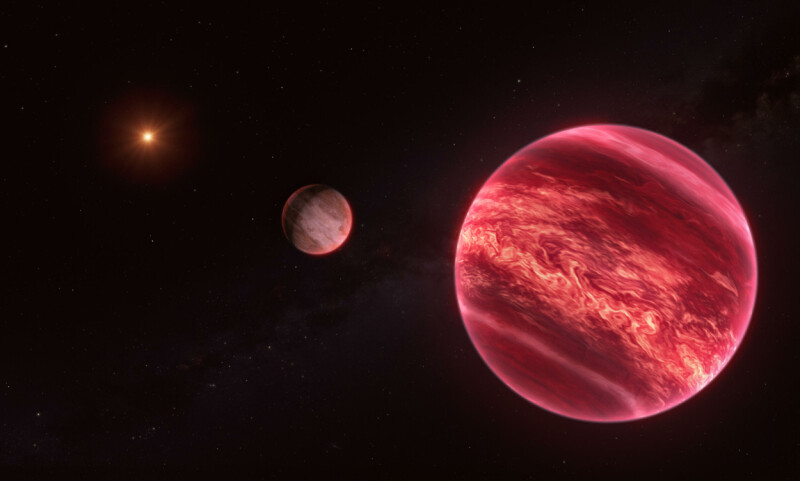
Astronomers have detected what could be the first moon ever found outside our Solar System, though its enormous size means it stretches the very definition of "moon." PhD student Kevin Hoy, working with Universidad Diego Portales and the European Southern Observatory, identified the object orbiting a brown dwarf, which itself orbits a star roughly 73 light-years from Earth. The discovery, published in Nature, matters because exomoons have proved far harder to detect than exoplanets and this marks a step towards confirming one beyond doubt, even if this particular candidate ultimately fails to qualify.
The object, dubbed an "exosatellite" for now, has a minimum mass around nine-tenths that of Jupiter and orbits its brown dwarf host, which is about 30 times Jupiter's mass, once every 170 days. Researchers used the radial velocity "wobble" technique, first employed to find exoplanet 51 Pegasi b in 1995, and their modelling suggests at least one satellite is present, with a second possible but unstable. Because brown dwarfs sit awkwardly between planets and stars, and this object is far larger than any moon in our own Solar System, the team says current terminology struggles to describe it, though improving instruments should eventually allow detection of smaller, more moon-like bodies.
- Possible first exomoon found, but it's almost Jupiter-sized
- It orbits a brown dwarf, itself orbiting a distant star
- Discovery uses radial velocity method, published in Nature