Badenoch Rules Out Reform Coalition, Criticises Farage and Condemns Party’s Identity Questions
Developing story first seen 1 hour ago
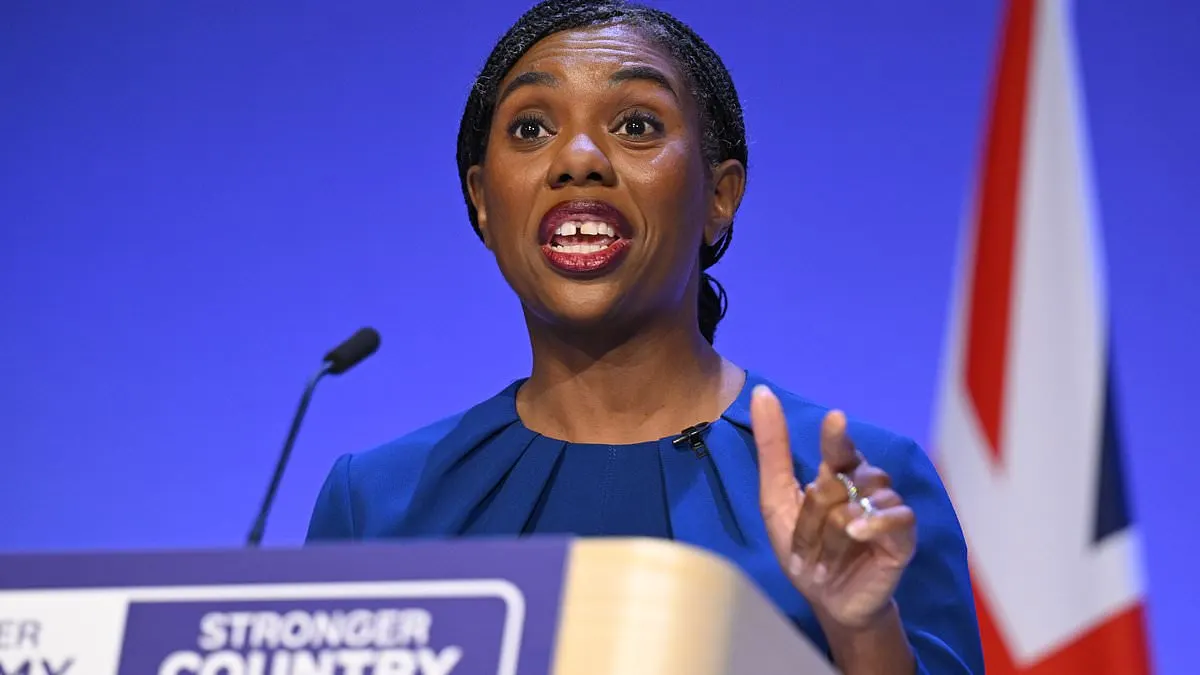
New details show Badenoch used her conference speech to present the Conservatives as a “no-drama” party on the path back to power, while rejecting an electoral pact with Reform UK. She condemned race-based nationalism among Reform figures, saying she did not want a country where people debated whether her mixed-race children were English.
The Conservatives were reduced to 121 of 650 seats in the 2024 election and remain behind Labour and Reform in polls, despite delegates’ optimism. Badenoch promised welfare cuts, looser regulation, tax reductions and fewer people paying inheritance tax; a proposed £10 billion air-defence system was met with scepticism after the party clarified it would be more limited than Israel’s Iron Dome.
- Badenoch ruled out an alliance with Reform UK.
- She criticised race-based questions about English identity.
- Her economic pledges include welfare and tax cuts.
New here? Start with this
Kemi Badenoch leads the Conservative Party, Britain's main centre-right opposition party, while Nigel Farage heads Reform UK, a party that emerged to attract voters from the right of the political spectrum. Both parties appeal to similar voters, which has created speculation about whether they might work together in government.
A substantial donation to Reform UK from billionaire donor Chris Harborne has become controversial, with political figures questioning its propriety and influence. Some Reform figures have also made critical comments about Badenoch's background and family, matters that reflect broader debates about national identity and belonging in Britain.
Badenoch's statements show how the Conservatives aim to position themselves differently from their rivals, emphasising certain values and raising questions about Reform's political direction and approach. This matters because it reflects divisions within Britain's opposition parties and how they compete to represent the right of British politics.
Full account
At the Conservative Party's annual conference in Birmingham, Kemi Badenoch, the party's leader, firmly rejected any prospect of an electoral alliance or coalition with Reform UK. The statement represents a significant moment in positioning the centre-right of British politics, as the Conservatives seek to rebuild following their worst-ever electoral defeat in 2024.
Badenoch's criticism of Reform centred substantially on financial scandals engulfing the party and its leader, Nigel Farage. She highlighted investigations into a £5 million payment Farage received from billionaire donor Chris Harborne—which he characterises as a non-political gift—alongside reports of attempts to discuss concealing foreign donations. An internal Reform investigation into senior staff found they had made incorrect and careless statements, though concluded that proposed foreign funding did not materialise. Badenoch also referenced George Cottrell, a Farage associate with a prior US fraud conviction who has reportedly funded social media staff and provided property access.
Beyond financial matters, Badenoch launched a pointed critique of Reform's approach to national identity, articulated with reference to her own experience as the first Black woman leading a major UK political party. She objected to what she characterised as Reform's "openly questioning people's identity," apparently alluding to remarks by Reform MP Suella Braverman—a former Conservative home secretary who defected earlier this year—who suggested that British Asians cannot be English. Badenoch drew historical parallels to earlier Conservative positioning on race, suggesting her party represented inclusivity in contrast to Reform's approach.
The rejection of coalition came as opinion polls show the Conservatives trailing both the governing Labour Party and Reform UK, the latter having made significant gains in recent local elections. Badenoch portrayed the Conservatives as a reformed entity, describing it as the "no-drama party" in implicit contrast to the scandals that have engulfed both Reform and her party's recent history. Meanwhile, the Labour government underwent its own leadership transition following Keir Starmer's departure, with Andy Burnham assuming the premiership following internal party discontent.
Where outlets differ
Source 1 emphasises financial scandals and investigations prominently; Source 2 focuses primarily on identity politics and cultural criticism; Source 3 situates the speech within broader electoral and polling context
Source 1 provides detailed allegations about Farage, Cottrell and Reform staff conduct; Source 2 concentrates on Braverman's identity remarks; Source 3 omits the financial scandals entirely
Source 2 personalises the identity debate through Badenoch's own background and family circumstances; Sources 1 and 3 discuss identity politics more abstractly
Only Source 3 discusses Badenoch's economic policy proposals including welfare spending reduction, regulation loosening, tax cuts and inheritance tax policy
Source 1 adopts a colloquial, scandal-focused tone; Source 3 takes a measured analytical approach; Source 2 balances both registers