Camden barber faces £500 fee or removal of 15-year-old shop bench
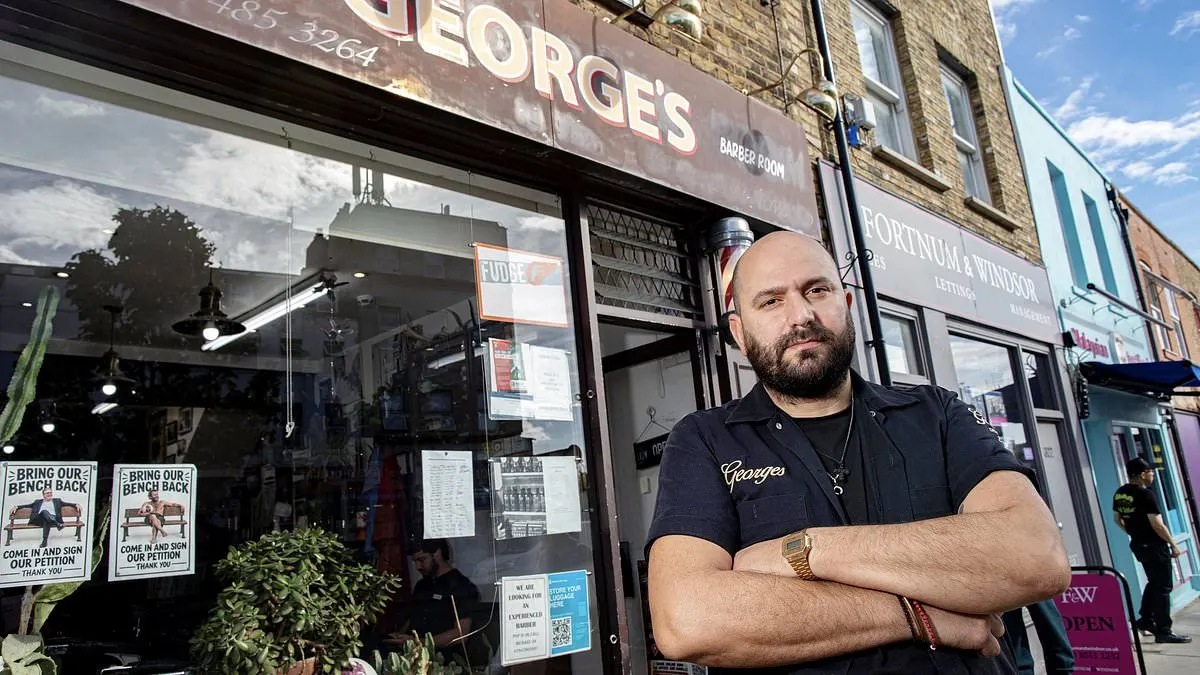
A barber in Kentish Town, north London, has been ordered by Camden Council to remove a bench outside his shop for 15 years or pay £500 for a pavement licence, plus £350 annually to renew it. Michael Vasili, 42, who runs George's Barber Room started by his father in 1989, says the community bench is used by customers waiting, staff taking breaks, and local residents, including elderly people resting on their way to the station, and he cannot afford the permit fees. The situation highlights a broader tension between small businesses and councils over how public space regulations are applied.
The bench, salvaged from a closing-down pub and stored away each evening, prompted the council's enforcement action two weeks ago without prior discussion, Vasili claims. Unable to pay, he has removed it but launched a campaign to restore it, gathering over 140 petition signatures in two weeks. The council maintains that because the bench sits on the public highway, a pavement licence is legally required under the same regulations applied across the borough, though Vasili argues the wide pavement and evening storage mean the bench causes no obstruction.
- Barber ordered to pay £500 plus annual £350 renewal for 15-year-old bench
- Community bench removed; barber launches petition with 140+ signatures
- Council says pavement licence required by law for public highway placement
New here? Start with this
George's Barber Room in Kentish Town, north London, has had a wooden bench outside for 15 years, used by customers waiting for appointments, staff on breaks, and local residents needing a rest. Camden Council has now told the shop's owner, Michael Vasili, that he must either remove the bench or pay £500 for a pavement licence, plus £350 annually to renew it.
Vasili says he cannot afford these fees and argues the bench serves the community whilst occupying minimal space since it is stored away each evening. He removed it after the council's enforcement action two weeks ago but has since launched a campaign to restore it, gathering over 140 petition signatures. The council maintains that because the bench sits on the public pavement, it legally requires a licence under regulations applied across the borough.
This dispute highlights tensions between small business owners and councils over how public space regulations are applied. Many independent shops have long had informal street furniture to create community spaces, but councils are increasingly requiring formal permissions and fees.
Both sides, in good faith
The strongest fair case each way — we don't pick a winner.
The case for
The bench has served the community for 15 years without causing meaningful obstruction—it is stored away each evening and sits on a sufficiently wide pavement—yet the council's enforcement action, applied without prior dialogue, imposes prohibitive costs that a small family business cannot afford. The overwhelming local support demonstrated by 140 petition signatures reflects genuine community value extending beyond the barber's customers to elderly residents and staff, suggesting that contextual judgment about real-world impact should matter more than rigid application of regulations to situations causing no actual harm. Expecting small businesses to pay substantial fees merely to continue offering modest amenities that benefit their communities seems disproportionate and suggests councils should distinguish between genuinely obstructive uses and those providing genuine local value.
The case against
Pavement licence regulations exist to ensure fair, consistent application of rules across the borough rather than allowing businesses to colonise public space based on duration of use or local sympathy. If exceptions are made because a use has continued 15 years or commands popular support, the principle of equal application becomes undermined, potentially encouraging others to flout regulations with hopes of retrospective accommodation and creating inconsistent enforcement. The remedy is for the business to pursue the licence through established channels if it believes the community benefit justifies the cost, not for councils to abandon consistent standards because individual cases are sympathetic. Fair administration requires applying the same rules to all users of public space, regardless of emotional appeal or historical precedent.
Art Celebrity Culture Entertainment World
Read the full article at the source →
Originally published by Daily Mail as “Barber told by council to remove bench that’s been outside his shop for 15 years or pay £500”.