Burnham Blames Brexit for Boat Crisis While Labour Privately Debates Early Election
Developed over time first seen 2 hours ago
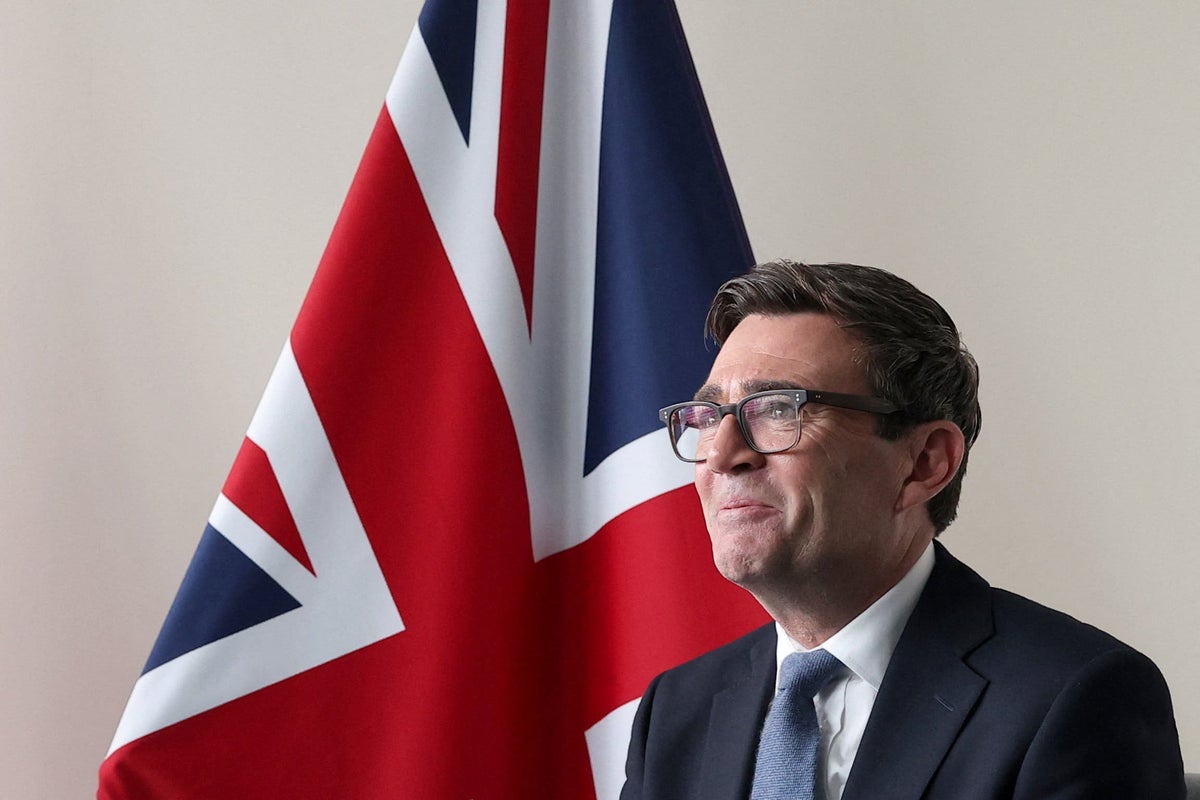
Prime Minister Andy Burnham has attributed the ongoing Channel small boat crossings to Brexit's impact on European cooperation, pointing to more than 700 arrivals in a single day as evidence of the persistent crisis. Despite the mounting pressure, Burnham has publicly committed to eliminating the crossings and emphatically ruled out calling a general election before 2029, declaring the prospect "stone dead".
Yet within Labour's Liverpool conference, where optimism surrounds Burnham's recent replacement of Keir Starmer, party MPs are privately engaging in substantive debate about the possibility of an earlier election call. This internal discussion reveals a gap between the grassroots sentiment within the party and Burnham's firm public position, suggesting potential divisions over the electoral timetable despite his confident denials.
- Burnham attributes Channel migrant crisis to Brexit-driven loss of EU cooperation whilst ruling out early election
- Labour MPs debate early election possibility despite PM's public insistence the idea is off the table
- 700+ small boat arrivals in single day underscore ongoing crisis dominating new government's agenda
Both sides, in good faith
The strongest fair case each way — we don't pick a winner.
The case for
Those favouring an early election argue that Labour's evident momentum—marked by Burnham's fresh replacement of Starmer and visible grassroots enthusiasm—represents a fleeting electoral advantage that may not persist if the government is forced to govern through accumulating difficulties for several more years. They contend that capturing the mandate whilst party morale and public sentiment remain favourable, rather than risking a deteriorating position by 2029, represents sound democratic stewardship and respect for the party's current strength.
The case against
Those opposing an early election emphasise that Burnham's explicit public assurance that the prospect is "stone dead" carries weight beyond mere words—it is a covenant with the electorate and the party's own credibility. They argue that governments exist to govern, not perpetually to campaign, and that abandoning a firm, recent commitment simply because internal calculations have shifted would signal weakness, opportunism, and the subordination of principle to electoral calculation rather than demonstrating the serious, steady leadership voters deserve.
Full account
Prime Minister Andy Burnham has linked continued small-boat crossings in the Channel to the loss of practical co-operation with European neighbours after Brexit, while insisting his government will continue trying to reduce arrivals. Speaking before Labour’s annual conference in Liverpool, he said the UK no longer had the same arrangements for working alongside neighbouring countries, though he did not present this as an excuse for failing to act.
His remarks followed a difficult week for the Home Office, including more than 700 arrivals on one day and reports of two boats reaching the British coast without detection. Burnham said smuggling networks were adapting their methods, citing a vessel which had reportedly set off unusually far west along the French coast and remained at sea for more than 30 hours. He declined to set a deadline for ending crossings but said the government’s objective was to bring them down to zero. Source 1 also noted that cumulative crossings for the year were lower than at the equivalent point in each of the previous two years, and referred to a three-year UK-French agreement concluded in April.
The issue has coincided with speculation over Labour’s electoral strategy. Burnham used pre-conference interviews to reject the prospect of an election before 2029. However, Source 2 reported that some Labour ministers and MPs remain unconvinced, saying internal calculations continue over whether opposition parties could divide the anti-Labour vote and whether Labour’s recent polling recovery can last.
According to that report, a forthcoming Holborn and St Pancras by-election could help shape the discussion, although ministers are said to regard an early contest as risky when margins are tight. Concern reportedly remains over Reform’s ability to regain support, particularly in former Labour-held “red wall” seats, despite polls placing it lower than before. The reports therefore portray a government publicly ruling out an early election while privately assessing the political conditions in which one might be advantageous.
Where outlets differ
Source 1 concentrates on Burnham’s Brexit comments, Channel-crossing figures, enforcement difficulties and the UK-French arrangement. Source 2 focuses on Labour conference politics, internal election speculation, polling and anxieties about Reform in marginal seats.
Both reports say Burnham sought to end speculation about an early election, but only Source 2 describes ministers and MPs as continuing to discuss the possibility privately.
Coverage
- The Independent — Burnham blames Brexit for small boats crisis – but rules out early general election
- The Independent — Labour happy to switch leadership plotting for a debate over an early election with Burnham