Could tech replace firefighters in the battle against wildfires?
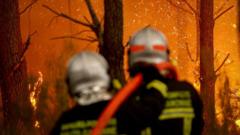
Wildfires sweeping through France, Spain and Portugal this summer have forced hundreds of thousands of people from their homes, killed four firefighters and injured 150 others in France alone, raising the question of why cutting-edge technology such as drones has not replaced traditional firefighting methods. While the physical techniques used to fight fires remain largely unchanged, detection technology has advanced significantly, with AI-assisted cameras increasingly replacing human lookouts in high-risk regions such as the Gironde.
These camera systems, developed by French start-ups such as Midgard and FireTracking, can detect fires up to 20km away and distinguish smoke from other disturbances such as tractor dust with near-total accuracy, cutting false alarms. FireTracking's chief executive, Jean-Simon Chaudier, says the AI has detected fires up to 15 minutes before emergency calls were received, time that can mean the difference between a small blaze and a catastrophe. The firm's cameras now cover a million hectares across France, with one full regional installation costing €1.2m, and further advances are being trialled, including solar-powered surveillance drones under a French civil protection programme called Condor.
- AI-powered cameras are replacing human lookouts for wildfire detection in France.
- Early detection can save 15 minutes, limiting fires to a few hectares.
- Wider AI and drone technology is in development, but firefighting itself remains largely manual.
Both sides, in good faith
The strongest fair case each way — we don't pick a winner.
The case for
Advocates for greater use of technology point out that AI-linked cameras, satellites and sensor networks can spot smoke or heat signatures within minutes rather than hours, giving crews a critical head start before a blaze becomes uncontrollable. Given the escalating scale and unpredictability of wildfires driven by climate change, they argue it would be irresponsible not to deploy every available tool to protect lives, homes and firefighter safety by reducing the time spent on manual watch duties. This is framed not as replacing firefighters but as freeing them from surveillance work so they can focus resources on the physically demanding task of actually suppressing fires.
The case against
Others, often drawing on firefighters' own frontline experience, argue that extinguishing a wildfire is an inherently physical, judgement-heavy task involving terrain, wind shifts and split-second decisions that no camera or algorithm can perform. They caution against over-investing public funds in detection technology at the expense of staffing, equipment and pay for the human crews who must still do the dangerous work of digging containment lines and directing water or retardant drops. Their concern is that framing tech as a solution risks masking the ongoing need for well-resourced, well-trained fire services rather than genuinely complementing them.