Curiosity rover spots field of giant honeycomb on Mars – but no giant space bees
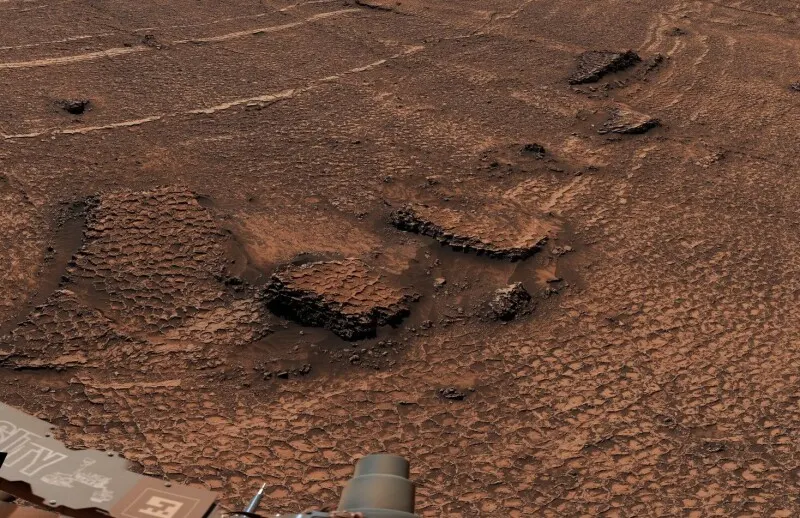
NASA's Curiosity rover has photographed a large field of honeycomb-like patterns on the Martian surface, offering fresh evidence that Mars once had a wetter, less hostile environment. Scientists believe the geometric shapes are polygonal fractures most likely formed when mud dried and cracked at some point in the planet's distant past, though the exact process remains uncertain. The find matters because it adds to a growing body of evidence, gathered throughout Curiosity's long-running mission, suggesting Mars once hosted oases or lakes of liquid water.
Curiosity captured the images on 19 and 20 June, the 4,930th and 4,931st Martian days of its mission, after beginning its ascent of a valley nicknamed "Valle Grande." Each honeycomb segment measures four to eight centimetres across, and while the rover has spotted smaller patches of similar textures before, NASA says nothing has matched this scale. Curiosity landed on Mars on 5 August 2012 using a novel "sky crane" system and has since travelled around 35 kilometres, overcoming tyre damage and a stuck drill along the way. It is currently in its fifth extended mission, which NASA continues to fund as the rover keeps returning valuable scientific data.
- Curiosity spotted a huge field of honeycomb-shaped cracks on Mars
- Likely caused by ancient mud drying and cracking, not aliens
- Adds to evidence Mars once had water; rover now in its fifth extended mission