‘Dead Souls’ Review: Alex Cox Betrays His Talent — Again — in His Latest Arid Didactic Western Doodle
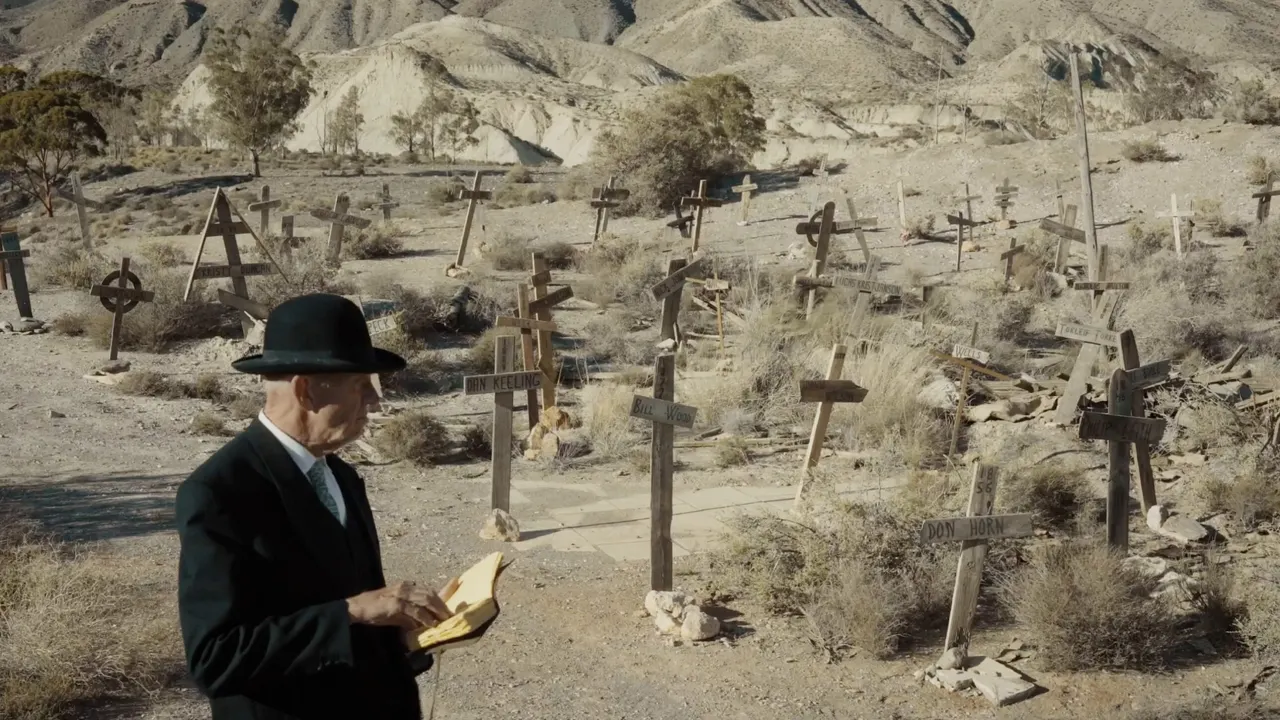
Variety’s critic finds “Dead Souls”, Alex Cox’s new crowdfunded Western, a disappointing and overly didactic film. Cox plays a mysterious elderly man who arrives in an 1890 Arizona border town to collect the names of dead Mexican labourers; the review argues that the premise becomes an arid political lesson rather than compelling drama. The critic sees the film as another example of Cox failing to fulfil the extraordinary promise of his early work.
Loosely based on Nikolai Gogol’s 1843 novel, the film has circulated at festivals and premiered at New York’s Roxy Cinema. The review contrasts it sharply with Cox’s 1980s films “Repo Man” and “Sid and Nancy”, praising the latter as a major punk film, music biopic and tragic love story, with standout performances by Gary Oldman and Chloe Webb. It presents Cox, a Merseyside-born director, as a filmmaker whose celebrated early achievements make his later output especially frustrating.
- “Dead Souls” is judged an ineffective, preachy Western.
- Cox plays an enigmatic man documenting dead Mexican labourers.
- The review mourns Cox’s unfulfilled early promise.
Both sides, in good faith
The strongest fair case each way — we don't pick a winner.
The case for
Supporters of the review may argue that a politically conscious Western still needs vivid characters, dramatic tension and emotional complexity to make its case persuasively. From this perspective, turning the story of exploited Mexican labourers into an overt lesson risks reducing both history and fiction to illustration, and Cox’s distinguished early films set a reasonable benchmark for judging whether the newer work realises its considerable premise.
The case against
Defenders may argue that Cox is deliberately using a spare, stylised Western and Gogol-derived premise to confront historical injustice that conventional drama often overlooks. They may see the film’s directness not as a failure of craft but as an ethical refusal to soften exploitation for entertainment, and contend that judging it chiefly against the energy and commercial impact of his 1980s work undervalues a later artist pursuing different political and aesthetic aims.