Badenoch condemns Reform figures over questions about her children’s English identity
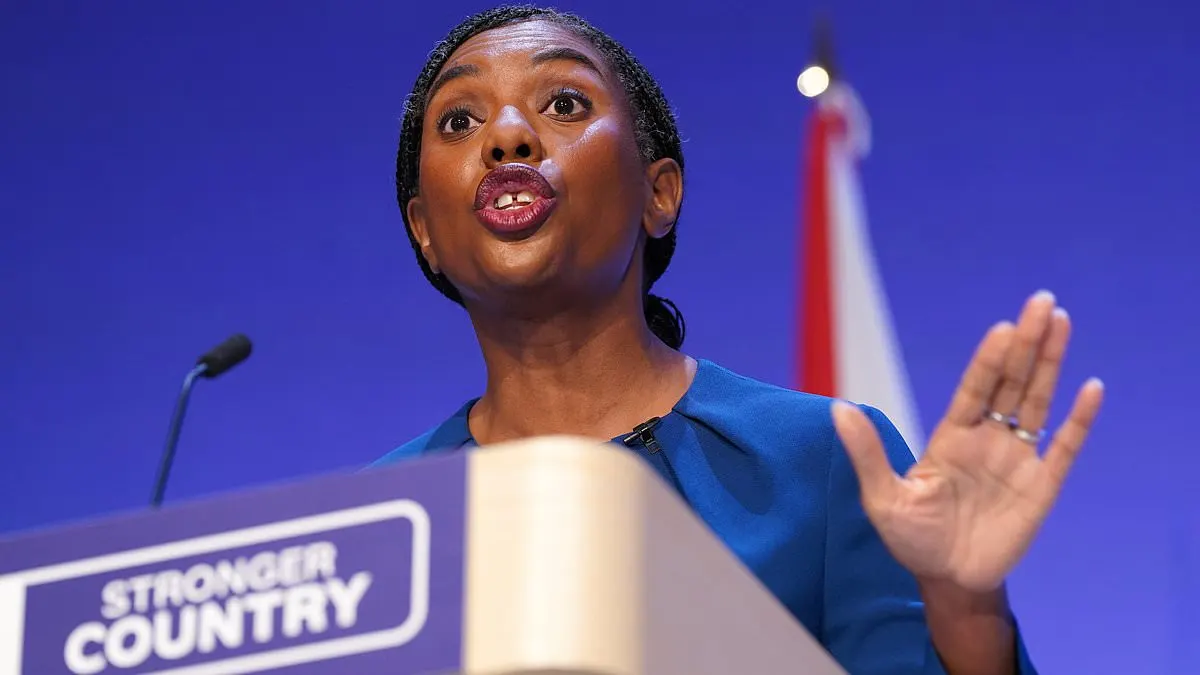
Kemi Badenoch criticised Reform UK in her Conservative conference speech, saying its senior figures should not question whether her mixed-race children are English. She argued that such comments challenge people’s identity and risk taking the country backwards, while presenting the Conservatives as different from Reform.
Her remarks followed Reform MP Suella Braverman saying she describes herself as British of Asian ethnicity rather than English, citing her family’s heritage. Reform deputy leader Richard Tice declined to say whether he would question Badenoch’s Englishness, calling the debate a waste of time. Badenoch also rejected calls for the Conservatives to unite with Reform.
- Badenoch condemned Reform’s comments on English identity.
- Braverman has described herself as British of Asian ethnicity.
- Badenoch ruled out a Conservative deal with Reform.
New here? Start with this
Kemi Badenoch, leader of the Conservative Party, has criticised Reform UK over comments about identity and Englishness. Reform MP Suella Braverman previously described herself as British of Asian ethnicity rather than English, citing her family's heritage, and other Reform figures have questioned whether people of mixed or certain ethnic backgrounds can be considered English. Badenoch objected to these suggestions, particularly regarding her own mixed-race children.
The dispute reflects a political disagreement about what English or British identity means. Badenoch argues that questioning someone's Englishness based on their ethnicity or family background is divisive and harmful. Reform deputy leader Richard Tice has declined to clarify his own position on the matter, though he called the debate wasteful.
The incident highlights tensions between the Conservatives and Reform UK at a time when some have suggested the parties might work together. It touches on fundamental questions about belonging and citizenship that have become politically significant in recent years. Badenoch used her party conference speech to distance the Conservatives from Reform, suggesting they represent different values on identity issues.
Both sides, in good faith
The strongest fair case each way — we don't pick a winner.
The case for
Badenoch's position defends inclusive national identity: anyone born and raised in England is English, regardless of ethnicity or heritage, and politicians should reject questioning this principle. From her perspective, such questions send a harmful message that some citizens' belonging is conditional on their racial background, undermining social cohesion and violating the fairness principle that national identity should be open to all.
The case against
The alternative view might contend that discussing how people self-identify across ethnic and national categories is legitimate political discourse, and that Badenoch is uncharitably interpreting this as inherently discriminatory. This perspective would hold that genuine discussion about identity and integration in modern Britain need not be exclusionary, and that blanket rejection of these conversations may prevent the understanding and dialogue that diverse democracies require.
Read the full article at the source →
Originally published by Daily Mail as “Don’t tell me my kids aren’t English! Kemi Badenoch lashes out at Reform UK over ‘Englishness’ row as she urges Tories to not let Nigel Farage’s party ‘take us backwards’”.