News, events and chat from Sheffield and South Yorkshire.
Dramatic pictures show drastic water levels at Derbyshire reservoir following driest July ever recorded
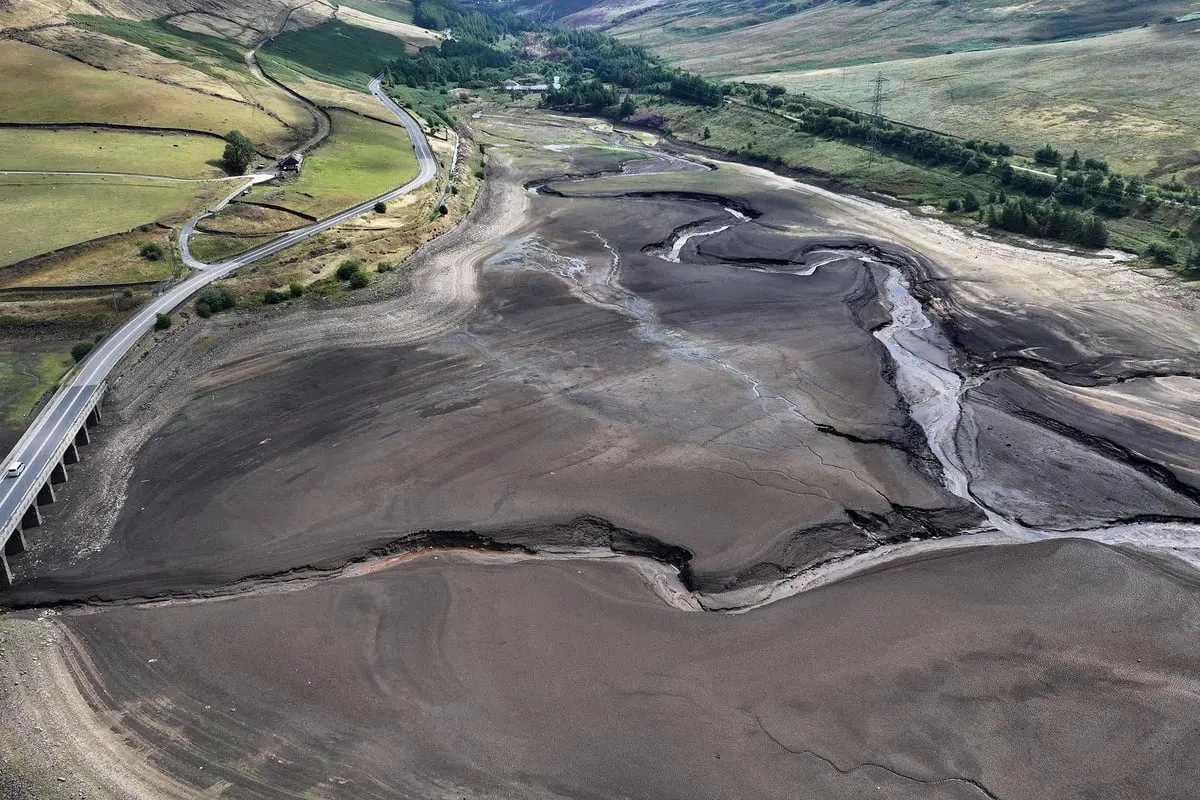
Aerial photographs taken on August 19 reveal severely diminished water levels at Woodhead Reservoir in north Derbyshire, exposing the normally submerged reservoir floor in visibly fractured condition. Despite recent rainfall, water levels remain critically low, illustrating the intensity of the ongoing drought affecting the region.
England is experiencing unprecedented dry conditions, with July 2026 becoming the driest month since meteorological records began in 1836. The National Drought Group has formally classified approximately two-thirds of England as being in drought status, triggering water-use restrictions that apply to roughly 27 million residents across the affected areas.
In short
- Woodhead Reservoir in Derbyshire shows critically depleted water levels with exposed, fractured bed—August 2026
- England's driest July since 1836 has triggered official drought status across two-thirds of the country, affecting 27 million people under water restrictions
Explained simply
Woodhead Reservoir stores water for nearby communities and the wider water network. Its level depends on rainfall and on water flowing into the reservoir from the surrounding catchment, so a prolonged dry spell can leave the ground beneath it exposed.
England’s drought status is assessed by the National Drought Group, which brings together agencies responsible for water, the environment and public services. Low supplies can lead water companies to restrict some uses, affecting households and other customers across the areas covered by those rules.
Reservoir levels matter for drinking water and for rivers and wildlife that depend on water moving through the landscape. Rain can help, but replenishing a reservoir after an extended dry period may take sustained rainfall.