Emmy Rossum Confirms the Meaning Behind ‘Furious’ Season 1’s Final Minutes: “It’s Not an Easy Hit List”
Developing story first seen 6 hours ago
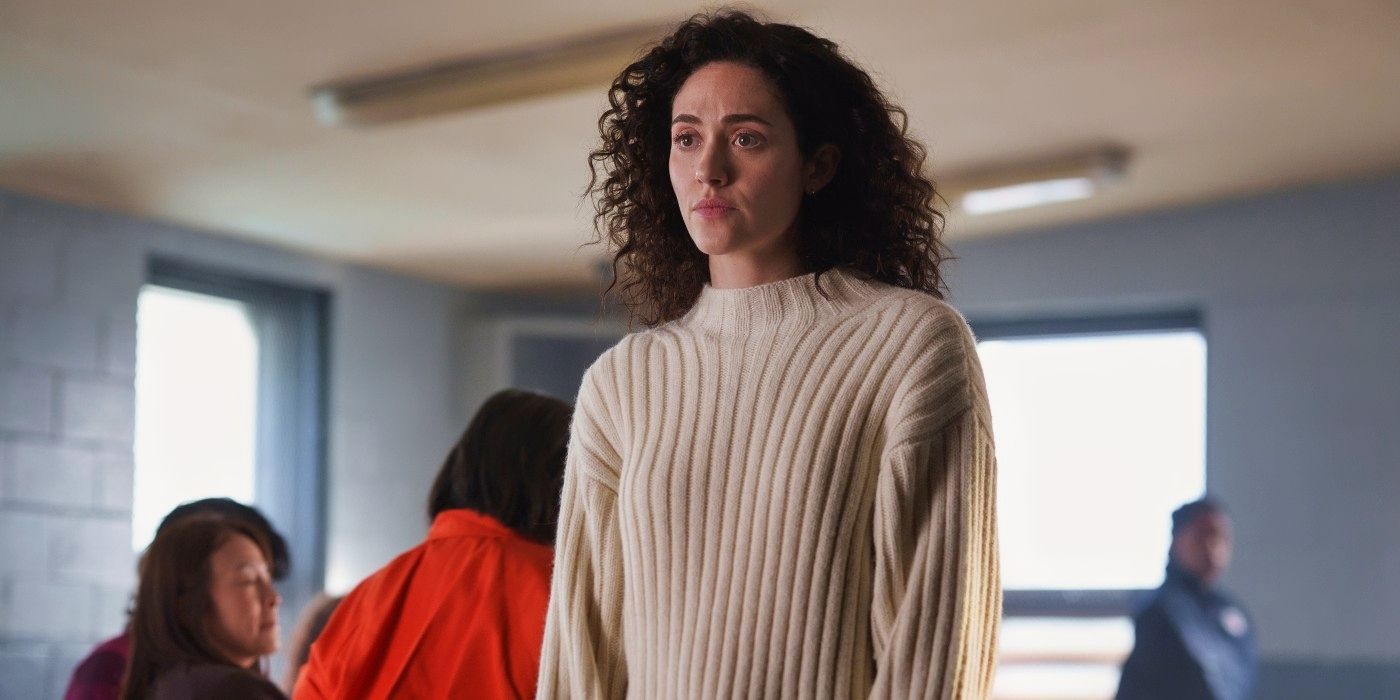
Emmy Rossum has confirmed that the closing moments of Hulu's crime thriller Furious were not meant to depict Alice Black embarking on a straightforward "hit list," clarifying the ambiguous intentions behind her FBI agent character as the show heads into its already-confirmed second season. Her comments follow the Season 1 finale, which saw Alice's storyline become entangled with serial killer suspect Catherine Grace after businessman Jay Easton's apparent cardiac arrest was revealed, via Catherine from prison, to have been no accident.
Rossum traced the pair's bond back to an earlier, pivotal meeting at a domestic violence shelter, where Alice—undercover and largely dishonest about her identity—told Catherine a rare, genuine story about herself, allowing a real connection to form despite the deception. The actor also likened the dynamic to the 1987 film Black Widow, and pointed to Alice's history of courting risk and violence as key to understanding her unpredictable choices, including the finale's now-clarified final scene, as the series moves towards a darker, more complex second season.
- Rossum says finale's ending isn't a simple "hit list" reveal.
- Alice and Catherine's bond began at a shelter meeting.
- Furious has been renewed for a second, darker season.
New here? Start with this
Central to the plot is the unusual bond between Alice and Catherine, which began at a domestic violence shelter where Alice was working undercover. Despite mostly deceiving Catherine about who she really was, Alice shared one true story from her own life, and that moment of honesty within a false relationship became the foundation of their connection. This dynamic has been compared by Rossum to the 1987 film "Black Widow," which similarly explored a tense, intimate relationship built on deception.
Understanding Alice's character matters because "Furious" leans on her willingness to take risks and flirt with violence to drive its story forward, making her motives central to how viewers interpret the show's twists. As the series moves into a second season promising a darker and more complicated storyline, Rossum's comments are aimed at helping audiences reassess what really happened at the end of season one, rather than confirming a straightforward revenge plot.
Full account
Hulu's crime thriller Furious has closed out its first season, and in a post-finale interview series creator Liz Meriwether and star Emmy Rossum have begun sketching out where the show might go next. The series follows the strained, unlikely connection between FBI agent Alice Black (Emmy Rossum) and Catherine Grace (Lola Petticrew), a young woman drawn into killing as she seeks justice of her own. In the finale, events come to a head at the mansion of wealthy businessman Jay Easton (Peter McRobbie), who appears to suffer a fatal cardiac arrest, and conclude with Alice visiting Catherine in prison, where Catherine correctly senses that Easton's death was no accident. Alice, meanwhile, ends the episode in possession of an incriminating flash drive, leaving plenty of unresolved threads for the newly confirmed second season.
Much of the finale's emotional weight, Rossum explained, was built earlier in the run, during a chance encounter between the two women at a domestic violence shelter. She traced her thinking back to the 1987 film Black Widow, citing the rapport that develops between Debra Winger and Theresa Russell's characters as two isolated women each concealing the truth about themselves while circling one another. In the equivalent scene for Furious, set around playground equipment, Alice recounts a genuinely personal memory from her own life, about a moment in the shower when she feared she might die and fixated on not having rinsed the shampoo from her hair. Rossum suggested that this small, true admission is precisely what allows Catherine to sense Alice is being sincere, even though the FBI agent is otherwise operating under false pretences throughout their acquaintance. She described Alice as someone far more at ease deceiving others than being emotionally exposed, which is what makes this rare moment of candour land so strongly.
Discussing where that dynamic might head in a second season, Rossum recalled wanting to echo another sequence from Black Widow, an underwater scuba scene in which the ambiguity between the two women's affection and danger plays out visually. She joked about lobbying showrunner Meriwether to shoot such a scene on the Croatian coast, partly for the tax incentives, only to be told it wasn't going to happen. Instead, the pivotal meeting between Alice and Catherine ultimately took place in the far less glamorous setting of a New York shelter in winter, while the closest the season came to a coastal set-piece was a wintry beach kiss between Alice and her love interest, Danny (Scoot McNairy), which still leaves plenty of romantic complication unresolved. Meriwether, for her part, framed such stylistic flourishes as secondary to the show's underlying intent, describing its focus as the lived experience of two very different women who have survived abuse, rather than a study of the predators around them, and stressed that the series does not claim to offer neat answers about how the justice system should handle such cases.
Both Meriwether and Rossum emphasised that portraying complicated, sometimes contradictory female characters was central to the project, informed by conversations with female FBI agents, psychologists, and survivors of violence and trafficking. Rossum pointed specifically to Alice's own duality, as a survivor of abuse who also engages in BDSM, arguing that such seemingly conflicting traits reflect real human complexity that doesn't fit the notion of a straightforwardly sympathetic victim that the justice system tends to expect. That refusal to offer easy resolution extends to the ambiguous final moments of the season, which the finale's title nods to directly, suggesting that whatever reckoning is coming in season two will not resolve into a simple, satisfying tally of wrongs righted.
Where outlets differ
Collider's interview centres on craft and character detail specific to the finale, including plot particulars of Easton's death, Alice's prison visit to Catherine, and the flash drive, and unpacks the earlier shelter scene as the emotional foundation for the finale.
Deadline's interview is more forward-looking, focusing on Rossum and Meriwether's hopes and joking speculation for Season 2 (including the unrealised Croatia/scuba sequence idea) and includes broader thematic remarks from Meriwether about the show's intent regarding survivors and the justice system that do not appear in the Collider excerpt.
Only the Deadline account includes discussion of Alice's characterisation as a survivor who also practises BDSM and the research (speaking with FBI agents, psychologists, and survivors) that informed the show's approach to complex female characters.
The Collider excerpt does not mention the Black Widow scuba sequence or the Season 2 renewal discussion in the same detail as Deadline, focusing instead on the shower/shampoo anecdote and the actors' scene work.
More coverage