ESPN personality busted on social media for inaccurately trying to promote the SEC’s strength of schedule
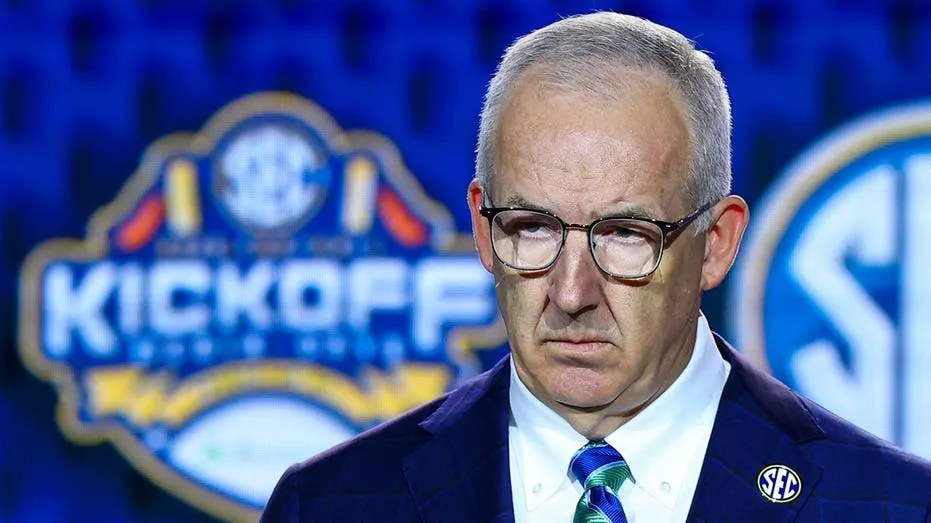
An OutKick (Fox News Sports) column accuses an ESPN personality of misrepresenting the SEC's college football strength of schedule in an effort to bolster the conference's reputation, after social media users flagged inaccuracies in the claims. The piece frames the incident as further evidence of what it calls an "open secret" — that ESPN, as broadcaster of most SEC games and producer of the SEC Network, has a financial and editorial incentive to promote the conference above rivals such as the Big Ten.
The article does not name the ESPN personality or detail the specific inaccurate statistics used, as the provided text is truncated before those details are given. It references broader ongoing debate about SEC versus Big Ten strength, also touched on in a linked Colin Cowherd and Joel Klatt interview discussing Indiana's unbeaten run and Big Ten-versus-SEC comparisons, but the core claim of the article is that the ESPN figure's promotional statements about SEC scheduling were debunked online.
In short
- ESPN personality criticised online over inaccurate SEC schedule strength claims.
- Article suggests ESPN has a vested interest in promoting the SEC.
- Comes amid wider SEC vs Big Ten college football debate.
Steelman: both sides, in good faith
The strongest fair case each way — we don't pick a winner.
The case for
ESPN's substantial financial investment in SEC broadcasts and the SEC Network creates a real conflict of interest that deserves scrutiny. When high-profile ESPN personalities publicly assert inaccurate claims about the SEC's strength—claims specifically designed to promote the conference—and these assertions are subsequently debunked by social media users, it suggests a problematic pattern where bias consistently favours their commercial interests. Broadcasters with financial stakes in the leagues they cover should be held to high standards of accuracy.
The case against
One analyst's statistical inaccuracy does not establish systematic institutional bias; journalists occasionally misstate facts across all networks, regardless of financial interests. Without knowing whether the analyst corrected themselves, whether alternative interpretations of the statistics exist, or whether errors occur equally across coverage of competing conferences, attributing intentional bias to a single incident mistakes human error for corruption. Financial incentives alone do not prove editorial malfeasance, and fairness demands more substantial evidence before concluding an entire network's coverage is compromised.
Explained simply
College football is organised into conferences, which are groups of universities that play regular-season games and compete for places in the national play-offs. The Southeastern Conference (SEC) and the Big Ten are two of the sport’s major conferences.
A team’s strength of schedule refers to how difficult its opponents are, based on factors such as their results and quality. Comparisons can be disputed because teams play different opponents, and people may use different measures to judge difficulty.
ESPN broadcasts many SEC games and runs the SEC Network, giving it commercial ties to the conference. That context helps explain why claims about the SEC’s standing can attract scrutiny, while debate over the relative strength of conferences is also part of how fans assess teams and play-off prospects.