Farage claims probe into undeclared £5m cypto billionaire’s ‘gift’ is rigged against him
Developing story first seen 2 hours ago
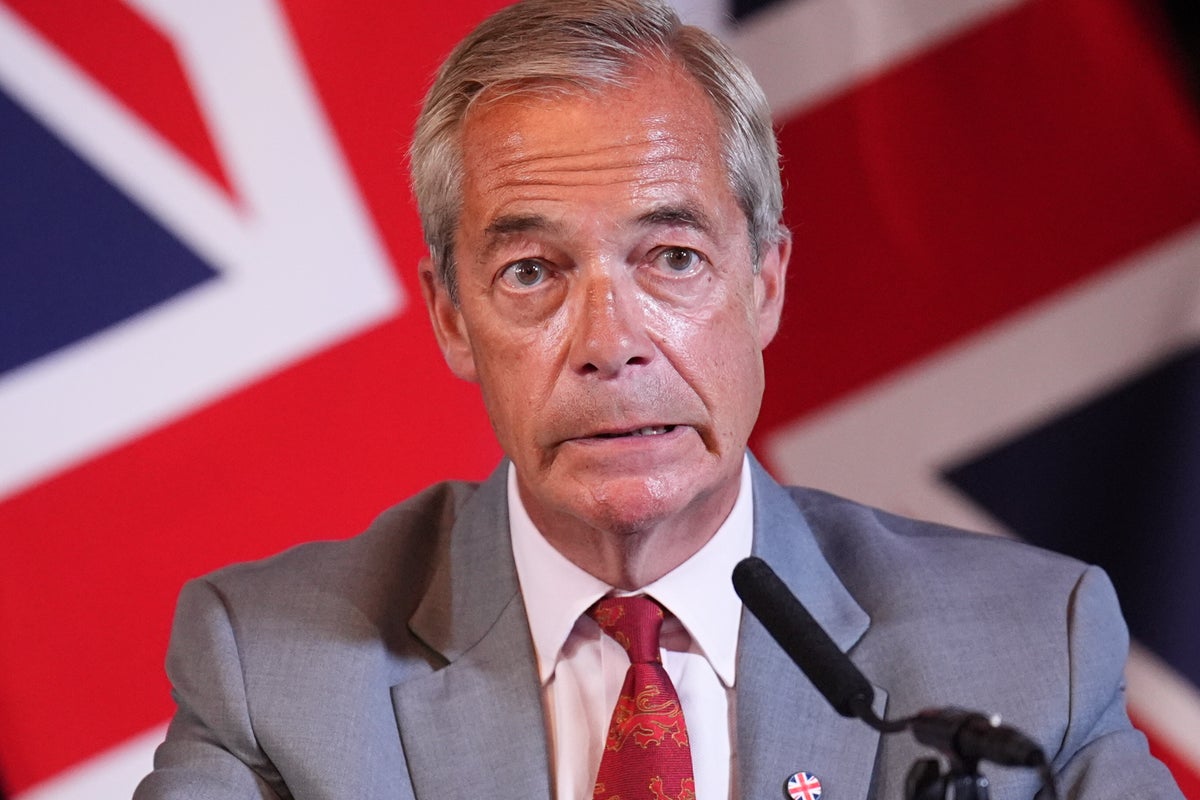
Nigel Farage has escalated his attack on the Commons Standards Committee, telling the BBC "we know the outcome already" and comparing his treatment to Boris Johnson's clashes with the Privileges Committee over Partygate, in which Johnson was ultimately found to have lied to Parliament and lost his former MP's pass. The Reform UK leader is contesting an inquiry into an undeclared £5million donation from crypto billionaire Christopher Harborne, and has questioned whether MPs from rival parties, chaired by Tory MP Alberto Costa, can judge him fairly given they are political opponents in elections.
Farage said the donation, received before he became an MP in July 2024, was a personal gift to cover his private security costs rather than a declarable political donation, though complainants say it fell within the period requiring declaration. He said he called the recent Clacton by-election partly to let voters "be the judge" while the investigation, which Labour's Lucy Powell suggested could take up to a year, left him "judged guilty every single day". Standards commissioner Daniel Greenberg is overseeing the probe; Farage said he had no issue with Greenberg personally but stood by his criticism of the committee's political make-up.
- Farage says Standards Committee will find him guilty regardless of evidence
- He likens his case to Boris Johnson's Partygate committee battle
- Inquiry concerns an undeclared £5m gift from crypto billionaire Christopher Harborne
New here? Start with this
Nigel Farage is the leader of Reform UK, the party that came third in vote share at the last general election and has been rising in the polls. He became an MP for Clacton in July 2024, and party leaders like him are required to declare significant political donations to Parliament's authorities so the public can see who is funding politicians.
The row centres on a £5million payment Farage received from Christopher Harborne, a wealthy businessman with cryptocurrency interests, which was not declared as a political donation. Farage says it was a personal gift to pay for his private security, while others who raised the complaint argue it should have been declared under the rules. The case is now being examined by the Commons Standards Committee, a cross-party group of MPs that investigates whether politicians have broken the rules on conduct and transparency, supported by an independent standards commissioner who gathers the evidence.
This matters because the committee's findings could affect Farage's standing as an MP and as leader of a party that has been gaining significant public support. Its decisions can also shape wider debate about how political donations are regulated and how much trust the public can place in the system meant to police them.
Full account
Nigel Farage has accused the parliamentary standards system of being stacked against him, as an inquiry continues into a £5 million donation he received from the crypto entrepreneur Christopher Harborne before he was elected as an MP. The Reform UK leader argues the money was a private gift to fund his personal security and therefore did not need to be declared, but complainants say it fell within the 12 months before the 2024 general election, the period in which such gifts should be registered. Mr Farage made his comments to the BBC shortly after returning to the Commons following a by-election in his Clacton constituency, which he had triggered partly, he said, because of the ongoing scrutiny.
Speaking to the broadcaster, Mr Farage questioned the impartiality of those who will ultimately judge him, saying the political make-up of the Commons Standards Committee, chaired by Conservative MP Alberto Costa, meant he already knew what the outcome would be. He argued it was wrong for MPs from rival parties, against whom he competes in elections, to sit in judgement on him, and said decisions of this kind ought to be made by people who are genuinely apolitical. He further complained that the process was dragging on, leaving him, in his words, judged in the court of public opinion long before any formal finding is reached.
The case centres on whether the donation from Mr Harborne should have been declared to the authorities. It is currently being examined by the independent parliamentary standards commissioner, Daniel Greenberg, whose inquiry was delayed by the Clacton by-election. Should Mr Greenberg conclude that rules were broken, the matter would be referred to the Standards Committee, which has the power to recommend a suspension from the Commons. A suspension of ten sitting days or more would open the door to a recall petition, and if enough constituents signed it, a further by-election could follow. Mr Farage insists the payment was unconditional and given with no strings attached, reflecting his belief that the state has failed to provide him with adequate protection despite repeated requests.
The two accounts of Mr Farage's remarks placed emphasis on different elements of the story. Coverage highlighting the parallels with Boris Johnson's earlier clashes with the Privileges Committee over the Partygate affair framed Mr Farage's attack on the committee's composition as an echo of that earlier row, and dwelt on the awkwardness of a by-election campaign fought largely against the novelty candidate Count Binface. Other reporting focused more on Mr Farage's broader critique of what he called a 'complainant society', in which rival parties routinely trigger investigations, and on his pledge to strip MPs of their role in deciding standards punishments should he become prime minister. There was also some variation in how directly the donation was linked to Mr Farage's personal security arrangements, with one account setting out that justification in more detail than the other.
Where outlets differ
The Independent draws an explicit parallel between Farage's attack on the Standards Committee and Boris Johnson's 2022 clashes with the Privileges Committee over Partygate, including references to personal attacks on Harriet Harman at the time; the Daily Mail account does not make this comparison.
The Daily Mail leads with Farage's 'complainant society' quote and his stated intention to remove MPs' power to decide standards punishments if he becomes prime minister — a policy pledge not mentioned in The Independent's account.
The Daily Mail gives more procedural detail on the process, including the role of standards commissioner Daniel Greenberg, the ten-sitting-day suspension threshold, and the recall petition/by-election mechanism; The Independent focuses more on the confrontational BBC interview exchange with political editor Chris Mason and Farage's claim the outcome is already decided.
The Independent notes Farage's complaint that Labour's Lucy Powell suggested the process could take up to a year, and frames the Clacton by-election as widely mocked (Farage 'fighting a bin'); the Daily Mail instead reports the by-election result in more neutral, factual terms (a majority of 12,784).
More coverage