For too long, only the right has expanded the boundaries of what governments can do. Can Burnham change that? | Andy Beckett
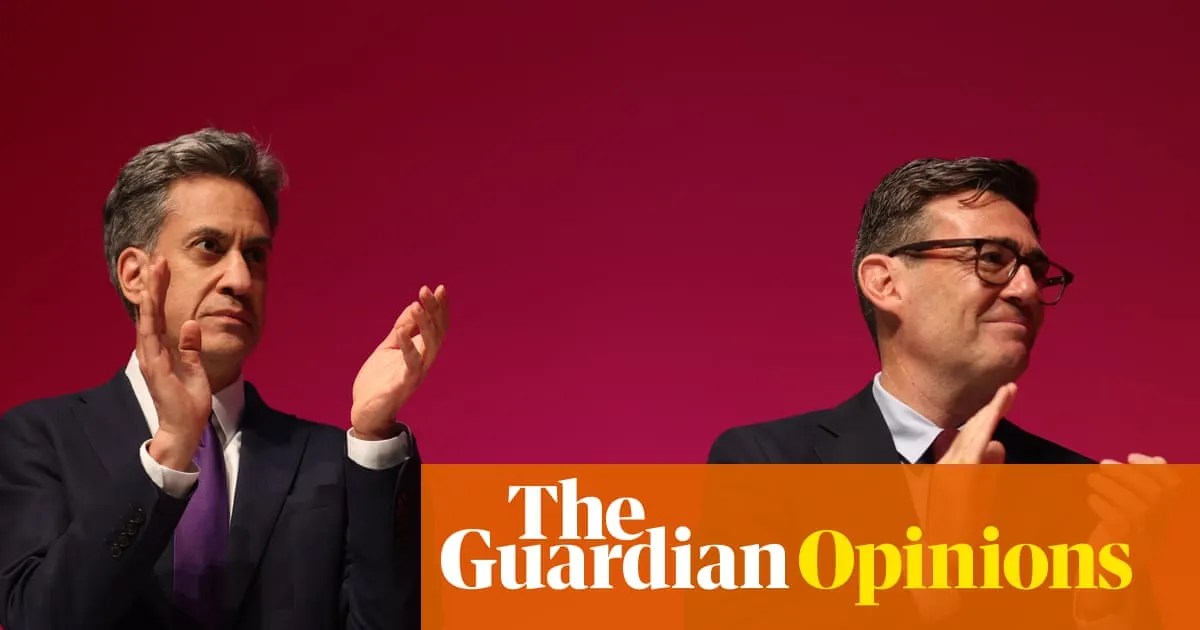
Andy Burnham used Labour’s conference to argue for major changes to public services, the economy and Britain’s political system, challenging the belief that governments have little room to act. His proposals could widen what Labour is willing to debate, while his hopeful, less partisan style may set him apart from political opponents.
He raised electoral reform, social care, intervention in failing privatised utilities, the pension triple lock and possible EU re-entry. The article contrasts his approach with New Labour’s caution about confronting powerful interests, and notes that Burnham’s influence may be limited by Labour’s fragile position and fragmented politics.
- Burnham is pushing Labour to discuss major reforms.
- His conference proposals include social care and electoral reform.
- A less partisan style may help him challenge political opponents.
New here? Start with this
For some years, British politics has been constrained by a widespread belief that governments have limited power to reshape the economy or public services significantly. This view has made politicians across parties cautious about proposing major interventions in areas like privatised industries or welfare.
Andy Burnham, a prominent Labour figure, has begun challenging this consensus. At the party's recent conference, he suggested that government should intervene more boldly across the economy and public services, including in areas like privatised utilities, social care provision and electoral reform.
This represents a departure from the caution shown by previous Labour governments, which largely accepted constraints on state intervention. However, Labour's current political position and the fragmented nature of British politics may limit how far such ambitious ideas can actually be implemented.