‘Future generations will curse us for its loss’: can nothing save Glasgow School of Art, Mackintosh’s masterpiece?
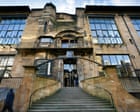
Glasgow School of Art says restoring Charles Rennie Mackintosh’s fire-damaged 1909 building exactly as it was would cost about £265m, making a full reconstruction currently unaffordable. The announcement raises fears that one of Scotland’s most important architectural works could instead be left as a stabilised shell, reduced to facade retention or allowed to deteriorate in a curated form.
The building was devastated by fires in 2014 and 2018, following an earlier restoration effort, and has remained covered and unusable for years. Architectural bodies and Glasgow Labour MSP Paul Sweeney are urging Scottish and UK government leadership, arguing that a nationally significant landmark needs public backing or a new funding partnership; insurers are understood to have funded the immediate stabilisation work.
- Full faithful restoration is now estimated at £265m.
- The fire-damaged Mackintosh building faces an uncertain future.
- Architects call for Scottish and UK government intervention.
Both sides, in good faith
The strongest fair case each way — we don't pick a winner.
The case for
Supporters of a full restoration argue that the Mackintosh building is an irreplaceable cultural work whose architectural integrity, civic meaning and educational legacy warrant an exceptional effort to save it. They contend that rebuilding it as faithfully as possible would preserve a major part of Scotland’s heritage for future generations, sustain Glasgow’s international cultural standing and honour the craftsmanship embodied in the original design. In this view, high costs are serious but should prompt creative fundraising and public-private partnership rather than acceptance of permanent loss.
The case against
Sceptics of a full reconstruction argue that, after two devastating fires, attempting to recreate the building exactly may be financially disproportionate and could produce an expensive replica rather than the original masterpiece. They may favour retaining what is authentic, documenting the losses and pursuing a safer, more sustainable adaptation that serves present educational and public needs, even if that means facade retention or a carefully managed ruin. Their concern is that scarce charitable and public resources should be weighed against other cultural, social and educational priorities, rather than committed without a credible long-term funding plan.