Private risk map rates Iran, Yemen, Sudan and Ukraine as extreme risk
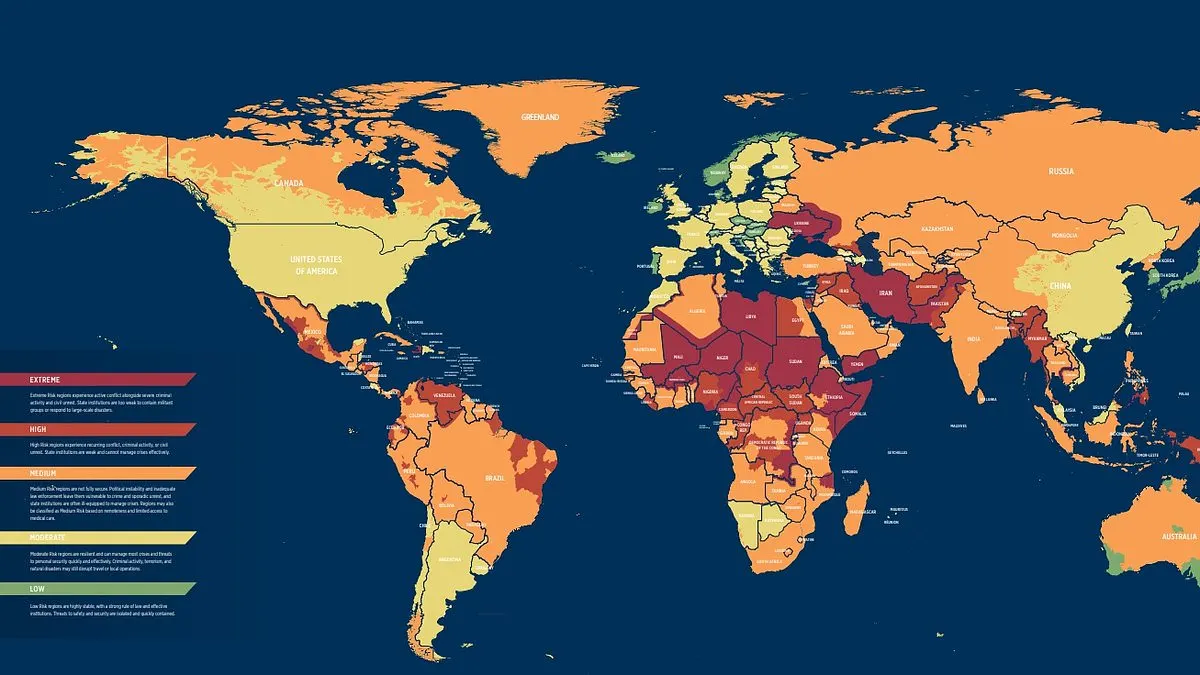
Global Guardians’ latest Global Risk Map places Iran, Yemen, Sudan and Ukraine among the countries or areas at extreme risk, while Switzerland, Norway and Denmark are among the lowest-risk nations. The classifications matter for understanding how security, public services and environmental hazards vary between countries, though they are assessments by a private security firm.
The map evaluates seven factors: crime, armed conflict, terrorism, political unrest, healthcare, infrastructure and natural disasters. The UK and US are rated moderate risk, Ireland low risk, and Jordan, Saudi Arabia, the UAE and Oman medium risk; the Mexican side of the US border is rated extreme risk. The article also highlights risks in Nigeria and Ethiopia, and reports that 17 people were killed in attacks in Nigeria’s Zamfara state, while renewed fighting in Ethiopia’s Tigray region has heightened regional tensions.
- Global Guardians rates Iran, Yemen, Sudan and Ukraine as extreme risk.
- Switzerland, Norway and Denmark are among the lowest-risk countries.
- The map weighs seven security, services and disaster factors.
New here? Start with this
A Global Risk Map is a tool that assesses which countries and regions face the greatest dangers to residents and visitors. Private security firm Global Guardians produces such maps by evaluating multiple risk factors across different nations. Understanding these assessments can help people make decisions about travel, investment and relocation, though they represent one firm's analysis rather than official government judgement.
The maps examine seven key areas: crime, armed conflict, terrorism, political unrest, healthcare, infrastructure and natural disasters. Each country receives a rating ranging from low to extreme risk based on how these factors combine. This approach recognises that danger takes many forms, from security threats to practical challenges like healthcare access.
People rely on these assessments when planning where to travel for work or holidays, where to invest money, or where to establish operations. Security firms produce maps regularly as conditions change, since risks in different regions fluctuate over time. The factors assessed—from crime and conflict to healthcare and infrastructure—reflect the range of concerns that affect safety and stability in any nation.
Read the full article at the source →
Originally published by Daily Mail as “Global risk map reveals countries deemed ‘extremely’ dangerous including Iran, Yemen and Sudan with Switzerland and Norway among the safest”.